
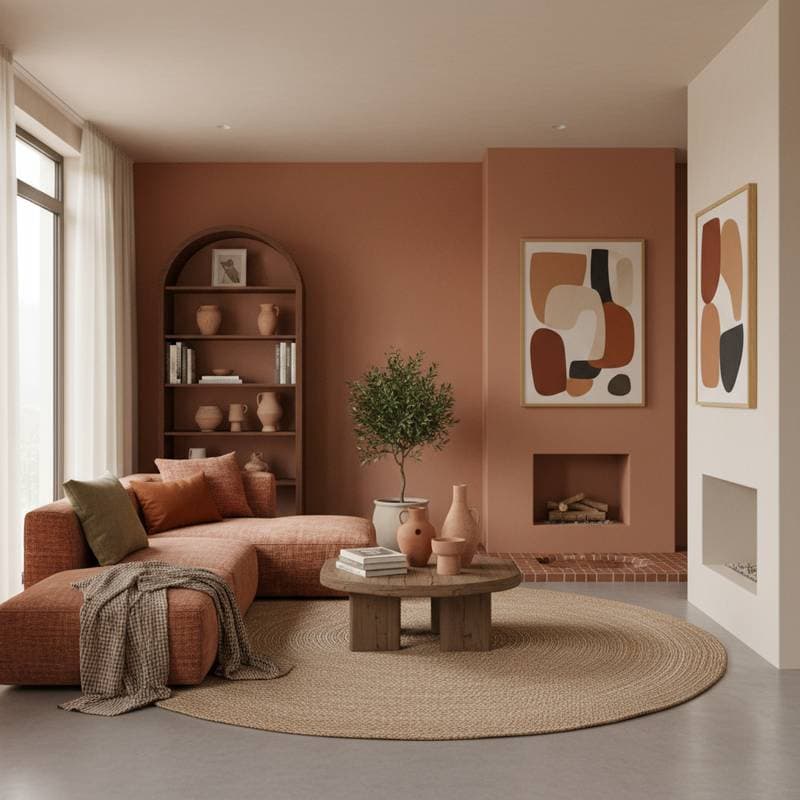
Introducing Terracotta Tones in Interior Design
Many homeowners seek ways to infuse spaces with warmth and character without overwhelming existing decor. Terracotta tones offer an ideal solution, drawing from the rich hues of sun-baked clay and natural earth. These shades provide a grounded foundation that enhances comfort while maintaining versatility across diverse aesthetics, from sleek contemporary to cozy traditional.
The appeal of terracotta lies in its inherent depth and subtlety. Unlike stark neutrals, it introduces organic vibrancy that evolves with lighting conditions. Homeowners appreciate how small applications yield significant impact, often at minimal expense, allowing gradual experimentation.
This article outlines practical methods for incorporating terracotta, optimal color pairings, and strategies to achieve harmonious results.
Practical Methods for Incorporating Terracotta
Begin with modest introductions to assess compatibility with your environment. Gradual integration permits adjustments based on personal preference and room dynamics. The following approaches suit various skill levels and budgets.
Painting a Feature Wall
Select a single wall exposed to natural light to serve as a terracotta focal point. Opt for lighter variants to foster openness in smaller areas, or deeper shades for dramatic emphasis in larger rooms. Materials typically cost between $40 and $80, covering primer, paint, and tools for a single-day project, including preparation and drying periods.
Matte or eggshell sheens enhance the color's natural texture, avoiding the artificial sheen of glossy finishes. Test samples on adjacent surfaces first to confirm harmony under different lighting.
Installing Terracotta Tiles
Terracotta tiles excel in high-traffic zones such as kitchens, bathrooms, and hallways, where they contribute both visual warmth and tactile interest. Authentic clay versions range from $4 to $8 per square foot, offering longevity when properly sealed against moisture and wear. Budget alternatives in porcelain mimic the aesthetic at reduced prices while simplifying maintenance.
Advantages:
- Exceptional durability under daily use
- Inherent slip resistance for safety
- Compatibility with radiant floor heating systems
Disadvantages:
- Requires periodic sealing to resist staining
- May feel chilled without supplemental warmth
Incorporating Terracotta Textiles
Fabrics provide a reversible entry into terracotta design, transforming ambiance through items like pillows, drapery, or rugs. Such elements require minimal effort, often limited to direct replacement of existing pieces, with costs spanning $20 to $200 based on scale and material.
Layer multiple textiles for dimension, ensuring patterns complement rather than compete with the base color. This method suits seasonal refreshes, allowing easy storage of off-season items.
Utilizing Terracotta Accessories and Pottery
Clay vessels and decorative objects introduce terracotta subtly, pairing well with foliage for a biophilic touch. Position pots on shelves or tabletops, or select vases and lanterns to accent neutral backdrops.
For customization, apply a diluted lime wash to unfinished pottery, achieving a weathered patina at negligible cost. This technique softens intensity while evoking artisanal heritage.
Enhancing Kitchen Spaces with Terracotta
Kitchens benefit from terracotta's inviting quality, applied via backsplashes, cabinetry accents, or storage solutions. It harmonizes with brass fixtures, white surfaces, and timber elements, creating a welcoming hub.
For non-structural changes, integrate terracotta in cookware or apothecary jars. These additions foster functionality alongside style, requiring no professional intervention.
Strategies for Balanced Terracotta Integration
Excessive warm tones risk enclosing spaces, so equilibrium remains essential. Aim for designs that promote airiness alongside intimacy through deliberate choices.
- Incorporate Light Neutrals: Balance with whites, creams, or light woods to counteract density.
- Maximize Natural Illumination: Employ sheer curtains and reflective surfaces to amplify terracotta's luminous potential.
- Diversify Textures: Pair sleek elements with coarser ones, such as linen or woven fibers, for tactile variety.
- Vary Shade Intensities: Introduce subtle tonal shifts to build depth without uniformity.
- Integrate Foliage: Greenery echoes terracotta's organic roots, injecting vitality.
These principles ensure enduring appeal, adaptable to evolving needs.
Tailoring Terracotta to Specific Aesthetics
Terracotta's adaptability spans genres, with application varying by context.
- Contemporary Settings: Limit to accent features like matte dishware or singular walls, paired with streamlined furnishings.
- Bohemian Environments: Layer with macramé, eclectic prints, and abundant botanicals for free-spirited energy.
- Farmhouse Interiors: Blend with plank paneling, reclaimed timber, and iron accents for rustic authenticity.
- Mediterranean Motifs: Apply liberally in flooring and ceramics, offset by azure or verdant highlights.
- Industrial Palettes: Temper with raw concrete, steel, and ebony woods for softened urbanity.
Adaptation hinges on restraint, allowing the hue to enhance rather than overshadow.
Sustaining Terracotta's Enduring Presence
Terracotta establishes a cohesive base for future enhancements, accommodating climatic shifts. Summer arrangements might feature airy cottons and cane alongside it, while winter setups incorporate knit fabrics and richer timbers.
Prioritize portable components, such as removable rugs or panels, to facilitate transitions. This flexibility supports stylistic growth over time.
Initial hesitation often gives way to appreciation, as terracotta unifies disparate elements into a cohesive narrative.
Implementing Terracotta Transformations
Terracotta imparts serenity and substance to interiors, addressing sterility with authentic warmth. Choices range from expansive renovations to targeted accents, each delivering prompt gratification.
Proceed incrementally, guided by intuition, to cultivate personalized havens. Through thoughtful textural interplay and illumination, spaces emerge as nurturing extensions of daily life.