
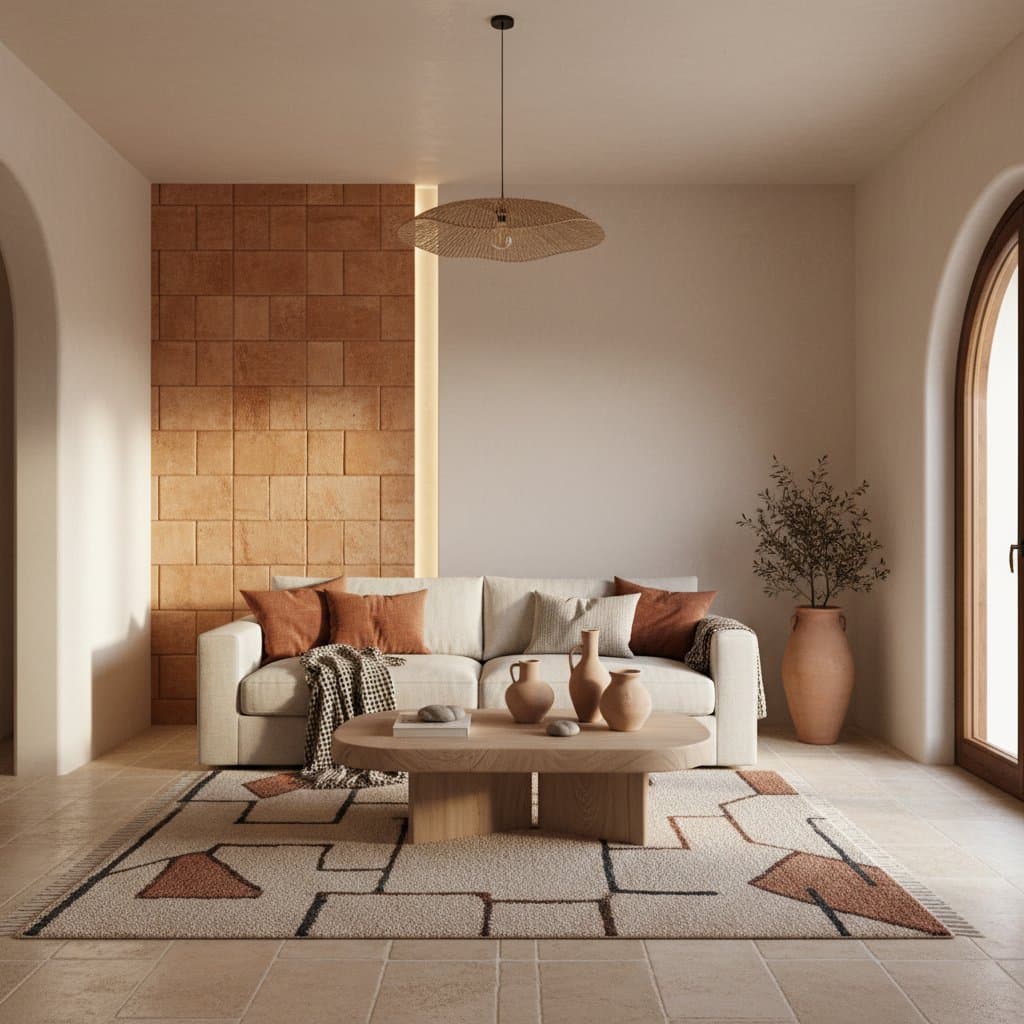
Terracotta and Raw Materials Shape Earthy Minimalism
Individuals often gravitate toward the calm simplicity of minimalist spaces, yet they seek warmth, texture, and a connection to the natural world. Picture entering a room where the atmosphere feels grounded, colors evoke soil and sun, and surfaces invite touch. This represents the core of earthy minimalism, a design approach that merges restraint with richness. Terracotta and raw materials form the foundation of this style, infusing modern interiors with a soul that appears both timeless and vibrant.
The Appeal of Earthy Minimalism
Minimalism attracts many with its clarity and serenity, though it occasionally appears stark. Earthy minimalism tempers this sharpness. The style achieves equilibrium between simplicity and depth. Uncluttered lines and open areas remain, delivering the refreshment of minimalism, while warmth, substance, and genuineness emerge. Raw, unprocessed materials occupy the forefront. Terracotta, limewash, stone, and unfinished wood establish a palette that conveys honesty and tactility.
Those who perceive their minimalist environments as sterile find relief in these elements. Imperfections capture attention, surfaces shift with illumination, and tones mirror nature's subtle elegance.
Why Terracotta Captures Attention
Terracotta enjoys a history in architecture and art, yet its resurgence in interior design conveys novelty. The hue proves compelling, combining rust, clay, and ember to warm any area immediately. It complements soft neutrals, matte blacks, or natural greens seamlessly. Versatility defines terracotta's allure. Designers shape it into tiles, planters, lighting fixtures, or sculptural pieces.
Envision a kitchen featuring hand-pressed terracotta tiles on the floor, their faint variations illuminated by morning light. Consider a living room with a substantial terracotta pot in one corner, containing a leafy fig tree. Minor additions, such as a terracotta pendant light or a clay vase, elevate the space to one that feels anchored and welcoming.
Raw Materials That Ground the Aesthetic
Raw materials complement terracotta's warmth and contribute distinct qualities. Each material carries unique traits and narratives:
-
Lime Plaster Walls
Lime-based plaster yields soft, breathable surfaces with a velvety matte texture. It scatters light evenly, fostering a serene ambiance ideal for bedrooms or bathrooms. Application involves multiple thin layers for optimal adhesion and finish. -
Natural Stone
Options like travertine, limestone, or sandstone provide understated patterns and organic textures. Rough-hewn stone countertops or fireplace surrounds introduce restrained drama. Select pieces with natural veining to enhance visual interest without excess. -
Unfinished or Lightly Oiled Wood
Pale oak, ash, or reclaimed timber maintains a natural, relaxed vibe. A raw wood dining table with precise lines serves functional and artistic purposes. Apply minimal oil to preserve the wood's inherent grain and color. -
Woven Textures
Jute rugs, linen curtains, and rattan accents introduce softness and dimension. These elements add tactile layers that counteract minimalism's potential chill. Integrate them sparingly to maintain balance.
These components influence the sensory encounter. They interact with light uniquely, produce varied sounds underfoot, and carry faint natural scents. Collectively, they foster a cohesive environment that feels inhabited yet polished.
Designing with Balance and Purpose
Earthy minimalism flourishes through moderation. The objective involves selecting a few materials that communicate effectively, rather than overcrowding with rustic items. Approach design in deliberate layers:
- Foundation: Employ neutral shades like warm whites, soft taupes, or subdued grays. These form a subtle backdrop for terracotta and raw textures.
- Focal Points: Select one or two prominent materials, such as a terracotta floor or stone backsplash. Allow them prominence without rivalry.
- Accents: Incorporate smaller objects in natural fibers or clay to echo the motif discreetly.
- Lighting: Opt for warm, diffused sources to accentuate textures. Terracotta responds particularly well to gentle glows.
Achievement stems from intentional scarcity. Every item must possess purpose and impact.
Practical Guidance for Homeowners
Incorporating raw materials demands thoughtful preparation. Terracotta's porosity necessitates sealing in high-moisture areas like kitchens or bathrooms to prevent staining. Lime plaster demands expert application for longevity and air permeability. Natural stone offers enduring appeal, though expenses fluctuate based on origin and processing.
Anticipate additional effort in choosing and caring for these materials, yet the results justify it.
- Budget Planning: Handmade terracotta tiles command higher prices than machine-produced versions, often ranging from $10 to $30 per square foot. Raw wood pieces vary similarly; pair investment items with affordable complements.
- Maintenance: Employ mild, pH-neutral cleaners. Embrace developing patina as an enhancement to character.
- Permits and Experts: For extensive wall treatments or stone work, review local regulations. Engage contractors versed in natural substances to guarantee superior outcomes.
A skilled local design-build firm assists with procurement, protection, and upkeep of these surfaces.
Integrating Local Influences
This aesthetic excels by reflecting its context. In coastal settings, combine terracotta with whitewashed walls and driftwood elements. Urban lofts might blend exposed brick, concrete, and clay pieces to mellow industrial tones. Adaptation avoids mere imitation, instead drawing from the immediate environment.
Residents in clay-rich regions benefit from commissioning local pottery or tiles that capture regional essence. Procuring from nearby craftspeople bolsters the economy and roots the home in its locale.
Experiencing Earthy Minimalism Daily
With the space assembled, observe its influence on routines. Warm hues and organic textures promote unhurried paces. Bare feet on terracotta flooring provide stability. Limewashed walls emit a soft radiance at dusk. The design encourages reflection, respiration, and valuation of subtle flaws.
Sustain simplicity in furnishings. Place seasonal branches in a clay vessel or permit sunlight to serve as primary decoration. Earthy minimalism values observation over accumulation.
Steps to Implement the Style
To convert a home into a serene, anchored haven, select one room for initial application of earthy minimalism. Refresh a bathroom using limewash and terracotta tiles, or renew a living area with raw wood and stone. Collect ideas, yet align choices with personal habits.
Seek regional specialists in natural materials by submitting projects on Doric South at no cost. Matches occur with qualified contractors who blend aesthetic precision with functional expertise.