
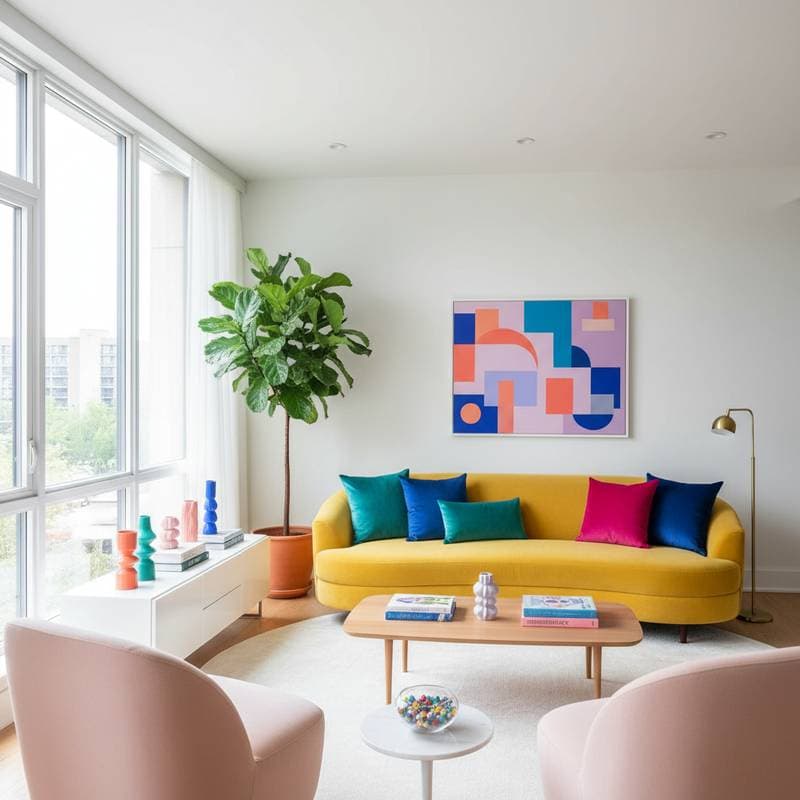
Understanding Color Psychology in Home Design
Color psychology examines how hues influence emotions and behaviors. In home environments, specific colors can enhance focus, promote relaxation, or spark creativity. For instance, warm tones like soft yellows stimulate optimism, while cool blues encourage tranquility.
The dopamine decor trend, prominent in 2026, emphasizes vibrant, joyful elements to trigger positive feelings. This style integrates bold accents with serene bases, creating spaces that uplift daily life. Homeowners increasingly adopt these principles to combat stress and infuse personality into interiors.
Key Principles for Effective Color Use
Select colors based on room function. Energizing reds suit kitchens for social gatherings, whereas calming greens benefit bedrooms for restful sleep. Test samples under natural and artificial light to observe true tones.
Balancing Vibrant and Neutral Elements
Combine vibrant tones with neutral backdrops such as white, beige, or light gray. This contrast prevents overwhelming spaces while allowing pops of color to shine. Limit palettes to three main colors per room to maintain harmony and avoid visual clutter.
Incorporate texture to temper bold shades. Materials like linen curtains, rattan furniture, or soft wool throws introduce depth and serenity. These elements soften intensity, making vibrant areas feel inviting rather than chaotic.
Optimizing Lighting with Your Palette
Lighting plays a crucial role in how colors appear. Warm bulbs accentuate earthy tones, creating cozy atmospheres in living areas. Cooler bulbs enhance blues and greens, ideal for offices or reading nooks where clarity matters.
Create visual rest areas amid bold designs. Use natural materials like wood panels or muted shades in corners to provide balance. This approach ensures the home feels dynamic yet peaceful.
Budget and Effort Considerations
Dopamine decor adapts to various financial levels, making mood-boosting updates accessible.
Low-Budget Options
Begin with affordable accessories such as throw pillows, area rugs, and wall art. These items allow experimentation without commitment. Costs typically range from fifty to two hundred dollars, depending on room dimensions and quality selections.
Mid-Range Investments
Incorporate accent furniture or a single feature wall with peel-and-stick wallpaper. Such changes add impact without extensive renovations. Expect expenditures between two hundred and eight hundred dollars for materials and minor labor.
High-Budget Transformations
Opt for comprehensive updates like full-room repaints, custom upholstery, or hiring professionals. These yield seamless, tailored results. Prices vary widely but deliver long-term value through durable, cohesive designs.
Time commitments align with scope. Weekend projects suit accessory swaps, while painting or custom orders may require one to two weeks. Plan accordingly to minimize disruption.
Engaging Professional Expertise
Uncertainty in coordinating elements warrants professional input. Color consultants or interior designers provide targeted advice. Initial sessions, often priced reasonably, assess lighting, layout, and personal tastes to develop functional palettes.
Experts prevent errors such as mismatched furniture or repeated repaints, saving time and resources. Their guidance ensures colors align with lifestyle needs, enhancing overall satisfaction.
Personalizing Your Color Choices
Effective dopamine decor reflects individual preferences over fleeting trends. Consider elements that evoke joy, like a turquoise backsplash inspired by coastal memories or a lavender nook for post-work relaxation.
Prioritize personal resonance in selections. Over years, evolve the space by exchanging hues, repositioning items, or adding textures. This keeps the home vibrant and aligned with changing moods.
Observing and Adjusting Color Impacts
After implementing a scheme, monitor emotional responses. Brighter rooms may draw extended stays, while cooler tones sharpen concentration. Track these effects to refine the environment.
If adjustments prove necessary, introduce more white for spaciousness or layer softer textiles to mellow intense walls. Iterative tweaks maintain harmony and effectiveness.
Implementing Your Vision
A thoughtfully colored home fosters vitality and comfort. Start small by sampling paints or reorganizing accents to identify mood-lifting combinations. These steps cultivate spaces that nurture well-being daily.