
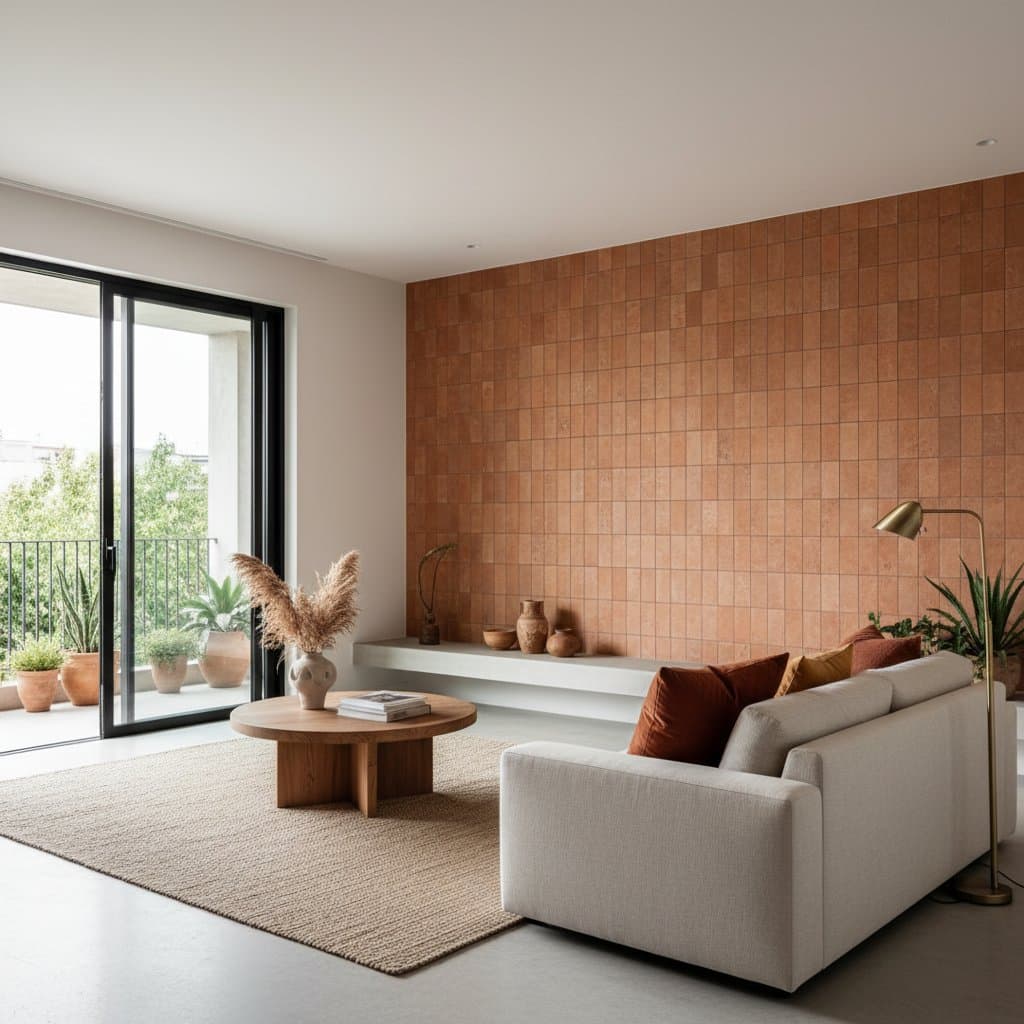
Terracotta's Renaissance: Warm Earth Tones for 2026
Rooms in soft whites and cool grays often evoke a sense of calm, yet they can appear stark or uninviting. Homeowners increasingly seek alternatives to these minimalist palettes. A warmer, more grounded approach now influences homes, restaurants, and offices. Terracotta, traditionally associated with clay tiles and Mediterranean settings, reenters design with contemporary flair. This material integrates seamlessly into diverse spaces.
Why Terracotta Captures Contemporary Interest
Terracotta delivers warmth, texture, and inherent comfort that aligns with current preferences. It conveys a sense of habitation and invitation while maintaining a fresh, modern profile through pairing with geometric forms and precise lines. Derived from the term for baked earth, it embodies a direct link to nature without evoking outdated rusticity.
Designers favor materials that develop patina over time, exhibit artisanal qualities, and tolerate imperfections. Terracotta embodies these traits. Its spectrum extends beyond traditional clay orange to include subtle blushes, dusty roses, subdued corals, and rich brown-reds. These shades integrate with neutral backdrops or vibrant accents.
Individuals select terracotta for varied purposes. Some appreciate its tactile depth in spare environments. Others employ it to counteract sterility in overly clinical areas. Overall, it offers enduring appeal alongside relevance, natural authenticity paired with polish.
Characteristics of Modern Terracotta
Contemporary terracotta avoids elaborate Tuscan motifs or decorative tiles. Instead, it emphasizes restraint and subtle heat. Finishes feature smoother profiles, sculptural contours, and matte or satin sheens rather than high gloss. Applications span planters, wall tiles, lighting fixtures, and furniture details.
Terracotta's adaptability stems from its response to illumination. Natural daylight imparts a gentle radiance. Ambient warm light intensifies its hues. Such dynamic interplay vitalizes otherwise static interiors.
Outdoors, terracotta absorbs sunlight uniquely, surpassing concrete or coated surfaces in organic appeal. It renders patios, boundary walls, and walkways more integrated with surroundings. Indoors, it fosters intimacy in expansive areas without introducing excess.
Incorporating Terracotta into Residential Spaces
Full-scale application proves unnecessary to adopt this trend. Targeted elements yield significant impact. Consider these integration strategies.
Flooring and Tiling Options
Terracotta tiles remain foundational, though updated iterations offer innovative geometries and treatments. Hexagonal patterns, expansive rectangles, and artisanal squares gain popularity. Pricing spans five to fifteen dollars per square foot, influenced by craftsmanship and surface preparation. Sealed variants simplify upkeep and suit high-traffic zones like kitchens, foyers, and terraces. For authentic aesthetics, opt for unsealed options, which demand annual oil or wax applications to resist dampness.
Feature Walls
A solitary wall in terracotta hue alters room ambiance profoundly. Position it adjacent to bedding, dining zones, or expansive glazing to capture diurnal color shifts. Muted iterations suit cautious approaches, providing subtle elevation while remaining understated.
Accessory Elements
Commence with modest items such as vases, containers, or lamp pedestals crafted from terracotta. These introduce dimension with minimal obligation. They harmonize with porcelain whites, untreated timber, and fibrous weaves. Strategic placement on shelving or consoles unifies compositions.
Seating and Fabrics
Upholstery in terracotta motifs provides accessible transformation. Envision a velvet seat in muted clay or a linen cushion in sienna. Such updates refresh communal areas sans comprehensive overhaul. They accommodate pale or deep timber frameworks.
Outdoor Implementations
Terracotta siding and roofing prove resilient and thermally efficient, modulating interior climates through heat absorption and gradual dissipation. Initial expenses for paneling elevate, yet longevity minimizes ongoing care. Budget constraints permit potted arrangements or border delineations to establish unified exteriors.
Harmonizing Terracotta with Complementary Substances
Balance defines terracotta's modern integration. It thrives alongside elements that accentuate its inherent glow.
- Timber: Pale oak or walnut extracts amplify depth, fostering serene, nature-inspired serenity.
- Rock: Limestone or travertine anchors elegance with grounded poise.
- Alloy: Matte brass or ebonized iron provides crisp juxtaposition to its yielding nature.
- Fabrics: Linen, jute, and wool sustain tactile, soil-rooted cohesion.
Steer clear of vivid or artificial overlays. Terracotta's allure resides in unadorned genuineness.
Advantages and Drawbacks of Terracotta
Materials present distinct merits and hurdles. Awareness informs judicious selection.
Benefits
- Thermal and Tactile Qualities: Instills immediate intimacy in sleek or forward-thinking settings.
- Longevity: Sealed installations endure for generations.
- Ecological Profile: Originates from abundant clay, frequently regional.
- Adaptability: Aligns across aesthetics from pastoral to vanguard.
Limitations
- Upkeep Demands: Unprotected forms risk discoloration or liquid ingress.
- Mass: Exceeds lightweight ceramics or synthetics.
- Hue Inconsistency: Batch variations enhance individuality but necessitate coordination.
- Expense: Premium artisanal pieces command premium rates.
Test via minor inclusions to gauge illumination interactions and furnishing compatibility before expansive commitments.
Adapting Terracotta Across Aesthetic Frameworks
Terracotta transcends singular styles, molding to contexts through deliberate application.
Spare Environments
Within minimalism, terracotta serves as thermal foil to chilled tones. One painted plane or select vessels mitigate angular severity. Restrict to beige, ivory, and fawn supports, allowing the hue prominence.
Eclectic Interiors
Bohemian sensibilities embrace terracotta inherently. Merge with interlaced carriers, motif-laden carpets, and foliage. Unified tonality amid layered surfaces ensures equilibrium.
Metropolitan Dwellings
Urban lofts benefit from terracotta's softening influence on raw concrete, ferrous frames, and generous fenestration. Textural interplay enriches narrative.
Heritage or Regional Motifs
Mediterranean or Iberian influences find natural synergy with terracotta. Accompany with lime-washed planes, shadowed joists, and forged ornamentation for poised tranquility.
Essential Planning Factors
Large-scale endeavors warrant evaluation of finances, preservation, and execution.
Financial Planning
Variability marks terracotta economics. Bespoke tiles surpass mass-produced counterparts. Account for sealing, jointing, and professional fees in broad applications. Modest endeavors like vessels or focal paints incur low outlay yet deliver outsized effect.
Preservation Routines
Sealed surfaces respond to gentle detergent and moisture. Eschew abrasives that erode barriers. Refresh coatings on faded areas. Unsealed instances require seasonal natural dressings against blemishes. Exterior checks post storms address fissures.
Execution Demands
Tiling demands meticulous alignment, sealing, and drying periods. Novices benefit from expert involvement to avert setbacks. Simpler tasks like container assembly or wall painting suit adept amateurs with standard implements.
Security and Ecological Aspects
Inert and flame-retardant properties render terracotta suitable for culinary and hearth vicinities. Eco-conscious choices include reclaimed or proximate clays; verify low-volatile and green methodology credentials.
Terracotta's Influence on Ambiance
Psychological principles underpin terracotta's draw. Terrestrial warms instill equilibrium and solace, evoking occupancy and poise. Such effects prove invaluable for remote work or extended indoor tenure. Terracotta-infused rooms convey rooted serenity amid progressive forms.
Commercial venues leverage it to humanize eateries and workplaces. Residentially, it promotes ease without diminishing finesse. Organic shades forge subtle natural bonds, both affective and corporeal.
Integrating Terracotta with Streamlined Design
Thermal minimalism dominates current trajectories, fusing linearity with organic grains and soil palettes. Terracotta aligns ideally. Forego profusion or saturation; prioritize glow, luminosity, and touch to animate restraint.
For streamlined preferences, designate terracotta as focal warmth. A lone partition, luminous ceramics, or undulating base suffices. Streamline furnishings, permitting material prominence.
Steps to Integrate Terracotta Effectively
Commence modestly with vessels or trial coatings. Observe chromatic evolution under varying light. Positive resonance justifies progression to broader canvases or substrates. This measured path ensures harmonious, enduring enhancement.