
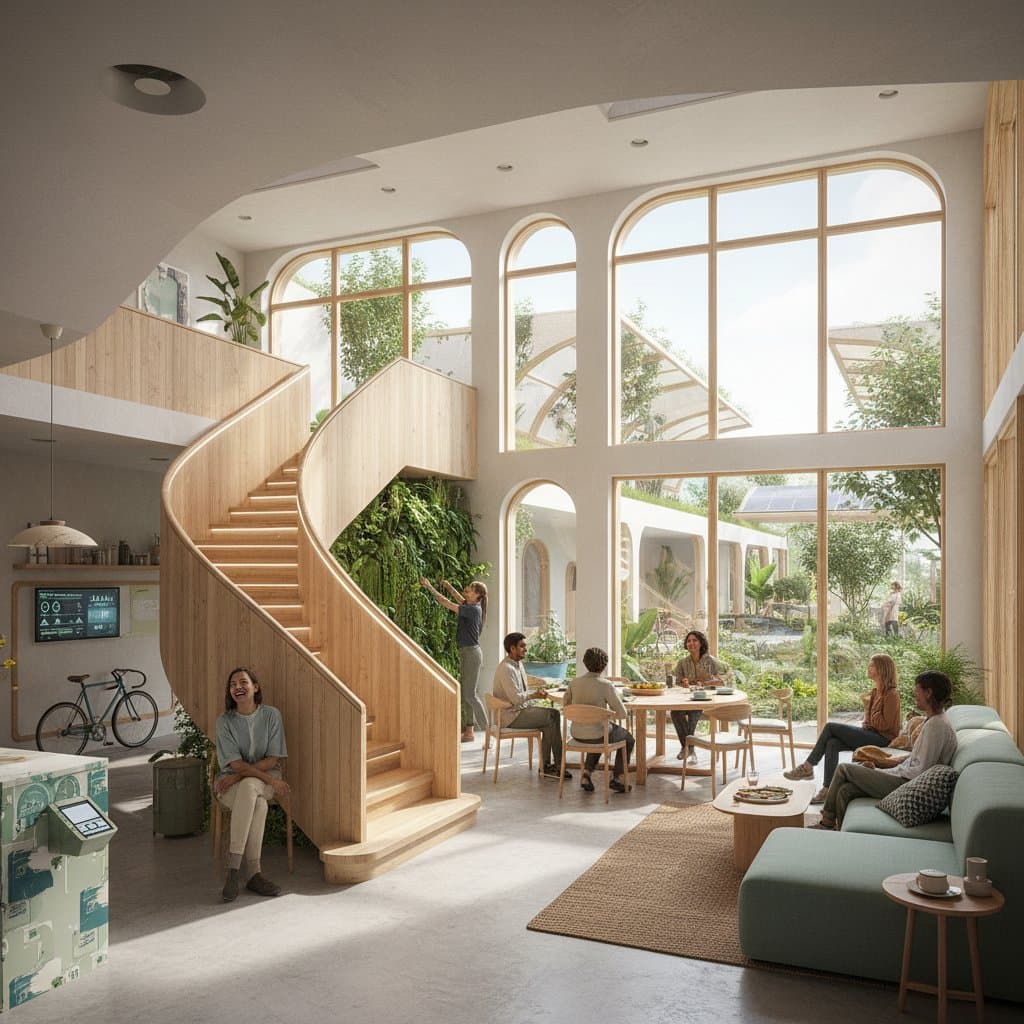
Solarpunk's Vision: Homes in Harmony with Nature by 2026
Picture a morning where sunlight floods your living space, air-purifying plants thrive throughout the rooms, and clean energy powers every appliance. Beyond the windows, verdant rooftops replace urban sprawl, communal gardens flourish, and residents exchange surplus produce with ease. This scenario represents the essence of solarpunk design, an emerging philosophy that merges ecological stewardship, innovative technology, and collaborative living to reshape everyday habitats.
Solarpunk extends beyond aesthetics; it proposes a blueprint for residences that actively contribute to planetary health. By 2026, advancements in materials and systems will make these ideals attainable for homeowners worldwide. This article outlines the foundational concepts and practical implementations to guide your transition toward such living.
Defining Solarpunk Living
Solarpunk emerges as a holistic framework for habitation, emphasizing harmony between human needs and environmental imperatives. It integrates solar energy generation, eco-conscious construction techniques, and cooperative resource management to form resilient communities. At its core, solarpunk challenges individuals to consider how their dwelling can enhance biodiversity while providing modern conveniences.
For those contemplating new construction, renovations, or minor updates, solarpunk principles offer a roadmap to enhanced well-being and reduced ecological impact. Implementation requires no vast resources; modest investments yield immediate benefits in efficiency and comfort.
Key Principles Shaping Solarpunk Residences
To embody solarpunk, a home must adhere to principles that prioritize endurance and integration with the natural world. These guidelines ensure structures support both inhabitants and ecosystems over decades.
- Prioritize Sustainability. Select materials and technologies that minimize waste and promote regeneration, such as low-impact composites and energy-recycling systems.
- Achieve Energy Autonomy. Incorporate photovoltaic arrays, small-scale wind generators, or ground-source heat pumps to diminish dependence on fossil fuel-based utilities.
- Integrate Biophilic Elements. Embed living features like vertical greenery, timber accents, and ample glazing to foster connections with the outdoors.
- Foster Community Ties. Develop shared amenities, including collective orchards, fabrication hubs, and lending libraries for equipment, to build social resilience.
- Emphasize Repair and Repurposing. Utilize salvaged components and design for disassembly, extending the lifecycle of every element.
These tenets transform isolated houses into dynamic nodes within a supportive network.
Implementing Solarpunk Design in Existing Spaces
Transitioning to solarpunk does not demand complete reconstruction. Begin with targeted enhancements that build upon your current setup, scaling as resources allow.
Enhance Energy Efficiency
Efficient energy management forms the bedrock of solarpunk residences, reducing consumption while maximizing output.
- Reinforce insulation in walls, attics, and floors using materials like cellulose or sheep's wool to maintain stable indoor temperatures year-round.
- Replace incandescent bulbs with LEDs, which consume up to 80 percent less electricity and endure for 25 times longer.
- Mount solar photovoltaic systems; initial investments from $10,000 to $50,000 often recoup through 20-30 percent annual energy bill reductions, bolstered by incentives like federal tax credits up to 30 percent.
- Deploy intelligent automation, such as Wi-Fi-enabled thermostats that learn occupancy patterns and adjust settings to optimize usage.
These measures not only lower expenses but also buffer against utility fluctuations.
Incorporate Natural Elements Indoors
Biophilic integration elevates psychological and physiological health by simulating natural environments.
- Introduce air-filtering foliage, including snake plants for formaldehyde removal or areca palms for oxygen enrichment, positioned strategically for maximum coverage.
- Opt for renewable finishes like cork underlayment or FSC-sourced hardwoods in high-traffic areas to evoke organic textures.
- Optimize natural illumination through sheer curtains, reflective surfaces, and strategic shelving that avoids blocking light paths.
Such adaptations make compact urban dwellings feel expansive and restorative.
Promote Water Conservation
Mindful water stewardship conserves this vital resource and supports local hydrology.
- Retrofit fixtures with aerators and efficient heads that cut usage by 50 percent without compromising performance.
- Set up barrel systems or modular tanks to capture roof runoff, directing it to non-potable applications like lawn watering.
- Landscape with native species such as lavender or agave, which require minimal irrigation once established.
For advanced setups, route treated wastewater from laundry to irrigate edible gardens, closing the resource loop.
Cultivate On-Site Food Production
Self-sufficiency in nutrition strengthens food security and diminishes carbon footprints from transport.
- Utilize stackable hydroponic towers or railing-mounted pots for greens like kale and basil in limited areas.
- Collaborate on neighborhood plots, dividing labor for planting, weeding, and harvesting to yield diverse seasonal bounties.
- Establish backyard bins for organic waste decomposition, yielding nutrient-rich soil amendments within months.
These practices not only economize but also cultivate mindfulness around consumption.
Select Enduring, Ethical Materials
Material choices influence long-term habitability and environmental legacy.
- Source lumber from sustainably managed forests, metals from recycled streams, and finishes free of volatile organic compounds.
- Steer clear of synthetic laminates that off-gas pollutants; favor linoleum derived from natural oils instead.
- Partner with regional artisans to source bespoke items, thereby shortening supply chains and supporting local economies.
This approach ensures durability while aligning with solarpunk ethics.
Advantages and Challenges of Solarpunk Adoption
Solarpunk residences offer compelling benefits alongside hurdles that demand strategic navigation.
Advantages:
- Substantial reductions in operational costs, often 40-60 percent on energy alone over a decade.
- Enhanced occupant health via superior ventilation and reduced allergen exposure.
- Bolstered social networks through shared initiatives, increasing life satisfaction.
- Elevated market appeal, with eco-certified properties commanding 5-10 percent premiums.
Challenges:
- Elevated upfront expenditures for installations like battery storage.
- Regular upkeep for features such as vegetative roofs or turbine blades.
- Regulatory obstacles in areas resistant to alternative building methods.
Proactive research and expert consultation mitigate these issues effectively.
Essential Planning for Solarpunk Projects
Undertaking a solarpunk transformation requires foresight to align with practical constraints.
- Verify compliance with municipal ordinances governing renewable integrations and ecological modifications prior to commencement.
- Allocate budgets with a 15-25 percent premium for green innovations, offset by long-term rebates and efficiency gains.
- Account for extended schedules, as custom integrations like passive solar shading may add 4-8 weeks to timelines.
- Engage specialists in green building, such as LEED-accredited firms, to refine designs and identify efficiencies.
Thorough preparation streamlines execution and maximizes outcomes.
Advancing Toward Solarpunk Living
Embracing solarpunk principles cultivates residences that nurture personal vitality and ecological balance. From installing a single solar array to orchestrating a comprehensive overhaul, each initiative amplifies positive impact. As you observe declining resource demands and burgeoning community bonds, the motivation to expand these practices grows naturally. By 2026, solarpunk homes stand as testaments to proactive stewardship, inviting others to join in building a thriving, interconnected world.