
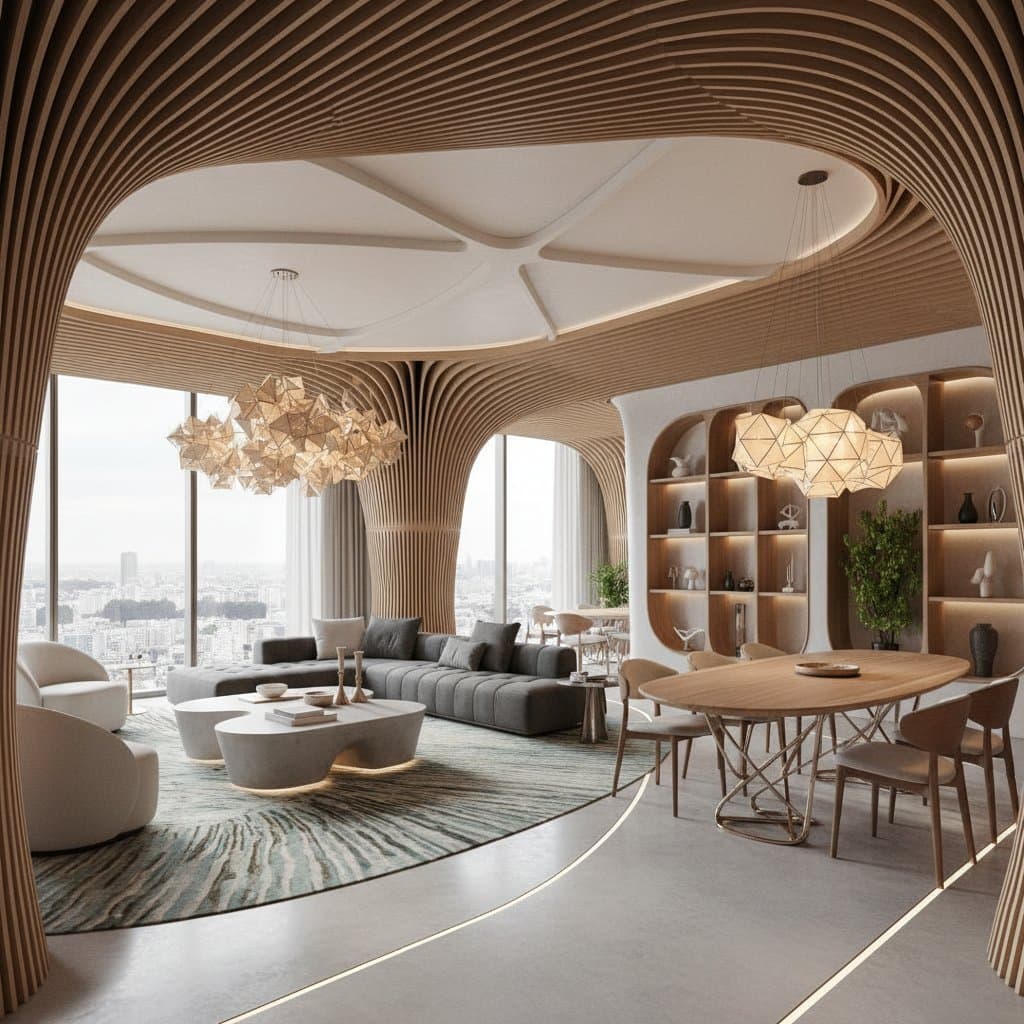
Why Parametric Interiors Are Shaping Modern Homes
Homeowners increasingly seek interiors that reflect personal style while maximizing functionality and connection to nature. Parametric design achieves this by employing computational methods to generate fluid, organic forms that traditional approaches cannot match. These designs turn everyday spaces into dynamic environments that enhance well-being and efficiency.
The Problem: Finding Unique Yet Functional Design
Standard interior design relies on fixed geometries and conventional materials, which often constrain creativity. Achieving custom elements, such as undulating walls or intricate light-diffusing panels, proves challenging without advanced tools. Manual drafting risks inaccuracies, leading to costly revisions and fabrication errors. Parametric design addresses these issues by enabling precise modeling of complex shapes from the outset.
The Solution: How Parametric Design Works
At its core, parametric design involves defining parameters—such as spatial constraints, environmental factors, or aesthetic preferences—and using algorithms to generate forms that adhere to them. Designers input variables like room dimensions or desired light penetration, and software iterates multiple configurations. For instance, a ceiling feature might adjust its perforations to balance daylight and privacy based on orientation.
This process extends to residential applications, allowing for tailored elements like sculpted shelving or adaptive partitions. The outcome integrates visual appeal with structural integrity, far surpassing the limitations of manual sketching or basic CAD tools.
Key Features of Parametric Interiors
-
Organic Forms
Inspired by natural phenomena like honeycomb structures or river bends, these designs introduce gentle curves that create a sense of movement. Such forms reduce the starkness of rectangular spaces, fostering a more inviting atmosphere. -
Functional Adaptability
Surfaces in parametric interiors multitask effectively. A curved divider, for example, might diffuse sound, regulate temperature, and serve as storage—all calibrated through parametric adjustments for optimal performance. -
Material Efficiency
Algorithms optimize material usage by simulating cuts and joins in advance. This precision cuts down on excess scraps, lowering both expenses and environmental impact compared to trial-and-error methods. -
Personalization
Parameters allow fine-tuning to match individual tastes, from subtle texture variations to bold scale changes. The final product aligns seamlessly with the home's architecture and the owner's lifestyle.
Practical Considerations for Homeowners
Cost Range:
Specialized software and fabrication techniques elevate expenses. Simple accents, such as decorative screens, range from $100 to $400 per square foot, factoring in materials like aluminum or wood. More ambitious installations, including custom millwork or overhead features, span $500 to $1,000 per square foot due to engineering demands.
Timeline:
Initial modeling requires 3 to 6 weeks to refine concepts and simulations. Fabrication and on-site assembly follow, typically adding 4 to 8 weeks. This extended process ensures accuracy, reducing surprises during installation.
Skill Level:
Professional involvement is essential for projects involving computational modeling or machine fabrication. Enthusiasts might tackle minor elements, like 3D-printed ornaments, with accessible software tutorials and basic tools.
Permits and Compliance:
Any load-bearing or fire-rated components demand adherence to local codes. Engage licensed professionals to verify structural safety, seismic requirements, and material certifications early in the planning phase.
Regional Differences:
Access to fabrication facilities influences pricing. Metropolitan hubs with digital workshops provide competitive rates, while remote areas face higher shipping fees for custom pieces.
Why Homeowners Are Choosing Parametric Design
Beyond aesthetics, parametric interiors enhance daily living through superior light management, acoustic control, and ventilation. These features contribute to energy savings and comfort, appealing to those prioritizing sustainability. The bespoke nature also elevates home value, signaling innovative design to potential buyers.
Implementing Parametric Elements
Begin with modest additions, such as a feature wall or modular furniture, to test the approach. Collaborate with computational design experts and request iterative digital renders to visualize outcomes. Select durable materials like engineered wood or recycled composites, and insist on prototypes for fit and finish.
Post-installation care mirrors standard interiors: regular dusting and gentle cleaning suffice. Inspect custom joints periodically to prevent wear, and consult fabricators for specific maintenance protocols.
Parametric design elevates homes by merging precision engineering with artistic expression. Homeowners gain spaces that adapt to their needs, promote harmony with nature, and stand as testaments to thoughtful innovation.