
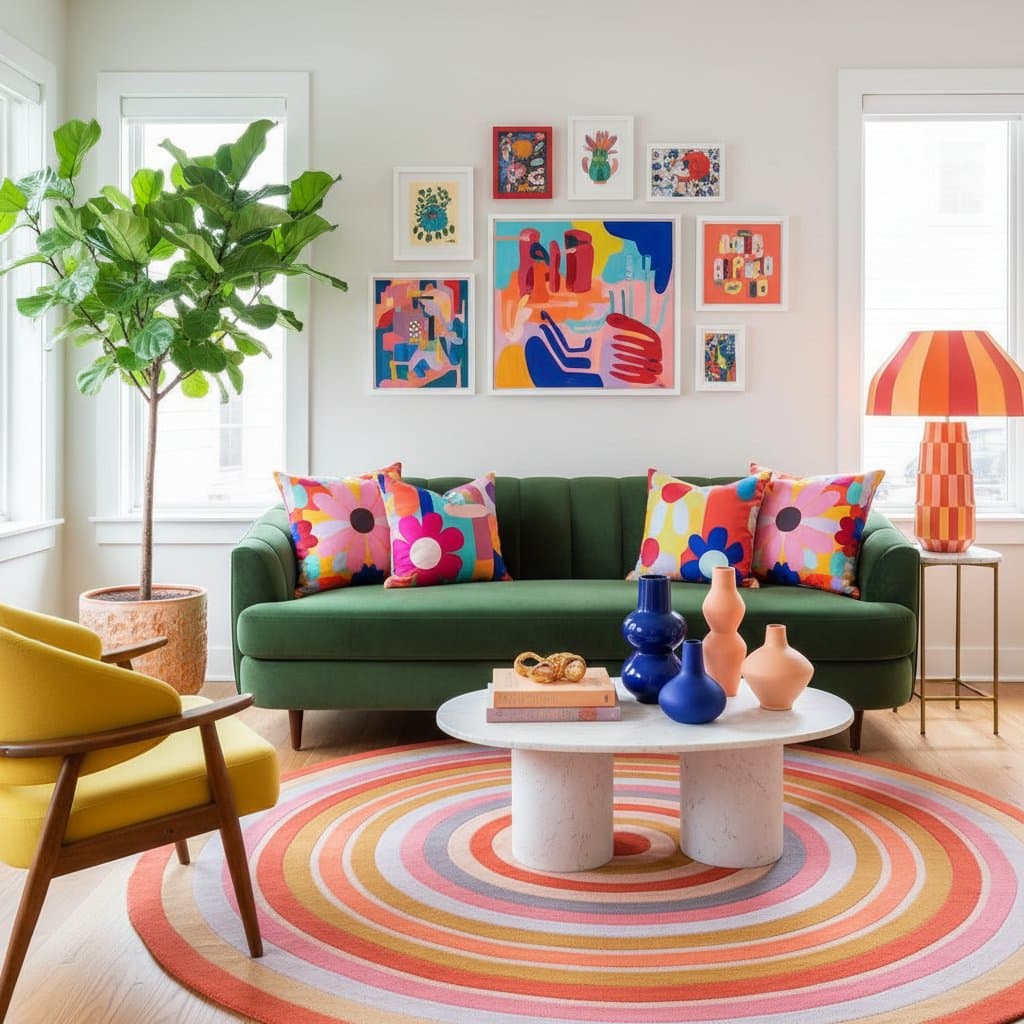
The Rise of Joyful Colors in Home Design
Readers have likely observed the transformation in residential interiors. Spaces once defined by neutral tones and sparse furnishings now feature vivid hues, intricate patterns, and distinctive elements. The once-refreshing simplicity of beige walls and uncluttered rooms can appear monotonous after prolonged exposure. In response to years of restrained minimalism, individuals seek greater warmth, vitality, and pleasure within their environments. Dopamine decor emerges as the solution, drawing its name from the neurotransmitter associated with pleasure and reward.
Transitioning from Minimalism to Expressive Maximalism
Minimalism offered tranquility through simplicity, yet it often evolved into an austere aesthetic for many homeowners. Pristine white walls paired with slate-gray upholstery convey cleanliness but may evoke a sense of chilliness. Dopamine decor inverts this philosophy by incorporating elements that evoke positive emotions. Rather than eliminating details, this approach integrates colors and items that stimulate happiness, thereby elevating the brain's production of dopamine.
Examples abound in contemporary residences: citrus-hued accent walls, vividly patterned area rugs, striking wall art, and curated vintage pieces that narrate personal histories. The objective centers on crafting environments that provoke smiles and foster comfort, extending beyond mere tidiness to genuine delight.
The Psychological Benefits of Color-Rich Interiors
Scientific studies confirm that colors profoundly impact emotional states and physiological responses. Warm shades such as coral, sunflower yellow, and ripe peach invigorate and elevate spirits. Cooler variants like turquoise or pale mint provide soothing effects without descending into blandness. When thoughtfully combined, these tones animate a room, creating an atmosphere brimming with life and balance.
Personalization forms the cornerstone of this design philosophy. Joyful elements vary by individual preference; a vibrant palette might energize one resident while overwhelming another. Consequently, dopamine decor prioritizes intuitive selections over rigid guidelines, empowering homeowners to curate spaces aligned with their unique sensibilities.
Incorporating Dopamine Decor: Practical Starting Points
Homeowners need not undertake extensive renovations to adopt this trend. Incremental changes allow for experimentation and gradual confidence-building. Consider these targeted strategies to introduce dopamine-inspired elements effectively.
-
Select a Signature Joyful Hue. Identify a color that evokes personal happiness, such as electric teal, radiant saffron, or gentle lilac. Introduce it via interchangeable items like cushions, table lamps, or framed prints to assess compatibility without commitment.
-
Layer Patterns and Textures Thoughtfully. Pair geometric stripes with organic florals or plush velvet alongside woven rattan. Such combinations maintain visual intrigue while adding depth and narrative to the space.
-
Curate and Showcase Meaningful Objects. Embrace individuality by displaying cherished mementos. Mount family photographs in colorful frames, exhibit souvenirs from journeys, or arrange beloved literature on open shelves to infuse the area with authentic storytelling.
-
Apply Paint with Precision. Transform a single focal wall or refurbish a single piece of furniture for dramatic effect. A single container of quality paint, often priced below the cost of a casual meal, can shift an entire room's ambiance.
-
Achieve Harmony Amid Boldness. Excessive saturation of intense colors risks visual fatigue. Counterbalance with neutral anchors like crisp white trim, natural wood grains, or muted textiles to provide respite for the eyes.
Advantages and Challenges of Dopamine Decor
Advantages
- It promptly enhances emotional well-being and dynamism within living areas.
- It mirrors individual character rather than adhering to prescriptive aesthetics.
- It accommodates evolution, permitting effortless updates to hues or accents as preferences shift.
Challenges
- Rapid accumulation of elements may lead to disarray if not managed.
- Certain vivid shades could prove fatiguing upon extended exposure.
- Coordinating disparate bold items demands careful consideration to avoid discord.
Should concerns arise about excess, simplification remains straightforward. The adaptability of dopamine decor ensures it adapts seamlessly to changing needs.
Managing Costs and Time Investment
Implementation ranges from modest tweaks to comprehensive overhauls. A complete room refresh, incorporating fresh paint, fabrics, and accessories, typically requires an investment of several hundred dollars. For constrained budgets, prioritize economical enhancements: upcycle existing furniture with new finishes, replace outdated fixtures, or source vibrant secondhand treasures from local markets.
Effort varies with scope. Refreshing a wall demands only a few hours, including preparation and drying time. Reconfiguring layouts and integrating accessories often completes within a single day. Focus on incremental achievements to sustain momentum without pursuing flawless outcomes immediately.
Ensuring Safe and Practical Implementation
When painting or refinishing surfaces, prioritize proper airflow to mitigate fumes. Employ protective coverings and hand protection during handling of chemical agents. Always sample bold paints in situ; artificial lighting in retail settings can alter perceived tones under natural home illumination.
Renters should review lease agreements prior to permanent alterations like painting. Alternatives abound for temporary vibrancy: adhesive-backed wallpapers, hanging draperies, layered floor coverings, and gallery walls offer reversible infusions of color.
Aligning Colors with Desired Emotions
Distinct colors carry unique psychological associations, guiding intentional selections. The following suggestions provide foundational direction:
- Yellow: Infuses brightness and optimism, ideal for compact areas or culinary zones to counteract dimness.
- Blue: Promotes serenity and focus, suiting reposeful settings like sleeping quarters or bathing areas.
- Green: Evokes grounded harmony and renewal, enhancing communal spaces such as family rooms.
- Pink: Sparks whimsy and vitality, enlivening studios or playful corners.
- Red: Ignites passion and alertness, most effective in accents like upholstery or decorative objects to prevent overstimulation.
Blending hues succeeds when anchored by recurring motifs, such as a dominant shade echoed across rooms or unified hardware like polished metals or timber elements.
Experiencing the Transformative Power of Color
Extended immersion in colorful surroundings reveals subtle shifts in daily disposition. An illuminated entryway eases transitions into the day, while a lively cooking space elevates routine tasks into enjoyable rituals. These environments subtly nurture positivity, fostering a deeper connection to one's home.
If vibrancy begins to overwhelm, conduct periodic audits by removing select items. Dopamine decor thrives on curation, emphasizing quality selections that sustain vitality over exhaustive filling.
Sustaining Joy Through Intentional Design Choices
Adopting dopamine decor requires initial boldness but yields enduring satisfaction. Bypass conventional design mandates in favor of intuitive experimentation, beginning with accessible projects like revitalizing a cabinet or introducing patterned linens.
Ultimately, a residence serves as a sanctuary for well-being. When elements like a coral accent or textured floor covering elicit consistent pleasure, they affirm alignment with this vibrant ethos. Prioritize personal resonance over neutral conformity to cultivate lasting delight.