
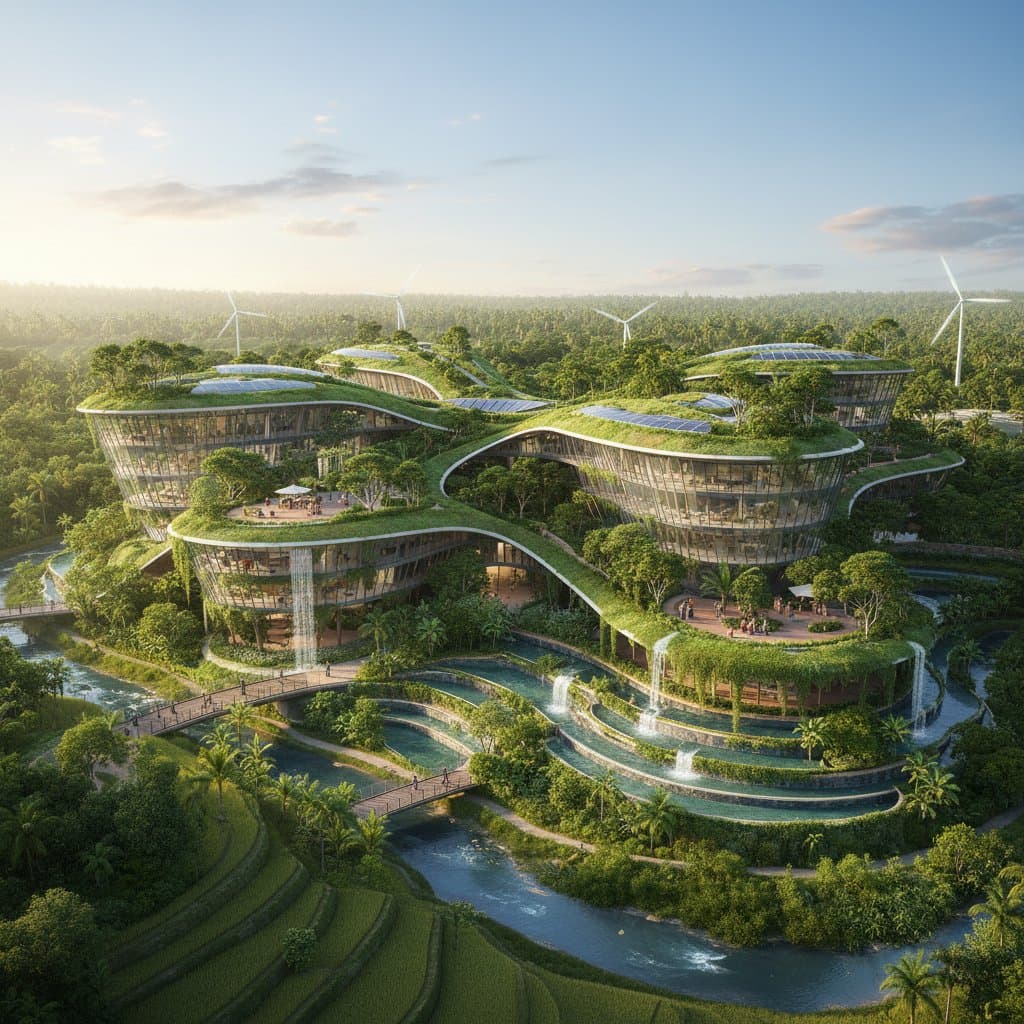
Buildings That Heal: The Regenerative Design Revolution
Step into a building that pulses with life. Fresh air circulates freely, walls integrate with their surroundings, and the nearby landscape flourishes. This structure does not merely exist; it participates in a dynamic system that restores more than it consumes. Regenerative design elevates architecture beyond mere sustainability, focusing on active restoration of ecosystems and enhancement of human health.
The Challenge: Structures That Deplete Resources
Conventional buildings demand vast quantities of energy and materials. They exhaust natural resources, disrupt local habitats, and produce enduring waste. Even structures labeled as green or sustainable typically minimize damage rather than foster recovery. Most leave a net negative impact on their environments.
The issue demands attention. As construction outpaces ecological renewal, efficiency alone proves insufficient. Regenerative design reframes the approach, posing a bolder inquiry: How can buildings contribute to global repair?
Regenerative Design: A Framework for Restoration
Regenerative design serves as both philosophy and methodology, positioning buildings as integral components of broader ecological networks. These structures generate energy, purify water, and enrich soil. They promote biodiversity, sequester carbon, and bolster community resilience.
A regenerative building exceeds net-zero standards. It delivers net-positive outcomes by producing surplus renewable energy, conserving more water than required, and enhancing site vitality. Designs evolve to harmonize with changing natural and social contexts.
Core Principles of Regenerative Buildings
Regenerative buildings operate through interconnected strategies that mimic natural processes. Examine these foundational elements to grasp their functionality.
-
Closed-Loop Resource Cycles
Resources circulate continuously, avoiding linear waste. Greywater from fixtures nourishes gardens, while organic refuse transforms into compost or biofuel, minimizing external inputs. -
On-Site Energy Production and Storage
Integrated solar arrays, geothermal wells, and micro-wind systems generate power. Surplus energy returns to community grids or powers adjacent sites, achieving energy independence. -
Carbon-Storing Construction Materials
Selections like cross-laminated timber from sustainable forests, hempcrete blocks, mycelium-based insulation, and lime plasters lock away carbon during their lifecycle, countering emissions. -
Ecosystem Enhancement
Site plans incorporate green roofs for insulation and habitat, rain gardens for filtration, and native plant corridors to revive pollinator populations and wildlife pathways. -
Occupant Well-Being Integration
Abundant daylight, biophilic elements, and ventilation systems reduce illness and elevate focus. These features create spaces that nurture mental and physical health. -
Ongoing Performance Optimization
Sensors track metrics like energy use and water quality. Data informs adjustments, ensuring sustained positive contributions over decades.
Steps to Implement Regenerative Design
Property owners can initiate regenerative projects through targeted actions. Start modestly to build toward comprehensive transformation.
-
Assess Site Potential
Map topography, hydrology, solar exposure, and flora. Leverage inherent features, such as slopes for natural drainage, to amplify benefits. -
Establish Quantifiable Objectives
Specify targets like 150 percent energy generation or 20 percent soil carbon increase. These metrics shape budgets and timelines. -
Select Sustainable Materials
Prioritize regional sources: salvaged timber for framing, adobe for walls, or recycled aggregates for foundations. Such choices lower transport emissions and stimulate local economies. -
Integrate Renewables from Conception
Orient structures for optimal solar capture and insulate envelopes to R-40 standards. Early inclusion prevents expensive modifications later. -
Engineer Water Conservation
Install cisterns for rooftop runoff, recycle effluent for irrigation, and use porous surfaces to infiltrate stormwater. These reduce municipal demands by 40 to 60 percent. -
Collaborate with Experts
Engage regenerative architects and ecologists for holistic plans. They address zoning hurdles and certify compliance with standards like LEED Platinum. -
Commit to Long-Term Stewardship
Schedule annual audits and calibrate systems based on performance data. This maintains efficacy and adapts to climate shifts.
Financial Considerations and Returns
Upfront costs for regenerative features range from 10 to 25 percent above standard construction, varying by scale and locale. Residential retrofits might add $20,000 to $50,000, while commercial builds see proportional increases.
Savings accumulate rapidly. On-site power offsets 80 to 100 percent of bills, water systems halve usage fees, and healthier environments cut healthcare and downtime expenses. Enhanced market appeal boosts property values by 5 to 15 percent in eco-conscious areas.
Payback periods typically span five to eight years, followed by decades of net gains. Incentives like tax credits for solar installations accelerate returns.
Regulatory and Safety Protocols
Regenerative elements must align with building codes. Systems for water reuse or off-grid power demand permits and utility approvals. Consult local authorities early to verify allowances for features like living walls or anaerobic digesters.
Professional installation ensures safety. Certified electricians handle grid-tied inverters, while structural engineers validate green roof loads up to 150 pounds per square foot. Simpler upgrades, such as permeable driveways, suit owner-led efforts.
Adapting to Local Contexts
Designs tailor to regional conditions. Arid zones emphasize drought-tolerant xeriscaping and evaporative cooling. Temperate regions prioritize thermal mass walls and south-facing glazing for passive heating. Flood-prone coasts select elevated foundations and corrosion-resistant composites.
This contextual sensitivity ensures harmony. Buildings enhance rather than impose on their environments, fostering resilience against local threats like wildfires or hurricanes.
Advancing from Sustainability to Regeneration
Sustainability sought balance through reduced consumption. Regenerative design pursues active renewal, turning structures into ecological allies. A project might filter 10,000 gallons of runoff annually, supply power to 50 homes, or regenerate 2 acres of degraded soil.
Outcomes extend to metrics: net-positive carbon via 500 tons sequestered yearly, biodiversity gains through 30 native species reintroduced, and hydrological restoration by recharging aquifers. These demonstrate viability as a scalable practice.
Enhancing Community Through Design
Regenerative buildings foster deeper human connections. Occupants benefit from reduced allergens and views of thriving greenery, lowering anxiety by 20 percent per studies. Surrounding neighborhoods gain from cleaner waterways and shared energy resources, sparking collaborative initiatives.
Applying Regenerative Strategies Today
For new constructions or renovations, integrate these principles during planning. Assemble interdisciplinary teams to model outcomes using tools like energy simulations. Track progress against benchmarks to verify impacts.
Homeowners can progress incrementally: convert lawns to food forests, add attic solar vents, or amend soil with biochar. Developers scale up by partnering on district-level restorations, yielding widespread environmental and economic dividends.
Regenerative design redefines architecture as a force for renewal. Structures emerge as stewards, supporting vibrant ecosystems and empowered societies.