
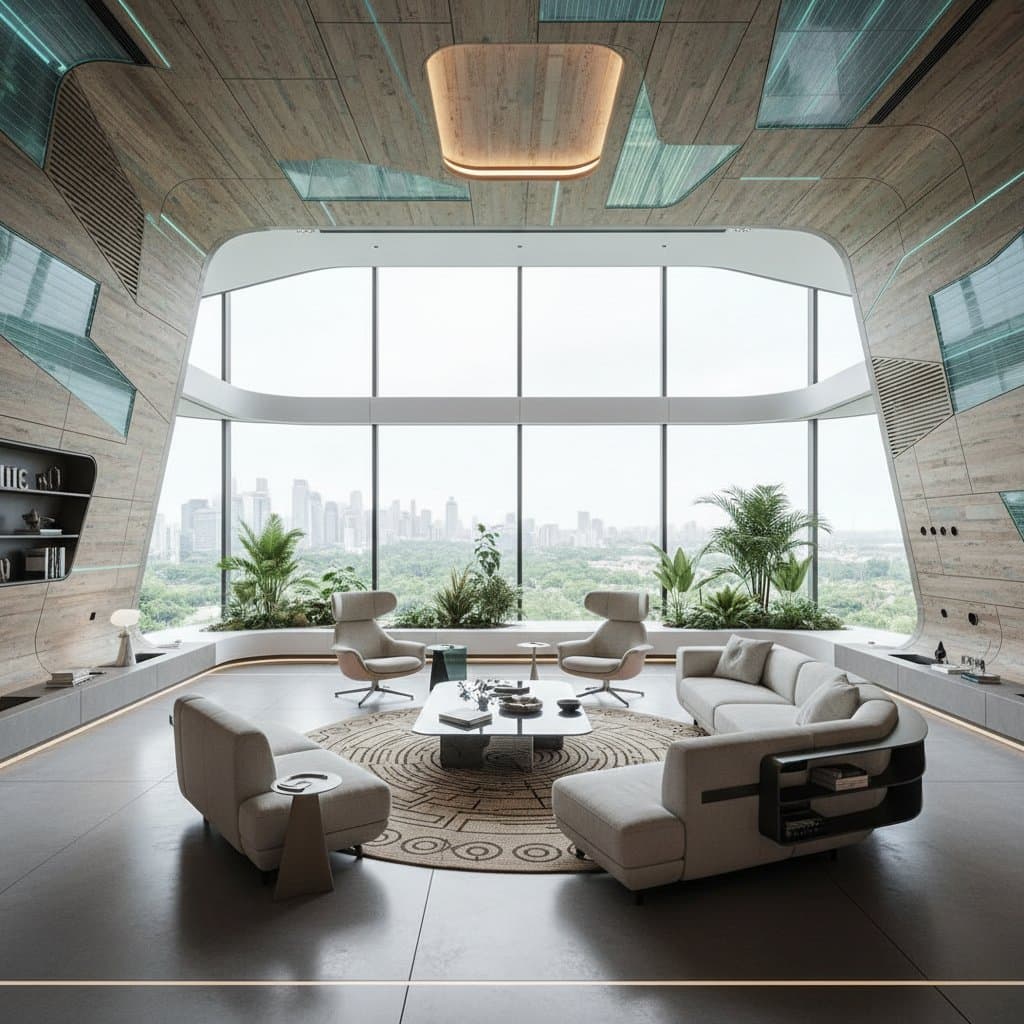
Algorithmic Design Reshaping Modern Homes
Home design enthusiasts often encounter innovative concepts while browsing inspiration sources. Fluid forms, dynamic patterns, and spaces that intuitively accommodate occupants mark a departure from conventional approaches. This evolution stems from algorithmic design in architecture, which emulates nature's problem-solving strategies through efficiency, beauty, and intelligence.
Consider a residence that tracks daily sunlight patterns and modulates shading systems accordingly. Envision a kitchen configuration derived not from manual sketches but from evaluating numerous iterations to align with daily routines. Such innovations represent the advancement of parametric and computational design, fundamentally altering architectural planning and construction.
Evolution to Responsive Architecture
Conventional architecture depended on sequential ideation, where designers produced and polished isolated concepts. Algorithmic design inverts this paradigm. Professionals establish variables such as light penetration, ventilation, or room adjacencies, enabling algorithms to produce vast arrays of options. Architects then select and refine from these generated possibilities, shifting from sole authorship to informed curation.
This approach converts rigid plans into adaptable structures attuned to their surroundings. Facades might harmonize with local aesthetics, or frameworks could optimize resource allocation. The methodology promotes adaptability and environmental stewardship alongside an artistic quality that resonates personally.
Core Principles of Algorithmic Design
Algorithmic design employs mathematical algorithms and digital simulations to generate architectural elements. Far from supplanting human ingenuity, it amplifies creative scope by handling intricate modeling beyond manual capabilities.
Parametric design constitutes a key facet, emphasizing adjustable parameters like surface contours, aperture proportions, or incline angles. Software dynamically recalibrates interconnected features to preserve coherence. For instance, specifying ideal daylight levels prompts automatic adjustments to surrounding components, yielding equilibrated results.
Computational design extends further by incorporating simulations of environmental factors, material behaviors, and operational metrics prior to implementation. This fusion of creative vision and empirical evaluation produces forms that balance expression with functionality.
Advantages for Homeowners
Algorithmic architecture extends beyond trends to deliver customized, eco-conscious, and streamlined habitation. Key benefits include:
-
Personalized Configurations
Tools assess property specifics, user inclinations, and behavioral patterns to produce bespoke designs, akin to tailored attire. -
Enhanced Energy Performance
Simulations forecast interactions among solar gain, airflow, and thermal dynamics, enabling configurations that minimize consumption while maximizing livability. -
Resource Efficiency
Models pinpoint minimal viable material quantities without compromising durability, yielding economic and ecological gains. -
Expanded Visual Possibilities
Organic geometries, textured planes, and detailed motifs become feasible, drawing from biomorphic inspirations such as marine structures or foliage. -
Long-Term Adaptability
Data-centric foundations facilitate ongoing modifications; digital updates can guide precise fabrications for evolving requirements.
Workflow from Ideation to Realization
Human involvement remains integral, enhancing partnerships among stakeholders. Typical stages encompass:
-
Parameter Definition
Collaborators outline objectives, including priorities for illumination, seclusion, or seamless indoor-outdoor transitions, which feed into algorithmic inputs. -
Iteration Generation
Programs yield diverse proposals, each interpreting constraints uniquely to reveal unforeseen solutions. -
Performance Assessment
Virtual evaluations scrutinize stability, efficiency, and usability to inform selections. -
Production Integration
Approved models transfer to precision manufacturing like CNC machining or additive printing, minimizing discrepancies and accelerating timelines. -
Ongoing Refinement
Post-occupancy monitoring via integrated sensors supplies data for iterative enhancements, fostering progressive intelligence.
Practical Implementations
Algorithmic methods permeate projects of varying scales. Builders apply computational analysis to optimize ventilation in seaside dwellings, relying on passive systems. On sloped sites, parametric techniques secure bases while respecting landscapes.
Interior applications abound: cooking zones sculpted from movement analytics or storage solutions calibrated to collections. Accessible platforms and skilled practitioners drive these integrations, blending digital prowess with tangible execution.
Integrating Sustainability
Algorithmic processes inherently advance ecological goals by preempting inefficiencies. Environmental modeling shapes features to harness winds, capture renewables, and select high-yield resources with reduced excess.
In dense areas, simulations account for inter-building influences, promoting symbiotic developments. Outcomes foster responsive urban fabrics that enhance collective well-being over isolation.
Harmonizing Innovation with Intuition
Concerns about impersonal outcomes overlook the human-centric origins of these designs. Behavioral and affective data underpin computations, yielding spaces that nurture interactions.
Professionals infuse interpretations with narrative depth; algorithms supply options, while expertise imparts significance. Resultant environments blend logic with lyricism, feeling both calculated and evocative.
Financial and Implementation Factors
Accessibility grows as tools democratize advanced techniques. Expenses vary by intricacy and automation levels; initial premiums of 10 to 20 percent in design often recoup through operational savings.
Seek specialists in computational practices. Verify regulatory alignment, as most employ conventional elements. Collaborate with fabricators versed in digital workflows for seamless execution.
Fostering Team Synergy
Digital platforms unify inputs, enabling instantaneous impact visualization. Alterations propagate across models, streamlining revisions and expenditures. This interactivity cultivates efficient dialogue among all parties.
Evoking Sensory Resonance
Computational guidance yields emotionally attuned spaces. Curvilinear elements, light-diffusing motifs, and fluid boundaries stir serenity. Forms appear organically suited, promoting equilibrium between built and natural realms.
Initiating Your Project
To pursue algorithmic approaches, consult architects proficient in parametric and computational methods. Review portfolios and process overviews to gauge alignment with your aspirations.
Platforms like doricsouth.com facilitate connections with qualified experts in digital and traditional building. Free project postings match you with professionals ensuring cohesive vision realization.
Experiencing Adaptive Residences
Inhabited spaces reveal embedded responsiveness: optimized daylight, intuitive circulation, and evolving illuminations. Integrated monitoring supports refinements, allowing structures to mature alongside users.
Realizing Intelligent Habitats
Algorithmic design crafts residences that anticipate, accommodate, and enrich daily life. From serene retreats to efficient dwellings, it unites analytical rigor with empathetic craft. Engage experts to manifest a space where innovation and inhabitation converge seamlessly.