
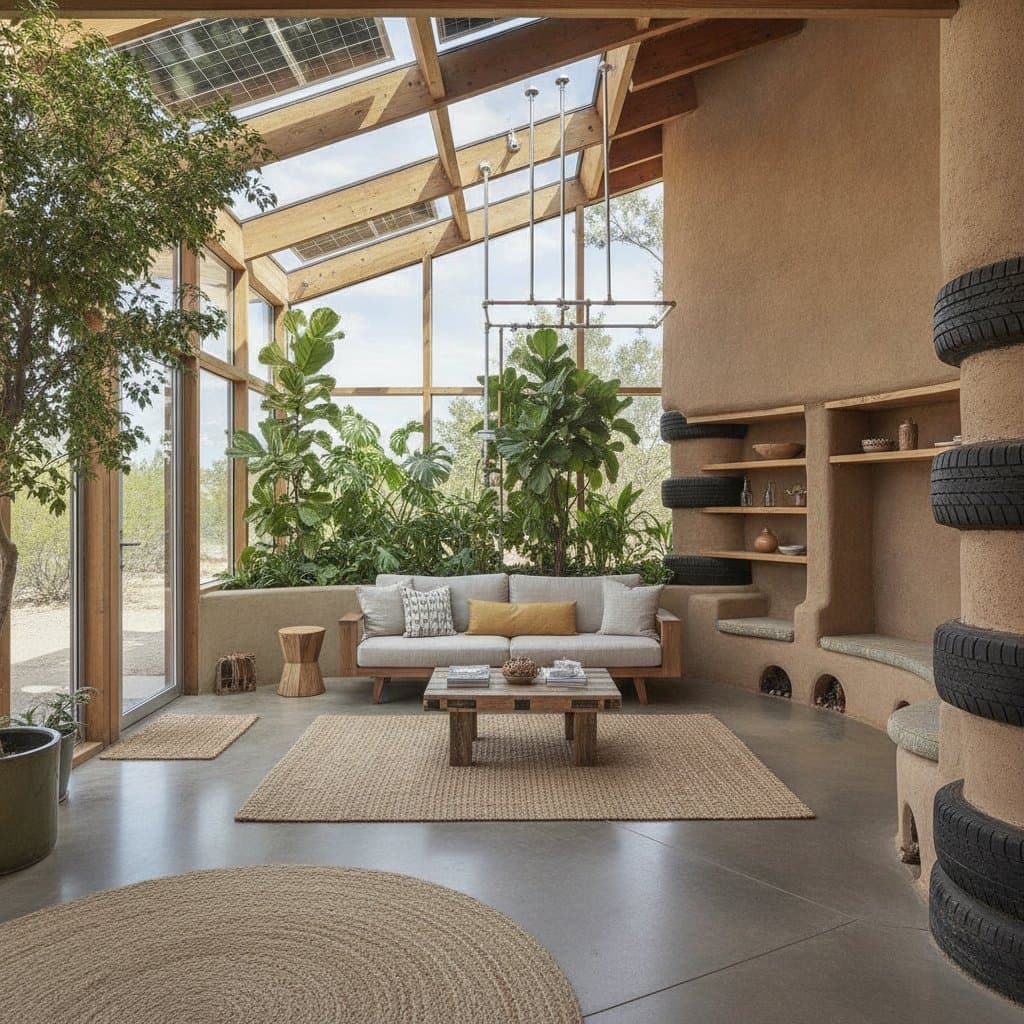
Earthship Homes Blend Radical Sustainability With Bold Design
Earthship homes use recycled tires, bottles, and earth to create self-sufficient dwellings. These structures rely on passive solar design, thermal mass, and integrated water systems to operate without traditional utilities. Many people explore this approach to reduce ongoing costs and environmental impact. Careful evaluation of site conditions, local rules, and personal resources helps determine whether such a project matches specific needs.
The following sections explain core construction methods, climate adaptations, professional requirements, and long-term considerations. Readers gain practical steps for planning and execution.
Earthship Construction Sequence
Construction follows a distinct order that emphasizes site alignment and material reuse.
Site Selection and Orientation
Select a location with unobstructed southern exposure in the northern hemisphere and a slope that supports drainage. Position the main living areas to capture winter sun while minimizing summer overheating through strategic overhangs. Accurate orientation prevents performance shortfalls that affect temperature regulation.
Tire Wall Assembly
Pack used tires tightly with compacted soil to form structural walls. Each tire acts as a thermal battery that absorbs daytime heat and releases it at night. This stage requires significant labor, so owners often organize volunteer crews or attend skill-building workshops to complete the work efficiently.
Interior Walls and Finishes
Infill non-load-bearing partitions with glass bottles or cans embedded in mortar or adobe. These elements introduce natural light patterns and visual texture. Apply earthen plasters or lime washes to interior surfaces for breathability and moisture control.
Roof Systems and Utilities
Install heavily insulated roofs with integrated gutters that channel rainwater into storage tanks. Mount solar panels and battery banks to meet electrical demands. Route greywater from sinks into planted beds that filter it for reuse in irrigation.
Climate and Regulatory Factors
Performance varies by region. Cold areas benefit from thicker insulation layers and reduced glazing. Tropical zones require enhanced cross-ventilation and vapor barriers to manage humidity. Arid sites need expanded roof catchments and larger cisterns to capture infrequent rainfall.
Verify building codes early. Some jurisdictions treat tire construction as alternative methods and request stamped engineering drawings. Consultation with experienced designers reduces permit delays and ensures structural compliance.
Professional Involvement Points
Owners handle much of the basic assembly, yet certain tasks require licensed specialists.
- Structural calculations confirm wall stability under local seismic or wind loads.
- Electrical work on inverters and battery banks must follow safety standards.
- Greywater and septic designs prevent health risks and meet health department rules.
These steps protect both occupants and investment value.
Construction Safety Practices
Clean tires thoroughly before use to remove residues. Wear gloves, eye protection, and respirators when cutting glass or handling dry mixes. Maintain airflow during plaster application to limit dust exposure. Completed homes maintain stable indoor conditions when filters and seals receive periodic checks.
Resale and Operational Economics
Market reception depends on location. Areas with established interest in sustainable housing support stronger demand. Conventional markets may require longer selling periods. Reduced utility expenses and low maintenance needs frequently offset slower turnover by lowering lifetime ownership costs.
Planning and Execution Steps
Follow a deliberate sequence to move from concept to occupancy.
- Assess solar access, soil stability, and vehicle access on the chosen parcel.
- Submit preliminary plans to the local building department for feedback.
- Finalize layout and mechanical systems within a defined budget range.
- Secure tires, bottles, and other reclaimed materials in advance.
- Engage engineers and tradespeople for critical system reviews.
- Phase construction to allow incremental system testing.
Daily Operation and Adaptation
Residents track battery charge, clean collection filters, and tune vents according to weather shifts. This routine fosters direct awareness of resource flows. Over successive seasons, owners commonly refine greenhouse layouts or add storage capacity without altering the primary structure. The approach supports ongoing customization while preserving the core off-grid framework.