
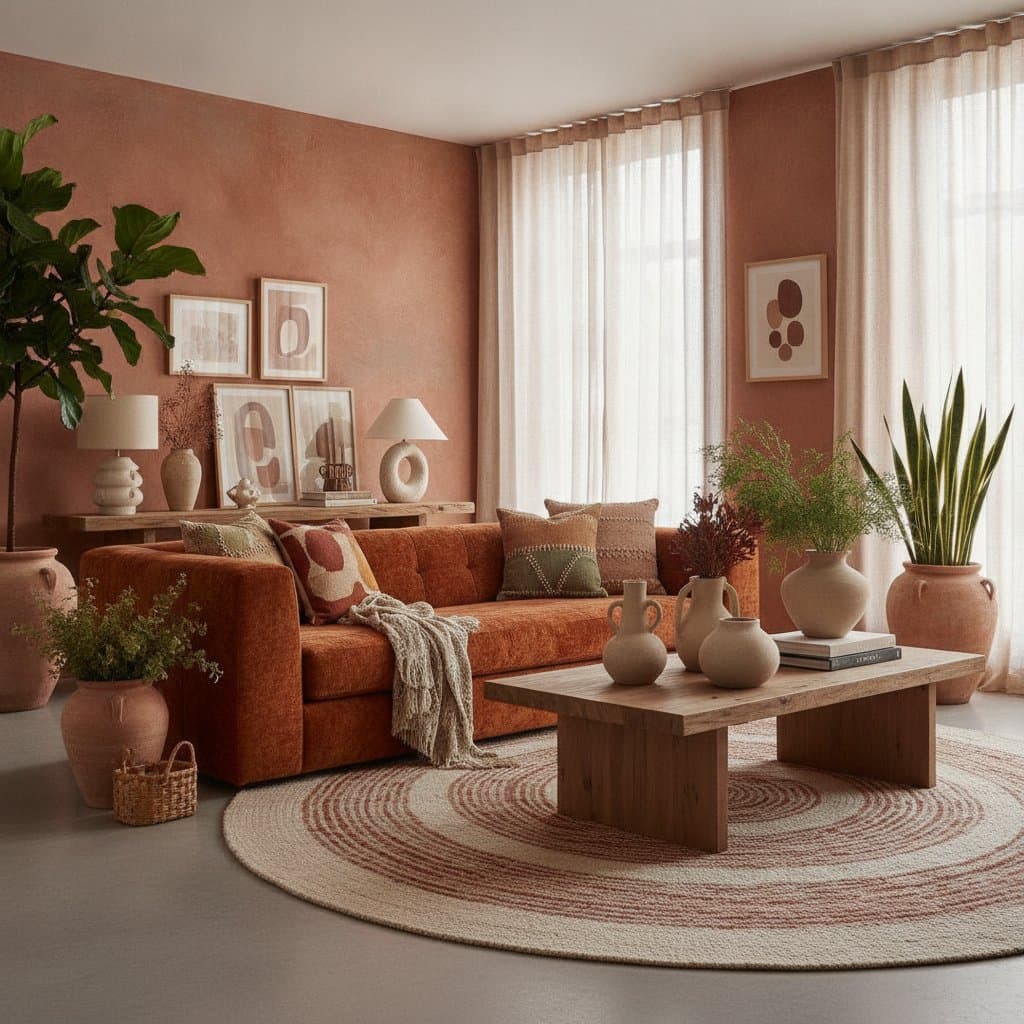
Terracotta Interiors Trending: Earthy Maximalism Style
Crisp white walls can start to feel sterile after a while. Minimalist rooms sometimes lose the personal touch that makes a house feel like home. Terracotta changes this by bringing sun warmed tones and organic texture into living spaces. Sunlight moves across clay colored walls while woven baskets and earthen tiles create a grounded atmosphere.
This style balances comfort with creative expression. It favors natural materials and layered details that feel collected over time. The result is a space that connects to the earth without appearing staged.
Why Terracotta Fits Current Trends
Terracotta appears in modern rooms through fresh applications. Its warm hue adds depth and a sense of calm that encourages people to stay longer. The material moves beyond traditional pottery into walls, floors, and accents that feel honest.
Homeowners now prefer surfaces with subtle imperfections over uniform synthetics. Terracotta delivers that quality through its natural variations. These traits turn ordinary rooms into memorable places that age with character.
Core Elements of Earthy Maximalism
Earthy maximalism builds abundance through careful choices rather than excess. Layers of pattern and texture come together when each item shares a connection to natural tones. A terracotta tiled floor works with linen drapes, aged leather seating, and hand thrown ceramics on open shelves.
Balance keeps the look intentional. Bold patterns sit beside muted greens, creams, and ochres so the burnt orange of terracotta anchors the palette. The approach produces rooms that feel expressive yet livable.
Steps to Introduce the Style
Start with one surface or object and add layers gradually.
Paint or Plaster an Accent Wall
Apply terracotta paint in a matte finish to a living room or bedroom wall. A half height treatment or limewash texture offers a softer entry point. The color shifts with light and creates immediate warmth.
Combine Natural Textures
Place a clay vase on a wood console beside a sisal rug and linen cushions on a rattan chair. Smooth and rough surfaces sit next to one another. The shared earth tones tie the elements together.
Add Pattern Through Textiles
Introduce hand blocked prints on cushions or a kilim rug underfoot. Moroccan tiles or Italian ceramics can join the mix over time. The space grows naturally instead of appearing complete in one step.
Choose Warm Lighting
Replace cool bulbs with amber toned fixtures. Wrought iron sconces or ceramic based lamps highlight the clay surface. Lighting becomes the element that unifies the palette at different times of day.
Bring in Living Plants
Set trailing vines in clay pots or a tall palm in a textured container. Green foliage contrasts with rust hues and keeps the room feeling fresh. The combination of plant life and terracotta stays both lively and calming.
Planning for Practical Results
Consider budget by beginning with textiles or lamps before moving to tile or plaster. Machine made terracotta offers an affordable start while artisan pieces provide longer lasting detail. Seal porous surfaces in kitchens and baths to protect against moisture.
In warm climates the material helps regulate indoor temperature. Cooler regions benefit from added textiles and layered lighting for comfort. Professional installation ensures even application and lasting performance.
Guidelines for a Cohesive Room
- Build the palette around terracotta, rust, ochre, taupe, and soft greens.
- Pair large earthen vessels with smaller ceramic details to create visual rhythm.
- Confirm each item serves a purpose so the room remains functional.
- Select handmade goods from local makers to add regional character.
- Allow slight color variations to remain visible because they enhance the organic feel.
Daily Experience in the Finished Space
Morning light on terracotta tiles makes routine moments feel richer. Evening glow from warm lamps softens clay colored walls and invites rest. The materials develop a patina that records daily life.
Over months and years the surfaces mellow while fabrics soften. The room continues to reflect the people who live in it. This natural evolution turns the design into a lasting personal environment.