
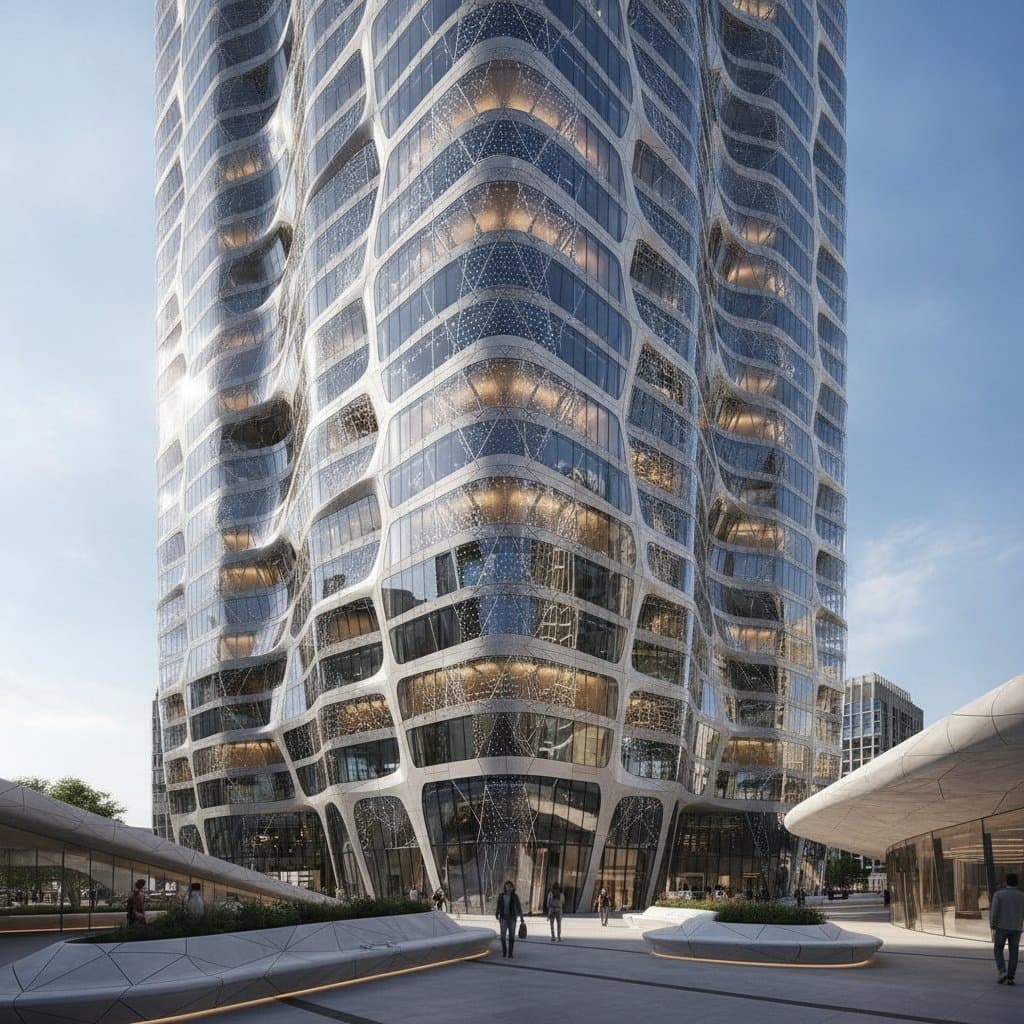
Parametric Facades: Where Algorithms Meet Architecture
You have probably walked past a building whose exterior appears to shift or ripple despite being made of solid panels. Those fluid patterns arise from parametric design, a method that uses algorithms to generate building surfaces. Parametric facades apply this approach to exteriors, allowing structures to respond to sunlight, wind, and thermal loads while meeting visual goals.
The following sections explain how these facades function, outline their advantages and limitations, and provide steps for incorporating them into a project.
Performance Gains from Algorithmic Facade Design
Static facades provide enclosure but rarely adjust to daily or seasonal changes. Parametric facades link geometry to environmental data so that panel depth, perforation density, or orientation can vary across the surface. This linkage produces measurable reductions in cooling demand and glare.
Architects adopt the method for four practical reasons:
- Solar-responsive shading that cuts peak heat gain by adjusting module size according to orientation data.
- Distinct visual character created when each project feeds site-specific inputs into the same script.
- Reduced material volume through scripts that nest panels and minimize offcuts.
- Optional sensor-driven movement that repositions louvers without manual intervention.
These outcomes rest on quantifiable parameters rather than stylistic preference alone.
Weighing Benefits Against Project Demands
Every facade system carries trade-offs. Parametric designs amplify both the rewards and the requirements.
Advantages
- Geometry tailored to exact solar, acoustic, or privacy criteria for the site.
- Lower total material tonnage once nesting algorithms finalize the layout.
- Measurable drops in annual energy use when shading and ventilation respond to real-time conditions.
- Strong visual presence that can support branding or wayfinding goals.
Limitations
- Elevated design fees because custom scripts and multiple iterations precede documentation.
- Need for team members fluent in both parametric software and structural code compliance.
- Longer lead times for custom molds, perforations, or folding operations.
- Scheduled inspection of any motorized or sensor components to maintain calibration.
Project teams often recover the initial premium through lower operating costs and higher asset valuation over a ten-year horizon.
Steps for Successful Implementation
Before issuing a request for proposals, address the following items in sequence.
- Submit preliminary digital models to planning departments to identify required variances early.
- Confirm that selected fabricators accept native script files rather than flattened drawings.
- Match material properties to climate: perforated aluminum for hot-dry zones, insulated glass cassettes for cold climates, or composite rainscreen panels where corrosion risk is high.
- Detail permanent access platforms or davit points for any component that requires periodic adjustment.
- Schedule weekly coordination sessions among architect, structural engineer, and fabricator from concept through shop drawings.
Clear communication on these points keeps fabrication tolerances within acceptable ranges.
Starting a Parametric Facade on a Modest Budget
Smaller interventions demonstrate the approach without full-building commitment. A single-story shading canopy or an entry screen generated from sun-path data can be detailed and installed within standard construction schedules. Once the workflow is proven, the same script can scale to larger elevations or future projects.
Begin by defining three performance targets, such as maximum annual solar exposure, target daylight autonomy, and maximum panel weight. Feed these targets into a parametric model, then review output options with the fabricator before finalizing the design.