
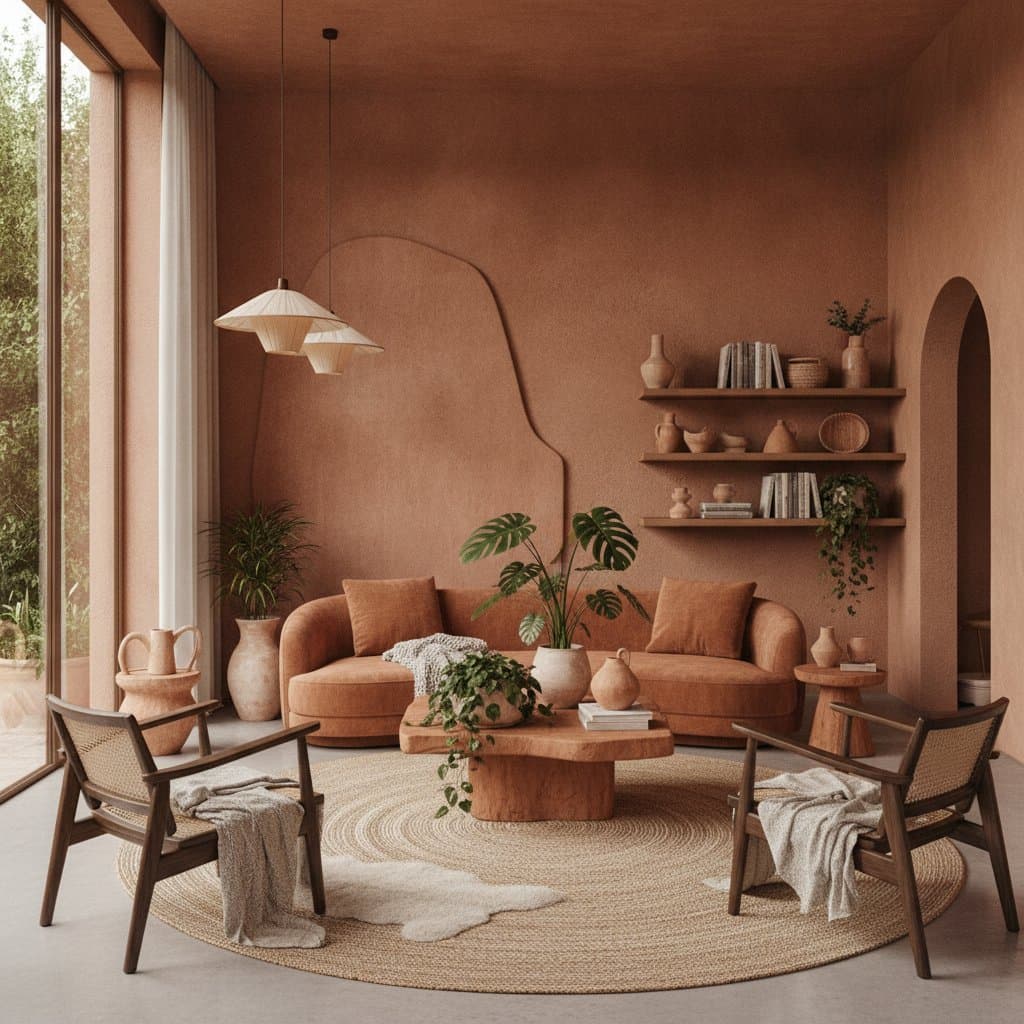
Terracotta Textures in Earthy Maximalist Homes
A home that feels alive, warm, and grounded yet full of personality starts with intentional choices. Terracotta textures anchor this vision through sunbaked tones on walls, handcrafted ceramics, and layered textiles that create rhythm across rooms. Earthy maximalism blends abundance with natural materials to produce spaces that feel collected and connected to the environment.
The Appeal of Earthy Maximalism
Earthy maximalism encourages bold combinations of organic materials, patterns, and warmth without excess. Clay-toned walls sit beside rattan pendants, while velvet sofas gain accents from woven throws in rust and ochre. The style emerged from a desire for authenticity after periods dominated by minimal, sterile rooms.
People now seek interiors that age with character and reflect human presence. Terracotta supplies that quality through its handmade variations and natural tones.
Core Qualities of Terracotta
Terracotta consists of fired clay that offers breathable surfaces and colors that shift with light. Its matte finish invites touch, and subtle imperfections add visual interest over time. These traits support layered designs by balancing vibrancy with underlying calm.
Applications range from city apartments to coastal homes. The material moves beyond traditional flooring into walls, tiles, textiles, and accessories.
Practical Applications in Interiors
- Walls receive terracotta-tinted plaster or limewash that produces a soft glow and changes gently with daylight.
- Tiles appear in elongated rectangles or scalloped shapes with hand-glazed finishes suitable for kitchens and bathrooms.
- Fabrics in terracotta hues, such as linen drapes or velvet cushions, unify palettes when paired with wood and brass.
- Hand-thrown vessels and lamps add organic edges that prevent spaces from appearing overly refined.
Layering Techniques
Balance terracotta with cool neutrals like pale gray or muted sage to prevent dominance. Introduce jute rugs and linen drapery for tactile contrast. Brass or aged copper hardware adds subtle dimension in lighting and fixtures. Combine large floor tiles with smaller mosaics to vary scale while maintaining cohesion.
Care and Installation Factors
- Apply a penetrating sealer to porous tiles to resist stains, then refresh the treatment periodically in moisture-prone areas.
- Machine-made tiles cost less than hand-pressed or reclaimed options, with artisanal pieces commanding higher prices for durability.
- Ensure subfloors remain level before installation, and soak tiles briefly to reduce cracking risk.
- In humid climates, thorough sealing prevents mildew, while the material helps moderate temperatures in drier regions.
- The clay base supports sustainability when sourced locally and fired at moderate temperatures.
Room-Specific Uses
Kitchens benefit from terracotta backsplashes paired with brass fixtures and wood shelving. Living rooms gain focus through plaster on fireplace surrounds combined with natural textiles. Bathrooms work well with mosaic tiles in shower niches balanced by matte stone accents. Bedrooms incorporate the tone via linen bedding and ceramic lamps. Outdoor patios develop character through pavers that acquire a soft patina.
Complementary Materials
Walnut or oak wood enhances warmth without competition. Travertine and limestone provide cooling contrast. Cotton, wool, and hemp increase tactile depth. Greenery stands out against the clay background to reinforce organic themes.
Lasting Value of the Material
Terracotta connects occupants to natural origins and traditional craftsmanship. Its permanence contrasts with temporary trends and brings emotional grounding to daily surroundings. Samples tested against existing light and furnishings help confirm selections before full commitment.
Starting the Integration Process
Local suppliers and artisan studios offer options matched to various budgets. Professionals experienced with natural materials assist with sourcing and application for larger projects. The result is a cohesive environment that extends the surrounding landscape into daily living.