
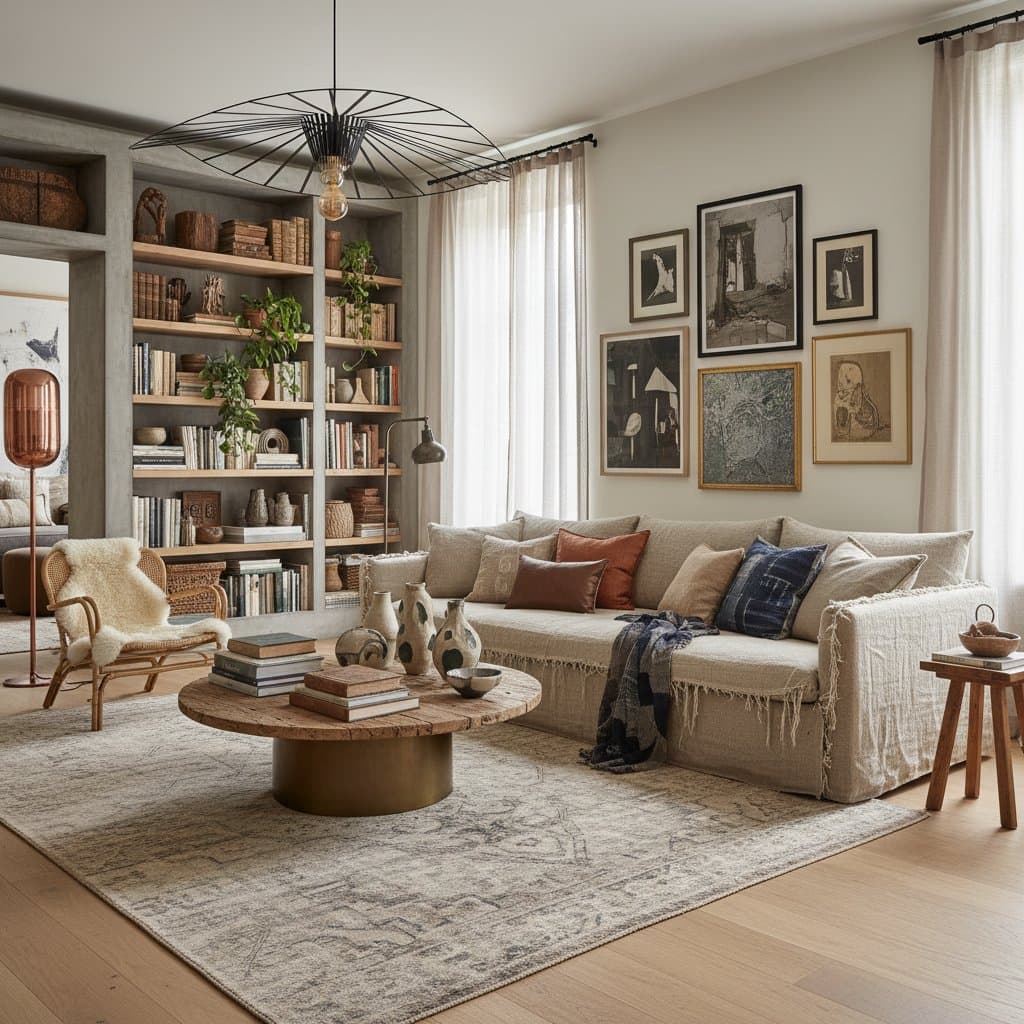
Wabi-Sabi Maximalism: Imperfect Luxury Redefines 2026
Readers have likely noticed that sleek, minimalist interiors often appear overly controlled. Perfect edges, spotless surfaces, and uniform sets create spaces that seem staged rather than inhabited. For those seeking beauty without the demand for flawlessness, a emerging design movement known as Wabi-Sabi Maximalism offers a compelling alternative. This approach reshapes perceptions of luxury by embracing texture, history, and subtle disorder.
Wabi-Sabi Maximalism merges the Japanese philosophy of Wabi-Sabi, which honors imperfection and transience, with the opulent layering of maximalist aesthetics. The outcome is an environment that radiates authenticity, expression, and distinctive character.
What Wabi-Sabi Maximalism Entails
This style centers on authenticity and personal expression. Wabi-Sabi values the patina of age, natural wear, and asymmetry. Maximalism emphasizes abundance, intricate patterns, and bold individuality. Together, they produce rooms that balance earthiness with generosity.
Consider rough-textured plaster walls alongside mismatched ceramic vessels, vintage woven rugs, and hand-carved wooden furnishings in one cohesive space. Each element appears intentionally unrefined yet purposeful. Rather than concealing imperfections, designers accentuate them. Preference shifts from factory-made uniformity to objects bearing evident narratives.
Reasons for Its Current Appeal
Contemporary tastes reject cookie-cutter interiors in favor of personalized havens. A Wabi-Sabi Maximalist setting evokes a sense of habitation and intimacy. The focus lies in relational depth over pristine condition. Homeowners blend inherited treasures with market discoveries, such as positioning a plush velvet armchair beside a weathered terracotta pot or draping aged fabrics across contemporary frames.
This philosophy aligns with modern lifestyles. Minor wall fissures or tabletop scuffs no longer provoke concern; instead, they contribute to the overall tactile richness. The aesthetic promotes stewardship through restoration rather than frequent renewal.
Steps to Achieve the Aesthetic
Developing a Wabi-Sabi Maximalist interior demands deliberate choices rather than substantial expenditure. Intention guides the process toward harmony and organic development. Proceed with these structured steps to cultivate the style effectively.
1. Emphasize Texture and Neutral Palettes
Select materials that convey genuineness, such as terracotta, flax linen, shearling wool, woven rattan, and weathered timber. Opt for surface treatments revealing nuance and irregularity. For instance, limewash coatings yield a diffused, artisanal haze on walls.
Establish a foundation with subdued earth-inspired hues: soft taupe, muted slate, sage green, terracotta accents, and cream tones. Introduce deeper shades like deep blue, berry, or mustard for dynamic interplay without overwhelming the base.
2. Incorporate Layers Thoughtfully
Layering defines maximalism, yet Wabi-Sabi insists on selectivity. Curate items rich in sentiment or visual intrigue rather than overcrowding surfaces. Assemble a narrative through elements like encased ancestral portraits, journey souvenirs, artisan bowls, or a patinaed brass lantern.
Aim for curated density over chaos. Allow space around each addition to permit imperfections to emerge naturally.
3. Integrate Vintage and Contemporary Elements
Juxtapose a streamlined sectional couch with a rugged oak console. Combine an abstract pendant lamp with heritage etchings. This interplay of eras fosters equilibrium and visual interest.
On a limited budget, revive existing possessions through simple interventions: light abrasion followed by natural oil application, or reinforcement of frayed upholstery seams. Such efforts infuse renewed vitality into familiar pieces.
4. Prioritize Craftsmanship
Value artisanal quality above accumulation. Acquire singular, evocative items like a knotted wool kilim, a sturdy oak trestle bench, or a slip-cast basin. These serve as focal points anchoring the composition.
Source from regional artisans, boutique ateliers, or resale outlets. Authentic provenance distinguishes these selections from industrial replicas.
5. Embrace Natural Irregularities
Regard subtle damages, asymmetrical finishes, or hand-applied marks as integral to the narrative. Acceptance of these features fosters ease within the environment.
Resist the urge for absolute symmetry. An off-kilter photo arrangement or a floor covering with uneven borders enhances approachability and charm.
Advantages and Challenges
Advantages:
- Natural aging complements the design, simplifying upkeep.
- Uniqueness ensures no identical spaces emerge.
- Sustainability thrives via upcycling and mending practices.
- The ambiance promotes relaxation and rootedness.
Challenges:
- Uncurated accumulation risks disarray.
- Artisanal acquisitions demand initial investment.
- Sourcing and refurbishing require dedication.
- It suits those who favor organic variety over pristine uniformity.
Budget Considerations
Wabi-Sabi Maximalism accommodates diverse financial levels. Repurposing possessions minimizes costs, while bespoke elements elevate sophistication.
-
Modest Allocation: Explore thrift venues, auctions, or community fairs. Basic enhancements like pigment renewal or padding updates revitalize heirlooms. Allocate two to five hundred dollars for targeted room updates.
-
Moderate Investment: Incorporate custom-woven fabrics, forged metalwork, or hybrid furnishings. Budget one to three thousand dollars for a harmonious blend.
-
Premium Outlay: Engage creators for tailored joinery or bespoke plasters. Expenditures begin at several thousand dollars, scaling with material and labor intricacy.
Timeline and Commitment
This evolution unfolds progressively, not in hasty overhauls. Scouting selections, surface preparations, or antique restorations demand ongoing attention. The gradual build mirrors personal growth, enhancing the appeal.
For constrained schedules, initiate modestly: refresh a nook with a fibrous coverlet, sculpted vessel, or raw timber accents. Incremental adjustments accumulate toward the full vision.
Engaging Experts
Self-directed styling suffices for most aspects, yet specialized tasks benefit from professional input.
-
Surface Treatments: Limewash or tadelakt requires skilled application; consult decorators versed in organic textures.
-
Infrastructure Adjustments: Exposing timbers, masonry, or subfloors necessitates structural assessment; involve builders for compliance and stability.
-
Illumination Design: Interior specialists optimize ambient and accent lighting to harmonize with focal installations.
Professional involvement safeguards durability while preserving the artisanal essence.
Maintaining Harmony Amid Abundance
Vibrant motifs and surfaces invite excess; counter this with restraint strategies.
-
Simplify expansive planes, such as partitions or substrates, to provide visual respite.
-
Employ recurrence: echo a single hue or substance across the layout for cohesion.
-
Preserve voids: uncluttered zones amplify surrounding details.
-
Refine iteratively: excise discordant pieces and evaluate the revised arrangement.
Experiencing Authentic Opulence
In a realized Wabi-Sabi Maximalist dwelling, daily routines shift subtly. Concern over minor blemishes fades, replaced by appreciation for tactile nuances and shifting illumination. The space embodies humanity, rendering comfort its truest indulgence.
This methodology invites deliberation and valuation of existing assets. It prioritizes enduring decisions over transient solutions. Applicable to urban dwellings or rural retreats, the fusion of flaw and fullness restores genuineness and cordiality to living environments.
Implementing Your Vision
Begin by assessing current possessions for revival potential. Visit local markets this weekend to discover a signature piece. Track progress through seasonal adjustments, allowing the home to mature alongside your story.