
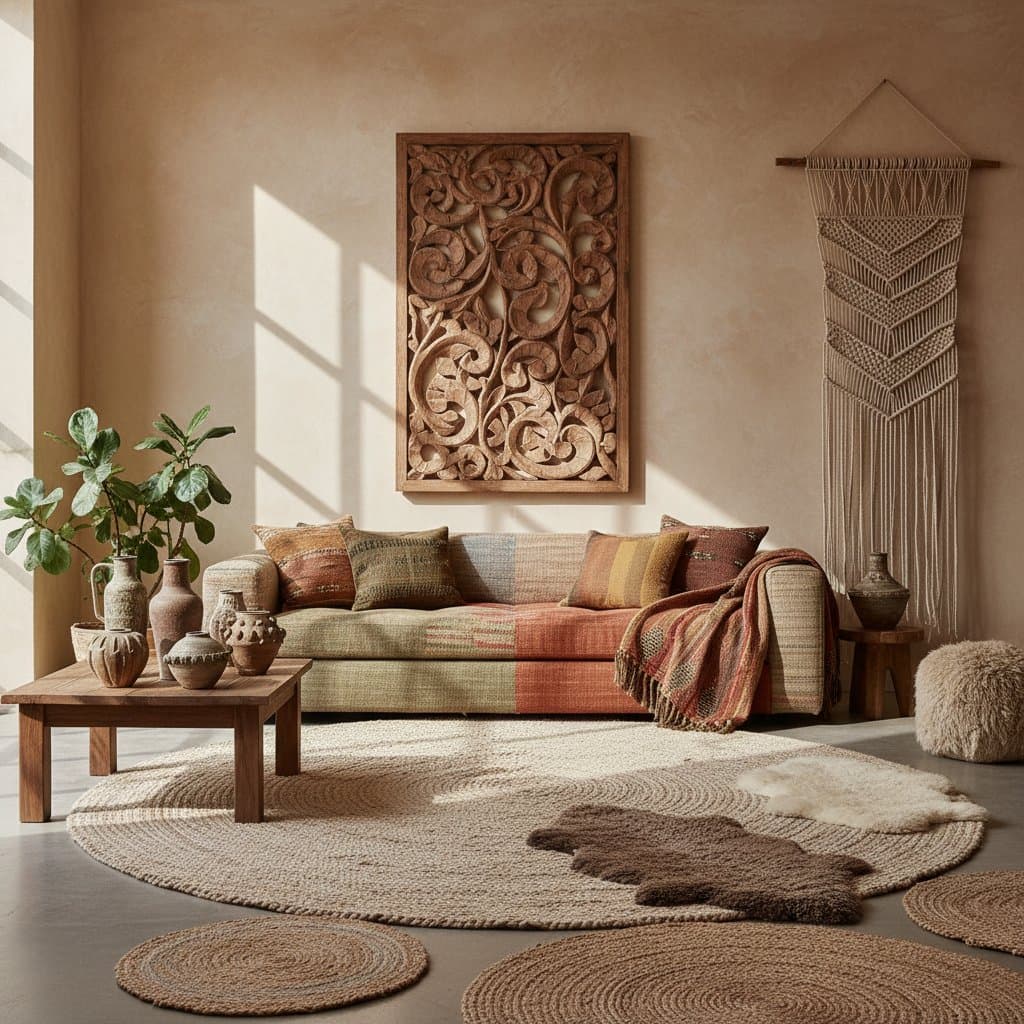
Introduction to Handcrafted Maximalism
In 2026, interior design shifts away from the stark lines of minimalism toward the rich embrace of handcrafted textures. This evolution celebrates maximalism through deliberate craftsmanship, where every surface tells a story of human skill and natural materials. Homeowners seek spaces that invite touch and reflection, moving beyond sterile perfection to layered warmth that evolves with time.
Handcrafted elements transform ordinary rooms into sanctuaries of authenticity. Consider the subtle undulations of plaster walls or the intricate patterns in woven rugs; these details create depth without overwhelming the senses. As this trend gains momentum, it encourages a reconnection with artisanal traditions, blending functionality with artistic expression.
Bedrooms: Crafting Comfort Through Texture
Bedrooms serve as retreats where soft, tactile materials promote rest and renewal. Begin by layering natural fibers such as crisp linen sheets topped with plush wool throws in earthy tones. Select an upholstered headboard crafted from reclaimed wood or softened leather to anchor the space with subtle elegance.
Incorporate diffused lighting through handmade fixtures, like pendant lamps with handblown glass shades, or bamboo weaves that filter sunlight into gentle patterns. These additions not only enhance ambiance but also encourage sensory engagement, making the room feel enveloping yet serene.
- Budget Range: Allocate $2,000 to $7,000 for a comprehensive refresh, covering premium textiles, custom lighting, and select accent pieces like a hand-carved nightstand.
- DIY Option: Experiment with reupholstering an existing headboard using fabric remnants or stitching custom pillow covers from thrifted linens to reduce expenses by up to 50 percent.
Balancing Abundance with Intention
Maximalism thrives on abundance, yet success hinges on intentional curation to avoid chaos. Select three to five complementary textures as focal points, then repeat them subtly throughout the room for visual harmony. For instance, introduce handwoven wool rugs in the living area and mirror their motifs in framed textile art or sheer curtain panels.
Balance rough and smooth surfaces to maintain equilibrium; pair the grainy texture of oak paneling with the silky drape of silk cushions. This contrast prevents heaviness while adding dynamic interest that draws the eye.
Color selection amplifies texture's impact. Opt for saturated jewel tones like emerald or sapphire to deepen the perception of carved details, or warm neutrals such as terracotta to highlight woven elements. Steer clear of stark whites, which can diminish intricate craftsmanship; instead, choose creamy off-whites or soft beiges that uncover hidden layers.
The Value of Handcrafted Investments
Handcrafted pieces offer aesthetic appeal alongside practical benefits, often surpassing the lifespan of factory-made alternatives. Artisans employ durable, repairable materials, ensuring that a carved oak console or thrown pottery vase withstands generations with minimal intervention. Refinishing wood or rewiring fixtures extends their utility, reducing waste and replacement costs over time.
From a financial standpoint, these investments enhance property value during resale. Prospective buyers gravitate toward homes with unique, tactile features that convey quality and character. Initial expenditures on custom work, such as a forged iron chandelier, yield returns through increased durability and market differentiation, often recouping 70 to 100 percent of costs in elevated home appraisals.
Sustainability further underscores their worth. Sourcing from local makers minimizes carbon footprints associated with global shipping, while natural materials like linen and clay promote healthier indoor environments free from synthetic off-gassing.
Regional Influences and Sourcing Strategies
Handcrafted textures adapt to regional climates and cultures, infusing designs with localized authenticity. Coastal dwellers favor light, airy options: bleached driftwood frames, seagrass baskets, and ceramics glazed to mimic ocean sands for a breezy, sunlit vibe. In contrast, mountainous or northern settings embrace robust choices like ebony-stained beams, thick shearling rugs, and rugged stone inlays that evoke enduring strength.
Prioritize local sourcing to align with your environment's nuances. Artisans familiar with regional woods or fibers craft pieces that harmonize with local architecture, such as Victorian trim in historic neighborhoods or adobe-inspired finishes in arid zones.
- Sourcing Venues:
- Explore craft markets and pottery studios for one-of-a-kind discoveries.
- Visit architectural salvage yards to uncover reclaimed timber and vintage hardware.
- Attend regional design fairs that showcase independent creators and their processes.
- Utilize online marketplaces that authenticate artisan origins and sustainable practices.
Inquire about material provenance, protective finishes, and upkeep protocols during purchases. These details ensure compatibility with your lifestyle, as handcrafted goods typically require mindful care that enhances rather than detracts from their charm.
Maintenance and Longevity Practices
Handcrafted materials develop character through aging, from the evolving patina on brass hardware to the softened hues of sun-faded fabrics. Proper maintenance preserves this beauty while extending usability. Regular, gentle routines prevent premature wear and allow natural imperfections to enhance appeal over years.
- Walls and Finishes: Wipe limewashed or plaster surfaces with a soft, dry cloth to remove dust; refrain from abrasive cleaners that erode delicate layers.
- Textiles: Shift rug positions seasonally and use low-suction vacuuming to safeguard fiber integrity without flattening pile.
- Wood Elements: Apply natural oil treatments once a year to nourish grains and avert splits or dullness.
- Metals and Hardware: Wash with lukewarm soapy water, rinse thoroughly, and polish dry to curb tarnish formation.
Embrace repairs as opportunities to maintain uniformity. Collaborate with original creators for services like re-staining or seam reinforcement, which sustain the piece's integrity and narrative.
Integrating Textures into Daily Life
To weave handcrafted textures seamlessly into your home, initiate small-scale changes that build momentum. Swap a generic lamp for a ceramic base thrown by a local potter, or introduce woven wall hangings to a bare expanse. These incremental steps accumulate, fostering a cohesive narrative across spaces.
Observe how textures interact with light and movement: sunlight dances on textured plaster, while wool absorbs sound for quieter evenings. Such details elevate routine moments, turning a simple meal at a hand-planed table into a tactile experience.
Experiencing the Depth of Crafted Spaces
Handcrafted maximalism cultivates environments rich in sensory depth, where every element invites exploration. Rough-hewn beams contrast with smooth stone counters, creating rhythms that soothe and stimulate. Over time, these spaces foster a profound sense of place, rooted in the imperfections that mass production overlooks.
Residents report heightened well-being in such settings, as authentic materials promote mindfulness and connection. Your home becomes a living tapestry, evolving with personal stories and shared memories, far beyond the constraints of trends.