
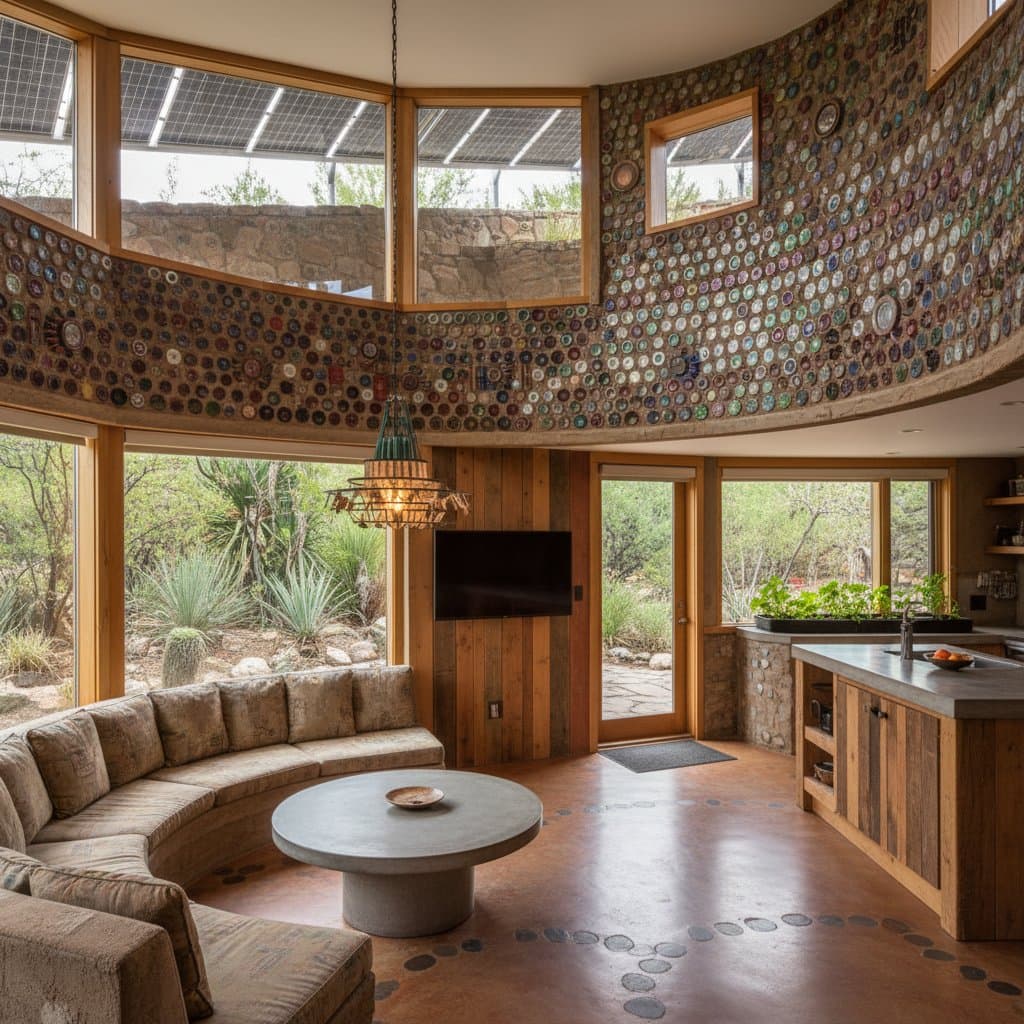
Earthship Homes: Off-Grid Life from Recycled Waste
Imagine a home that captures sunlight for power, collects rainwater for use, and grows food within its walls, all constructed from materials others discard. Earthship homes realize this vision through innovative off-grid architecture. These structures combine sustainability with practical comfort, enabling residents to live independently while minimizing environmental impact.
Living Off the Grid Without Sacrifice
Off-grid living often suggests discomfort, such as unreliable electricity or basic amenities. Earthships challenge this view by integrating advanced systems for modern conveniences. Residents enjoy consistent electricity from solar sources, ample water from harvested rain, and stable temperatures from earth-based insulation.
These homes repurpose common waste items like tires, bottles, and cans into durable components. Such materials provide strength and aesthetic appeal without relying on traditional resources. This approach reduces costs and environmental footprint from the outset.
What Exactly Is an Earthship?
An Earthship functions as a fully autonomous dwelling made from natural and upcycled materials. Its design follows six core principles to achieve independence:
-
Thermal or solar heating and cooling
Thick walls of rammed-earth tires store heat during the day and release it at night. This passive system maintains indoor temperatures between 65 and 75 degrees Fahrenheit year-round, regardless of external weather. -
Solar and wind electricity
Photovoltaic panels on the roof generate power, supplemented by wind turbines in windy areas. Deep-cycle batteries store excess energy, powering appliances through inverters for seamless use. -
Water harvesting
Roofs channel rainwater into filters and cisterns holding up to 10,000 gallons. The system recycles water three times: first for bathing, then for toilets, and finally for irrigation. -
Sewage treatment
Greywater flows through plant-filled cells that purify it for reuse. Blackwater supports outdoor vegetation, creating a nutrient-rich ecosystem without external waste removal. -
Food production
Attached greenhouses use passive solar heat to cultivate vegetables, herbs, and fruits. Integrated planters ensure fresh produce even in cold or dry conditions. -
Recycled and natural materials
Walls incorporate packed tires for mass, cans for insulation, and bottles for light diffusion. Adobe or earthen plaster finishes provide durability and visual warmth.
These elements enable Earthships to thrive in varied locations, from arid deserts to temperate forests.
Building with What Others Throw Away
Earthship construction redefines waste as a resource. Discarded tires, filled with 300 pounds of earth each and pounded solid, form curved, earthquake-resistant walls up to two feet thick. Aluminum cans, stacked and mortared, create insulated infill panels that resist moisture.
Glass bottles, laid in mortar courses, allow natural light to filter through while adding colorful patterns. This method not only builds structure but also embeds artistic expression. Homeowners often source materials from local dumps or recycling centers to keep projects affordable.
The tire-packing process requires physical effort, typically 20 to 30 hours per wall. Participants find it rewarding, as each pound of earth transforms refuse into a solid foundation. This hands-on method fosters a personal connection to the build.
The Science Behind Comfort
Earthships maintain comfort through physics rather than machinery. Buried north walls (in the northern hemisphere) insulate against cold, while south-facing glazing captures winter sun. This orientation maximizes passive solar gain, warming interiors without fuel.
Thermal mass in the walls absorbs daytime heat and radiates it slowly overnight. In summer, shaded roofs and earth tubes pull cool air from buried pipes, reducing indoor temperatures by 20 degrees. Ventilation stacks expel hot air, ensuring fresh circulation.
Monitoring devices confirm these systems hold steady climates. For instance, a New Mexico Earthship records average indoor temperatures of 70 degrees Fahrenheit across seasonal extremes from 0 to 100 degrees outside.
Designing for Your Climate
Adaptation ensures Earthships perform optimally in specific conditions. In humid tropics, elevated foundations prevent flooding, and dehumidifying plants handle moisture. Arid regions emphasize wide eaves for shade and efficient cisterns for scarce rain.
Coastal builds incorporate corrosion-resistant materials and windbreaks from native shrubs. Mountain designs feature steeper roofs for snow shedding and denser walls for heat retention. Consult climate data to size windows: larger for sunny latitudes, smaller for overcast ones.
Local experts refine these adjustments. They integrate site-specific features, such as fog nets for water in misty areas or geothermal loops for enhanced cooling.
Step-by-Step: How an Earthship Comes Together
-
Site selection and design
Select south-sloping land with unobstructed sun and soil suitable for digging. Review local codes for off-grid allowances and secure permits for alternative construction. -
Foundation and tire walls
Excavate a berm for partial burial, then stack 500 to 1,000 tires, ramming earth inside with sledgehammers. Curve walls for structural integrity and aesthetic flow. -
Framing and insulation
Erect interior partitions using can walls mortared with cement. Apply reflective foil or straw bales in roofs for extra thermal barriers. -
Roofing and water systems
Install sloped metal roofing with leaf screens. Pipe collected water through sediment filters to buried tanks, adding UV treatment for potability. -
Solar systems and interior finishes
Position 20 to 40 panels based on energy needs, wiring to 48-volt battery arrays. Plaster walls with lime-based mixes and embed planters for living walls. -
Final touches
Construct the greenhouse with polycarbonate glazing. Seed botanical cells and calibrate pumps to verify the closed-loop water flow.
This sequence builds a cohesive system where each part supports the others.
Budget and Practical Considerations
Costs for a 1,000-square-foot Earthship range from $150 to $300 per square foot, depending on labor and features. Owner-builds with scavenged materials lower expenses to $50,000 total, while turnkey options approach $200,000. Long-term savings eliminate $2,000 annual utility bills.
Permitting varies: some areas classify Earthships as experimental, requiring engineer stamps. Start with modular additions to comply gradually. Insurance providers familiar with green builds offer standard coverage.
Maintenance involves annual solar panel wipes and bi-annual filter changes. Systems self-monitor through simple gauges, alerting to imbalances early.
The Emotional Reward of Building Your Own Ecosystem
Residing in an Earthship cultivates mindfulness. Daily interactions with solar gauges and plant cycles heighten appreciation for natural processes. This lifestyle shifts priorities toward resilience and simplicity.
Owners report reduced stress from utility independence. The home's organic form invites creativity, with spaces evolving through personal touches. It becomes a reflection of values, fostering deeper environmental stewardship.
Overcoming Common Misconceptions
Critics claim Earthships lack light or space, yet designs incorporate skylights and open layouts up to 2,000 square feet. Finishes like polished concrete floors and bamboo accents rival contemporary aesthetics.
Concerns about durability overlook tested longevity: many structures endure 50 years with minimal repairs. Community networks provide blueprints and troubleshooting, countering isolation myths.
Finding the Right Help
Professional support accelerates Earthship projects. Post details on doricsouth.com to connect with vetted contractors specializing in sustainable methods. Matches include rammed-earth specialists or solar engineers tailored to your site.
These experts navigate codes and source materials efficiently. Their involvement ensures compliance and optimizes performance from day one.
Living with Your Design
Daily routines in an Earthship reveal efficiencies. Track water use via meters to refine habits, and adjust greenhouse vents for peak yields. This integration turns sustainability into intuitive practice.
Advancing Your Off-Grid Project
Assess your site and budget to outline a feasible plan. Tour existing Earthships for inspiration and consult regional builders for customized advice. Post your vision on doricsouth.com to assemble a skilled team and launch construction toward a resilient, waste-free home.