
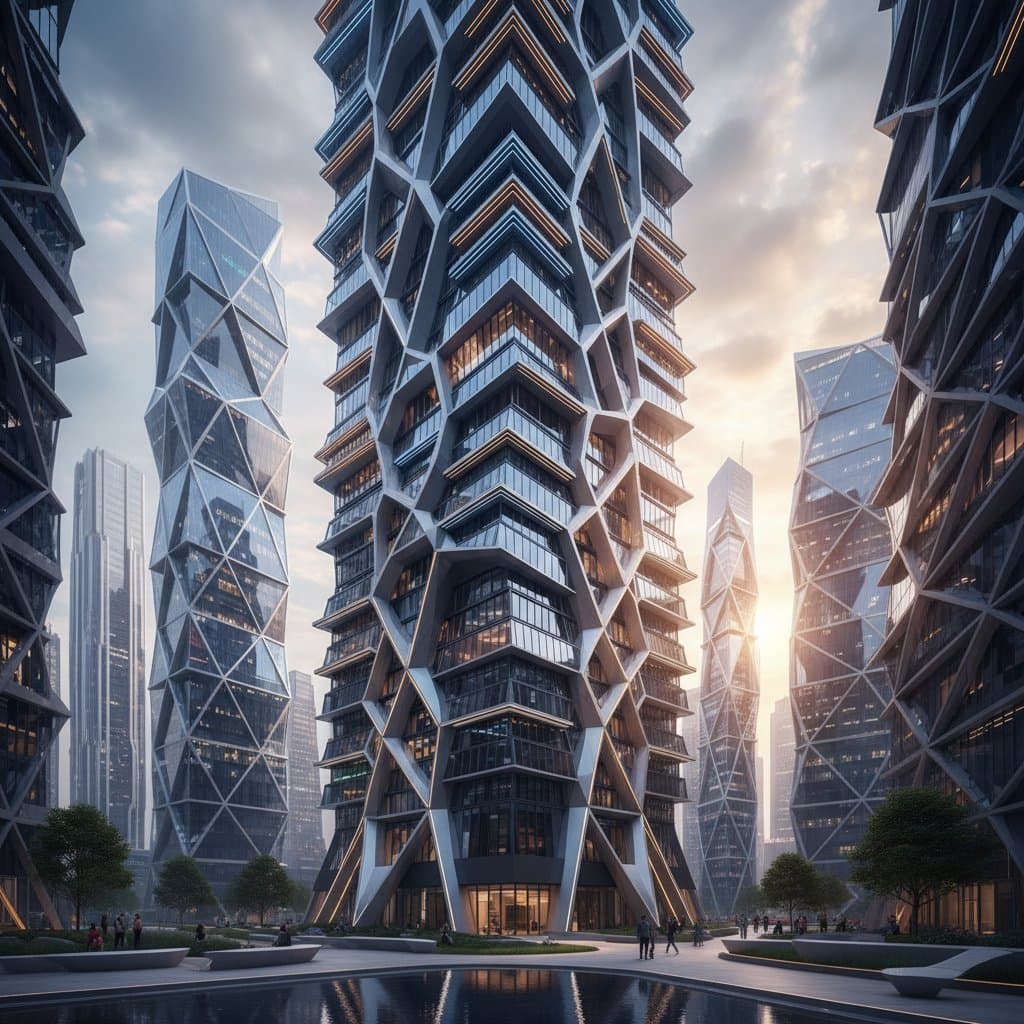
Why Parametric Facades Reshape Modern Architecture
Imagine walking through a city where buildings seem to breathe with the rhythm of daylight, their surfaces shifting in tone and texture as the sun moves across the sky. The glass glimmers differently every few minutes, and the metal panels ripple like water when the wind passes. These are not futuristic visions but the tangible results of parametric facades, one of the most exciting and transformative movements in modern architecture.
The New Language of the Building Envelope
So you have admired a building that feels alive, one that reacts to its surroundings instead of standing still. That sense of movement and intelligence comes from parametric design. A parametric facade is not a static skin. It is a dynamic system driven by algorithms that respond to environmental inputs such as light, temperature, or acoustics. Each element of the facade can be fine-tuned through a set of parameters, allowing architects to balance aesthetics, performance, and cost with remarkable precision.
The appeal lies in flexibility. Traditional facades are often drawn by hand and repeated across the surface. Parametric facades use data-driven rules to guide design decisions, so every panel, opening, or shade can be unique while still fitting perfectly within the larger pattern. The result is a surface that performs as beautifully as it looks.
The Problem with Traditional Design
Conventional building envelopes often struggle to manage environmental factors efficiently. You might see large glass walls that overheat interiors or heavy cladding systems that block natural light. Architects have long battled these challenges, trying to create facades that are both expressive and energy-conscious. Parametric design changes that equation by letting performance metrics drive form.
Instead of guessing how much shading a window needs, designers can simulate sunlight paths and let algorithms adjust louvers automatically. Instead of repeating identical panels, they can vary thickness, angle, or material to achieve better insulation or wind resistance. This approach not only saves energy but also reduces waste during fabrication.
How Parametric Facades Work
At its core, parametric design uses relationships between numbers and geometry. When one parameter changes, connected elements adapt instantly. For a facade, that might mean:
- Geometry driven by environment: The shape of panels may shift based on sun exposure, optimizing natural light while reducing glare.
- Material performance data: Algorithms test materials for strength, transparency, or reflectivity before fabrication begins.
- Fabrication precision: Digital models link directly with manufacturing tools, ensuring that complex shapes can be built affordably.
- Adaptive operation: Some facades even move or change tone in real time, adjusting to weather conditions or occupancy levels.
This combination of algorithmic design and digital fabrication creates a new kind of dialogue between architecture and environment. Buildings stop being passive shelters and start behaving like responsive organisms.
Real-World Expressions of Parametric Thinking
Look at how cultural centers, office towers, and museums are adopting these principles. One project might use perforated metal panels that vary in density to filter sunlight and project intricate shadows on interior walls. Another might feature glass fins that twist slightly from floor to floor to catch and reflect daylight differently. Even smaller projects, like boutique hotels or community buildings, are beginning to use parametric facades to express local identity while improving comfort.
What makes this approach so compelling is that it respects both art and science. The algorithm does not replace the designer; it expands creative potential. Architects can explore hundreds of variations quickly, testing how each version affects light, air, and energy use. The process feels more like collaboration between human intuition and digital intelligence.
Balancing Art, Cost, and Practicality
For all their beauty, parametric facades must still meet budgets and construction realities. Costs depend on material choice, fabrication complexity, and whether the facade includes active moving parts. Some systems are surprisingly affordable because digital modeling reduces errors and speeds up production. Others, especially those involving kinetic movement or custom materials, require investment but deliver long-term savings through energy efficiency.
Safety and compliance are also central considerations. Every element must meet structural and fire codes, and dynamic components need thorough testing to ensure reliability. Working with experienced contractors and facade engineers is essential to translate digital designs into durable construction.
Permits often require detailed documentation, so early collaboration with local authorities can prevent delays. Experienced teams know how to present digital simulations and performance data in ways that satisfy inspection requirements.
Why Parametric Facades Resonate with Modern Values
Beyond their technical advantages, parametric facades mirror the values of contemporary life. They prioritize sustainability, local context, and individuality. A building can respond to the unique qualities of its site, from sun angles to cultural patterns. Cities benefit from architecture that feels tailored rather than generic.
For developers and property owners, these facades also become strong visual identities. A well-designed parametric surface draws attention, signals innovation, and can increase a building’s market value. Tenants appreciate interiors filled with natural light and improved comfort, while communities enjoy architecture that feels alive and responsive to climate.
Making It Happen
If you are considering a new project, start by defining what you want your building envelope to achieve. Do you want improved energy performance, a signature aesthetic, or both? A parametric approach can adapt to any goal.
Collaborating with professionals experienced in algorithmic design ensures that your project stays practical as well as visionary. From the first sketch to the final panel installation, every step benefits from clear communication between architect, engineer, and builder.
Parametric facades are not a passing trend. They represent a shift in how architecture interacts with its environment, combining creativity with measurable performance. When you walk by a building that seems to glow differently each moment, you are seeing the language of modern design evolve before your eyes.