
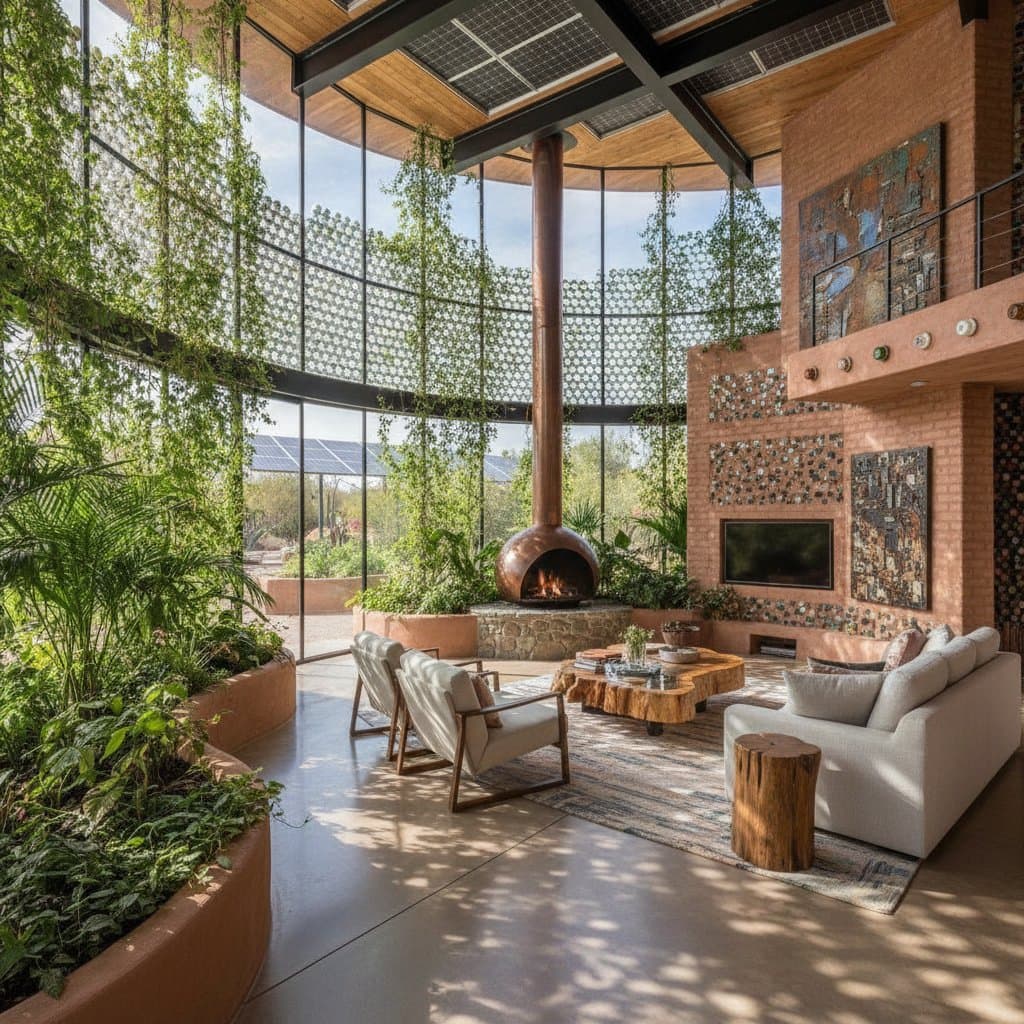
Luxury Earthship Homes Built with Recycled Materials
Imagine entering a residence where interior temperatures remain stable without mechanical systems and the architecture integrates reclaimed resources with refined finishes. Such homes exist today as luxury Earthships. These structures rely on recycled tires, glass bottles, and other salvaged items yet deliver the comfort and aesthetics associated with high end custom builds.
Traditional Earthships earned a reputation for rugged simplicity in remote locations. Contemporary versions retain the original self sufficient engineering while incorporating premium materials and layouts that suit modern lifestyles.
Core Construction Principles
Earthships capture and store natural resources to operate independently. Thick walls formed from earth filled tires provide thermal mass that absorbs daytime heat and releases it slowly at night. Additional elements such as bottle walls and can insulation improve both structural integrity and visual interest.
Earlier designs often featured unfinished surfaces that limited broader appeal. Updated projects apply plaster, tile, and custom millwork to achieve clean lines and sophisticated interiors without sacrificing the passive performance of the original system.
Factors Driving Interest Among Luxury Buyers
Several practical advantages attract clients who seek both sustainability and comfort.
- Complete energy autonomy through integrated solar arrays, wind turbines, and battery storage that eliminate utility expenses.
- Consistent indoor climates maintained by thermal mass walls that reduce or remove the need for conventional heating and cooling equipment.
- Flexible architectural layouts that accommodate open living areas, expansive glazing, and high quality fixtures while preserving resource efficiency.
- Tangible environmental benefits achieved by diverting large volumes of waste materials from landfills.
Construction Sequence
Successful projects follow a deliberate order that begins with site evaluation. Select a location offering unobstructed southern exposure and adequate space for water storage. Engage professionals experienced in passive solar design to finalize orientation and footprint.
Source tires from local suppliers at little or no cost. Pack each tire solidly with compacted soil, then stack them to form perimeter walls. Apply successive coats of plaster or stucco to create smooth, paint ready surfaces.
Install photovoltaic panels, charge controllers, and inverters sized to meet anticipated loads. Incorporate rainwater catchment that channels roof runoff into cisterns equipped with filtration for potable use. Complete interiors with polished concrete, custom cabinetry, and energy efficient appliances chosen to complement the off grid infrastructure.
Investment Considerations
Total expenditure ranges from modest owner built projects to full service custom residences. Owner involvement in labor reduces upfront costs while professional oversight ensures code compliance and finish quality. Construction duration typically spans several months to more than a year depending on crew size and weather conditions.
Local permitting requirements differ widely. Early consultation with planning departments and retention of an engineer familiar with alternative methods helps avoid delays.
Tradeoffs to Evaluate
Pros include minimal ongoing utility costs, stable interior conditions throughout the year, creative use of recycled resources, and distinctive aesthetic opportunities.
Cons involve significant physical labor during the tire packing phase, variable regulatory acceptance, and the necessity of precise site orientation.
Daily Experience in a Finished Earthship
Residents report reliable access to electricity, filtered water, and standard household conveniences. Independence from external utilities removes concerns over rate fluctuations or service interruptions. Thick walls attenuate exterior noise while generous natural light from integrated greenhouses creates bright, welcoming spaces.
Owners frequently note a gradual shift in awareness regarding resource consumption that aligns daily routines with the home performance characteristics.
Next Steps for Prospective Builders
Visit completed projects and consult builders who have delivered comparable homes. Direct observation clarifies how recycled materials translate into refined living environments that balance environmental responsibility with lasting comfort.