
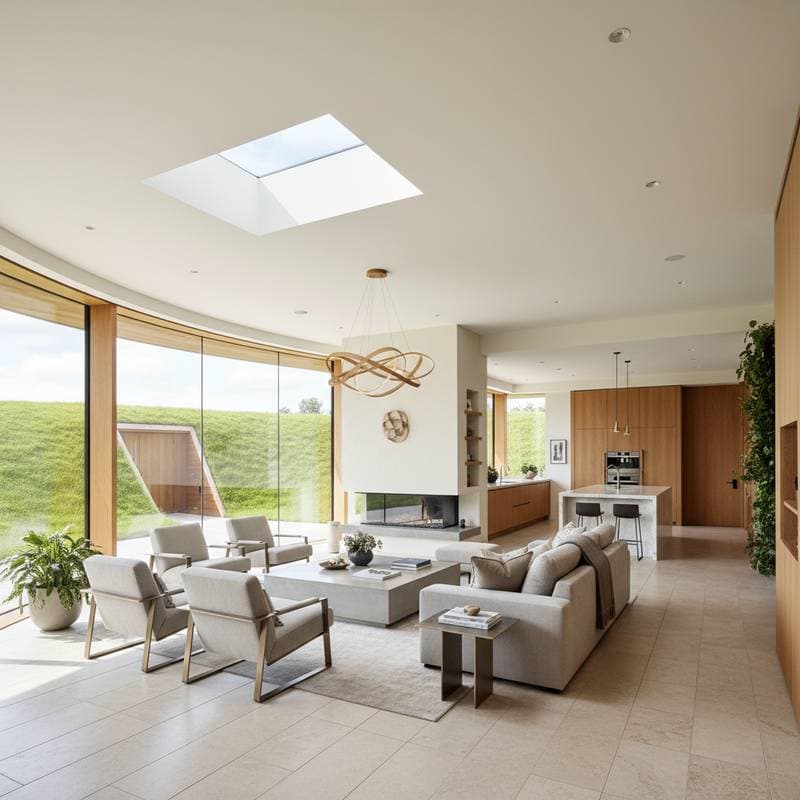
Earth-Sheltered Homes: Luxury Underground Redefined
Many homeowners examine energy bills and seek more intelligent living options. Others envision residences that provide peace and security by integrating with the landscape rather than dominating it. Earth-sheltered homes emerge as an innovative solution for those who prioritize comfort alongside sustainability. These structures leverage the earth for insulation, aesthetic appeal, and unparalleled privacy.
The notion of underground living often evokes images of dim, confined spaces. Contemporary earth-sheltered designs prove otherwise, featuring abundant natural light, sophisticated elegance, and expansive interiors. This architecture merges environmental responsibility with refined luxury, creating residences that appear both innovative and enduring.
Understanding Earth-Sheltered Living
An earth-sheltered home incorporates partial or full submersion below ground level. The surrounding soil serves as a thermal mass, maintaining consistent indoor temperatures while shielding the structure from wind and precipitation. Fully underground homes remain entirely below grade, whereas bermed variants feature earth mounded against one or more walls, leaving the roof exposed.
Designers employ innovative techniques to prevent any sense of enclosure. Expansive glass facades, central courtyards, and strategically placed skylights flood interiors with daylight and circulation. Such homes harmonize with their environment, appearing as natural extensions of the terrain.
Why Homeowners Choose Underground Luxury
The rising popularity of earth-sheltered construction stems from multiple advantages. Energy conservation attracts some, while others value enhanced security or ecological integration. The following highlights key benefits that distinguish these homes.
Energy Efficiency
The earth envelope moderates seasonal extremes, keeping interiors cooler during summer and warmer in winter. This thermal stability substantially reduces reliance on mechanical heating and cooling systems. Homeowners typically observe a 50 to 80 percent decrease in annual energy consumption after implementation of optimal sealing and insulation.
Peace and Quiet
Earth-sheltered designs inherently dampen external disturbances. Soil layers absorb sounds from roadways, adjacent properties, or severe weather events. Residents experience a profound tranquility that enhances relaxation and focus within the home.
Protection from Weather
These structures withstand harsh conditions with remarkable resilience. High-velocity winds, torrential rains, and hail inflict negligible damage. Owners gain assurance from the inherent fortification against environmental threats.
Environmental Harmony
By embedding into the site, these homes minimize disruption to natural contours. Green roofs or plantings with indigenous species can support biodiversity and erosion control. This approach reduces the ecological footprint while preserving scenic integrity.
Long-Term Durability
Properly constructed earth-sheltered homes endure for centuries. Robust materials, combined with earthen protection, resist degradation from thermal cycling and elemental exposure. Generations benefit from this steadfast reliability.
Challenges to Consider
All construction methods involve compromises, and earth-sheltered builds are no exception. Prospective owners benefit from evaluating potential drawbacks alongside advantages.
Initial Costs and Construction Demands
Subterranean work elevates upfront expenses through excavation, waterproofing, and specialized drainage. Budgets often exceed those of comparable above-ground homes by 10 to 25 percent. However, diminished utility costs recoup investments within 10 to 20 years.
Moisture Management and Ventilation
Improper execution risks condensation accumulation. Essential countermeasures include high-grade waterproof barriers and active ventilation. Engaging certified specialists ensures these systems perform effectively over time.
Illumination Strategies
Achieving ample daylight demands deliberate architecture. Orient windows toward southern exposures, integrate light shafts, or incorporate atriums to illuminate deeper spaces. These elements foster vibrant, welcoming atmospheres.
Regulatory and Engineering Hurdles
Local codes may lack provisions for subterranean designs, necessitating custom approvals. Collaborate with engineers versed in geotechnical analysis to comply with seismic, structural, and egress requirements.
Types of Earth-Sheltered Homes
Design choices vary by terrain, finances, and aesthetic goals. The primary categories offer distinct pathways to underground living.
Bermed Homes
Earth adjoins lateral walls in this configuration, preserving a traditional roofline. Construction proves simpler and less invasive than full burial. Benefits include partial thermal regulation and storm resistance without extensive digging.
Fully Recessed Homes
These immerse the entire structure below grade, maximizing seclusion. Light wells, rooftop gardens, or internal patios counteract isolation. Such homes deliver superior energy performance and privacy.
Earth-Covered Roof Homes
Primarily at-grade with vegetated roof coverings, this variant balances accessibility and efficiency. It suits sites with elevation constraints while promoting insulation through overhead soil mass.
Bermed options suit budget-conscious projects with straightforward maintenance. Full recessions excel in insulation and fortification. Roof-covered designs strike a compromise, enhancing landscape cohesion.
Steps to Construct an Earth-Sheltered Home
Building requires meticulous sequencing, often extending timelines beyond conventional projects. Patience yields a resilient, efficient dwelling.
Site Evaluation
Select parcels with favorable hydrology and soil stability. Sloped terrains facilitate berming; level sites demand enhanced perimeter drainage to avert water pooling.
Architectural Design
Partner with specialists in subterranean engineering. Blueprints must address thermal bridging, vapor barriers, airflow dynamics, and daylight penetration. Tailor layouts to accommodate daily routines, including multi-level access and storage solutions.
Excavation and Structural Base
Precise earth removal prevents instability; shoring techniques safeguard workers. Reinforced concrete forms the watertight envelope, integrating footings and load-bearing walls.
Waterproofing and Drainage Systems
Apply multi-layer membranes and install French drains or sump pumps. Surround the foundation with permeable backfill to direct runoff efficiently.
Thermal and Air Quality Controls
Incorporate rigid foam or spray-applied insulation to augment earth's mass. Heat recovery ventilators maintain freshness while conserving energy through balanced exchange.
Interior Completion
Select durable finishes like sealed concrete or reclaimed wood for authenticity. Fixture placements emphasize views and flow, with LED systems supplementing natural illumination.
Key Practical Factors
Address these elements to align the project with financial and lifestyle realities.
Budget Expectations
Construction premiums range from 20 to 40 percent above standard builds, driven by site work and engineering. Lifecycle savings on utilities and repairs often exceed initial outlays.
Ongoing Upkeep
Exterior demands remain low, focusing on gutter clearing and membrane inspections. Vegetated elements require periodic pruning to sustain health.
Market and Financial Aspects
Niche appeal may prolong resale, yet energy credentials bolster equity. Secure financing through eco-specialized lenders; insurers appreciate documented resilience features.
Experiencing Daily Life Underground
Settled inhabitants discover an environment of subtle opulence. Ambient silence envelops the space, free from drafts or vibrations. Steady climates eliminate frequent adjustments, with summers refreshingly temperate and winters cozily moderate.
Strategies for Optimal Results
- Engage proven experts in earth-sheltered builds to navigate complexities.
- Prioritize daylight integration during initial schematics.
- Allocate resources for premium waterproofing to safeguard longevity.
- Equip with adaptive HVAC for humidity and pollutant control.
- Design entry sequences that accommodate seasonal variances.
Pursuing Your Earth-Sheltered Vision
For those seeking elegance intertwined with stewardship, earth-sheltered homes present a compelling avenue. Consult experienced architects to explore feasibility on your property. Witnessing the interplay of light, form, and earth firsthand illuminates the transformative potential of this enduring approach.