
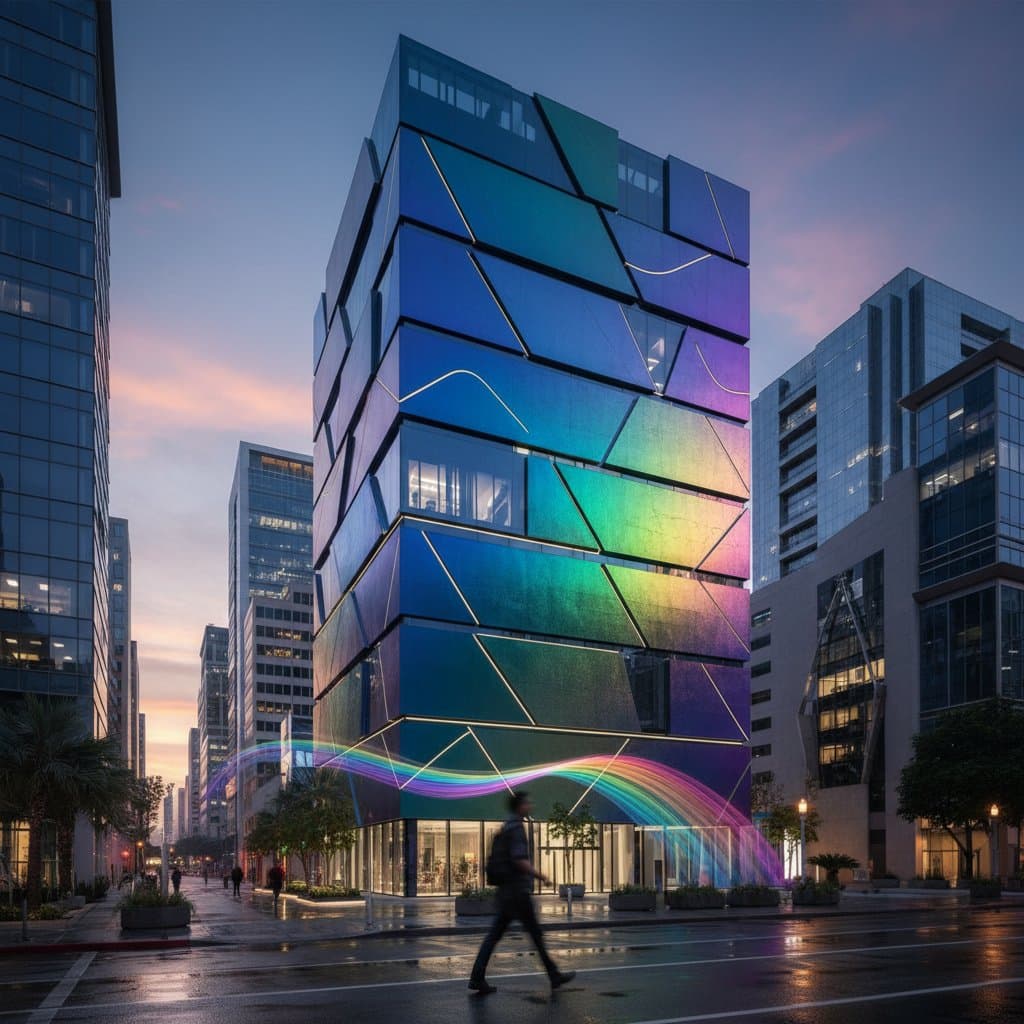
Introduction to Color-Shifting Facades
Architectural trends evolve rapidly, and color-shifting facades represent a pivotal advancement for 2026. These innovative exteriors respond to environmental stimuli such as sunlight, viewer movement, or programmed sequences, creating illusions of fluidity and depth on building surfaces. Unlike traditional static designs, they introduce interactivity that captivates observers and integrates technology seamlessly into urban environments.
This transformation stems from interdisciplinary progress in materials science and digital engineering. Buildings equipped with these facades appear to breathe with the city's rhythm, fostering a sense of wonder in everyday spaces. As sustainability demands intensify, such features offer practical solutions alongside aesthetic elevation.
How Color-Shifting Facades Function
At their core, color-shifting facades rely on materials and systems that alter appearance dynamically. Several technologies drive this capability, each suited to different scales and budgets.
Iridescent and Photochromic Coatings
Iridescent coatings mimic natural phenomena like butterfly wings or oil slicks on water. These thin-film applications use nanoscale layers to refract light, producing shifting hues based on viewing angles and illumination. Photochromic variants react to ultraviolet exposure, darkening or brightening in response to sunlight intensity.
Installation involves applying the coating to existing panels or integrating it during construction. Durability reaches up to 20 years with proper preparation, making it ideal for residential or commercial retrofits. The result is a subtle, organic shift that enhances without overwhelming the structure.
Electrochromic and Thermochromic Panels
Electrochromic glass or panels change tint via applied voltage, transitioning from transparent to opaque or colored states. Thermochromic materials shift based on temperature fluctuations, offering passive adaptation to weather conditions.
These systems connect to low-voltage controllers, allowing customization through apps or sensors. For instance, facades can adjust opacity to regulate internal temperatures, reducing reliance on mechanical cooling. Precision engineering ensures seamless integration with curtain walls or cladding.
Programmable LED and Projection Systems
For bolder effects, programmable LED matrices embed into facade grids, displaying patterns that evolve with time or motion. Projection mapping projects dynamic visuals onto surfaces, simulating color changes without permanent alterations.
LED setups feature modular panels with RGB diodes, controlled by software for synchronized displays. Motion sensors trigger responses as pedestrians approach, creating immersive experiences. While more complex, these options suit high-traffic areas like retail fronts or public installations.
Advantages and Challenges
Color-shifting facades deliver multifaceted benefits that align with contemporary architectural priorities.
Key Benefits
Energy efficiency stands out as a primary advantage. Responsive systems optimize natural light and heat gain, potentially lowering HVAC demands by 20 to 30 percent. Sustainability extends to material choices; many coatings incorporate recycled components, minimizing environmental impact.
Aesthetically, these facades elevate building identity, drawing attention and increasing property value. They promote biophilic design by simulating natural movements, which can improve occupant well-being. In urban settings, they contribute to vibrant streetscapes, enhancing community appeal.
Potential Drawbacks
Initial costs pose a significant hurdle, often exceeding traditional finishes by two to five times. Complexity in design and installation requires specialized expertise, extending project timelines. Maintenance demands vary by technology; LEDs may need periodic firmware updates, while coatings could fade under extreme pollution.
Reliability concerns arise in harsh climates, where moisture or UV exposure might accelerate wear. Retrofitting older structures presents structural challenges, necessitating assessments for load-bearing capacity. Despite these, advancing manufacturing mitigates many issues, broadening accessibility.
Understanding the Costs
Budgeting for color-shifting facades involves evaluating scale, technology, and site specifics. Basic iridescent coatings start at $50 per square foot for materials and labor, suitable for accent areas. Full electrochromic installations range from $150 to $300 per square foot, including wiring and controls.
LED systems command higher prices, $200 to $500 per square foot, due to custom programming and integration. Add 10 to 20 percent for engineering consultations and permits. Long-term savings from energy reductions often offset premiums within five to seven years.
Factors influencing expenses include project size and location. Urban sites incur higher labor rates, while larger areas benefit from economies of scale. Financing options, such as green building incentives, can alleviate upfront burdens for commercial ventures.
Planning Your Color-Shifting Facade Project
Embarking on this upgrade demands strategic preparation to ensure success and longevity.
Site Assessment and Design
Begin with a thorough evaluation of your building's orientation, climate exposure, and aesthetic goals. Consult architects experienced in adaptive materials to model potential effects using digital simulations. Define objectives, whether energy savings or visual impact, to guide technology selection.
Incorporate sustainability from the outset. Select low-VOC products to maintain cleaner air quality. Prioritize end-of-life recyclability; opt for panels that can be reused or recycled to reduce waste.
For LED systems, design energy-efficient programming. Configure lights to dim automatically at night or activate via motion sensors, conserving power without compromising performance.
Collaboration and Sourcing
Partner with reputable manufacturers offering warranties of 10 to 25 years. Source materials from certified suppliers to guarantee quality and compliance with building codes. Budget for prototyping small sections to test real-world performance before full commitment.
Engage electricians for systems integration and obtain necessary approvals early. Phased implementation allows testing and adjustments, minimizing disruptions.
Maintaining Vibrancy Over Time
Post-installation care ensures your facade retains its captivating qualities. Upkeep proves straightforward with consistent practices.
-
Gentle Cleaning: Employ soft brushes or microfiber cloths with mild soap and water solutions. Steer clear of abrasive tools or harsh chemicals that risk dulling the finish.
-
Routine Inspections: Examine surfaces for scratches, discoloration, or loose components biannually. Address minor issues promptly to prevent escalation.
-
System Diagnostics: For illuminated features, verify control mechanisms quarterly. Confirm uniform color rendering and sensor responsiveness to sustain reliability.
-
Enhancement Applications: Apply manufacturer-recommended sealants periodically. These protect against oxidation and weathering, prolonging aesthetic integrity.
Diligent attention preserves the facade's dynamic essence, yielding enduring value.
Realizing Your Architectural Vision
Color-shifting facades transcend conceptual sketches to become tangible enhancements for diverse structures. As market options expand and sourcing simplifies, adoption shifts from avant-garde icons to everyday builds. Initiate with targeted accents on entryways or expand to comprehensive overhauls in new constructions.
This integration not only revitalizes exteriors but also positions your property at the forefront of innovative design. The fusion of technology and artistry promises spaces that engage, adapt, and inspire long into the future.