
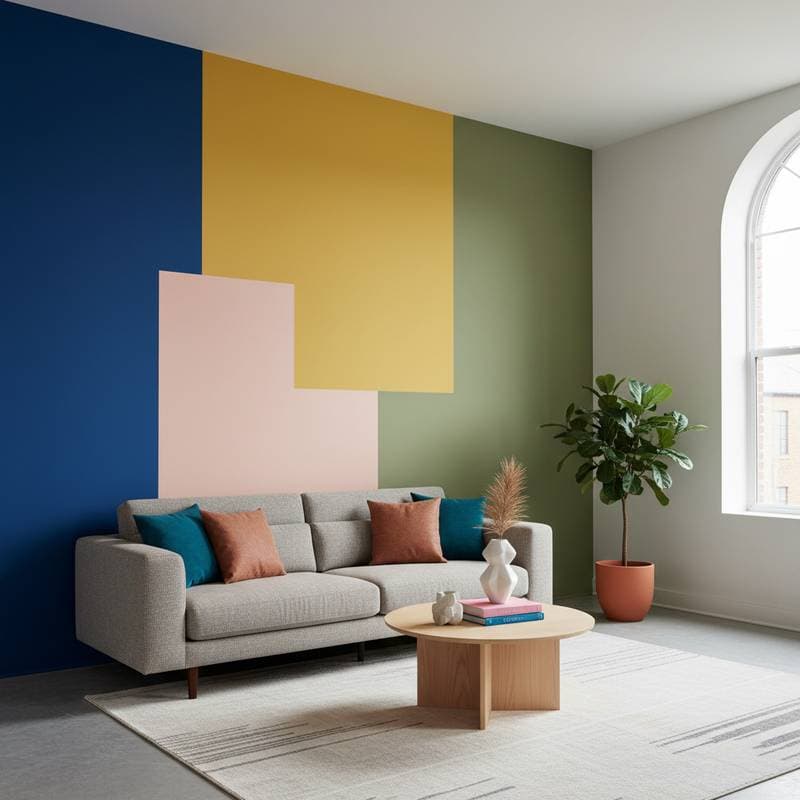
Vibrant Color Blocking: Spark Joy in Modern Interiors
Have you ever entered a room and immediately sensed a lift in your mood? That surge of vitality frequently stems from strategic use of color. If your home appears lackluster or uninspiring, color blocking offers an effective refresh. This design method employs bold color contrasts to infuse personality and delight into any space. Even without artistic training or professional expertise, you can achieve striking results through deliberate selections. Ordinary rooms transform into dynamic, contemporary environments that pulse with life.
What Color Blocking Really Means
Color blocking involves juxtaposing solid blocks of color to achieve intentional balance. Rather than depending on patterns or textures, this technique relies on pure, saturated hues to generate contrast and visual rhythm. Consider a vivid cobalt blue wall paired with mustard yellow upholstery, or coral accents set against deep teal cabinetry. Color directs the emotional tone while maintaining a streamlined, uncluttered aesthetic.
This method aligns closely with dopamine decor, a style that prioritizes happiness through vibrant elements. The objective extends beyond mere ornamentation; it creates environments that elevate your well-being upon every entry.
Why Try Color Blocking in Your Home
Color blocking gains popularity for its expressive and practical qualities. It allows you to reveal your individual style without undertaking extensive renovations. Begin with modest changes to yield significant impact. Several factors contribute to its effectiveness.
- Instant energy boost: Vivid, opposing colors invigorate a room naturally.
- Budget flexibility: Achieve dramatic effects using only paint and select accents.
- Creative freedom: Determine the level of boldness or subtlety that suits your vision.
- Easy updates: Refresh a scheme by repainting or exchanging accessories as preferences evolve.
Challenges exist, however. An excess of intense shades might overwhelm the senses. Clashing or competing colors risk producing disorder instead of harmony. Success hinges on equilibrium and preparation prior to application.
Getting Started: Finding Your Palette
Selecting a color palette marks the initial phase. Determine the desired atmosphere first, whether serene, invigorating, warm, or whimsical. This choice directs your hue selections.
- Select one primary color. Opt for a shade that resonates deeply, beyond fleeting trends.
- Incorporate a complementary or analogous color. Consult a color wheel for harmonious pairs, such as blue with orange or pink with green.
- Integrate a neutral anchor. Employ white, beige, or gray to stabilize bold tones and provide visual respite.
- Evaluate samples in context. Apply small patches to walls and assess them across daylight and artificial illumination.
For minimal commitment, pair a single bold wall with neutral elements. Build confidence by extending the palette to furnishings, floor coverings, or artwork in matching shades.
Techniques for Using Color Blocking
With a palette established, explore diverse application methods. Certain approaches suit quick weekend endeavors, while others demand greater forethought.
- Painted feature walls: Designate one or two walls for contrasting hues. This delineates zones and introduces dimension swiftly.
- Geometric designs: Apply painter's tape to outline forms like rectangles or stripes. Such patterns enhance hallways, studies, or children's areas effectively.
- Two-tone walls: Divide the wall vertically, painting the lower section in a deeper shade and the upper in a lighter variant. This yields a sleek, structured appearance.
- Furniture and decor integration: Avoid painting altogether by introducing solid-colored seating, lighting, or cushions.
- Architectural accents: Emphasize door frames, shelving, or moldings with vibrant paints to establish focal points without dominating the area.
When combining colors, prioritize adjacency on the color wheel for cohesion. For instance, adjacent blues and greens foster tranquility, while opposites like red and green amplify drama. Layer shades thoughtfully to prevent visual fatigue; alternate intensities to maintain interest.
Balancing Boldness with Comfort
An effective color-blocked interior energizes without sacrificing habitability. Harmony arises from mindful proportions and moderation.
- Limit to three primary colors per room. Additional hues may clutter the composition.
- Echo colors in subtle elements. Incorporate them via artwork, vessels, or cushions to unify the design.
- Introduce texture via materials. Wood grains, linen weaves, or metallic finishes temper the starkness of flat colors.
- Consider illumination effects. Hues intensify under direct light, so sample them in your room's typical conditions.
Should the result feel overpowering post-application, incorporate neutral pieces or textiles to moderate intensity. Refine through accessory adjustments until equilibrium prevails.
Cost, Time, and Effort
Color blocking remains accessible financially. A gallon of quality paint ranges from twenty to fifty dollars, sufficient for most rooms with one or two colors. Essential supplies include brushes, tape, and protective sheets. Professional assistance increases costs but conserves time and ensures precision.
Allocate a weekend for a compact space in a self-directed effort. Expansive or intricate patterns extend to multiple days. Prioritize thorough surface preparation, precise taping, and complete drying between coats for optimal outcomes.
Common Mistakes to Avoid
Planning prevents errors in even straightforward undertakings. Anticipate these frequent issues.
- Neglecting primer application: Vivid pigments adhere unevenly without a solid foundation.
- Overlooking light variations: Daytime favorites may turn stark under incandescent sources.
- Excessive color variety: Confine selections to deliberate choices for clarity.
- Disregarding spatial continuity: Adjacent areas require complementary schemes to avoid discord.
Simulate designs on paper or software to preview harmonies and shifts. This step clarifies intentions before commitment.
Pro Tips for Success
Elevate your project with these expert strategies. Source paints from reputable brands for durable, fade-resistant finishes. Experiment with matte versus gloss sheens; mattes absorb light for subtlety, while glosses reflect for vibrancy. Involve natural elements like plants to bridge color blocks and enhance organic flow. Document your process photographically to track progress and inspire future adaptations.
Embracing the Joy of Color-Blocked Living
Thoughtful color blocking infuses daily surroundings with vitality and delight. Simple areas gain purpose and individuality through this approach. Expensive accoutrements prove unnecessary; bold experimentation and intuitive decisions suffice. Initiate modestly, proceed deliberately, and relish crafting an environment that reflects your essence.