
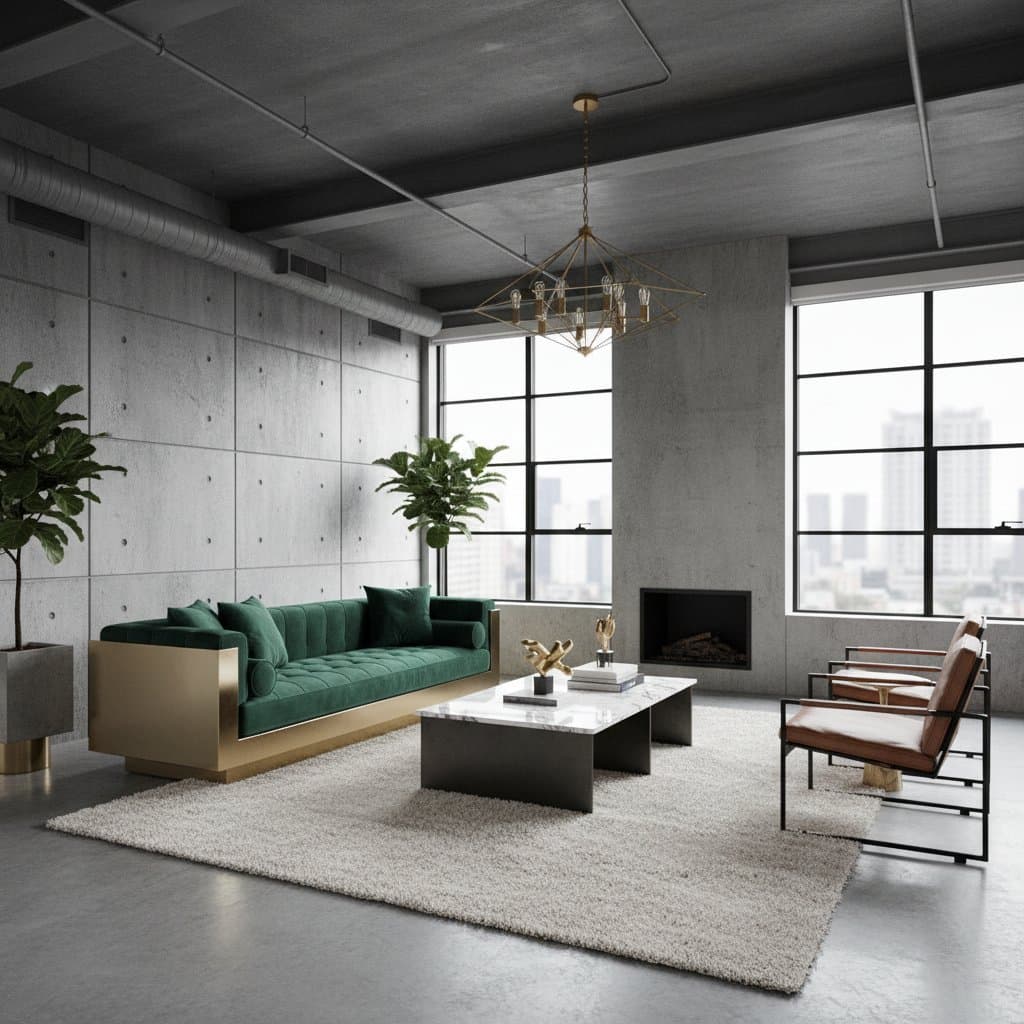
Raw Meets Refined: Mastering Industrial Glam Style
Exposed brick and metal deliver a bold aesthetic, while sparkle and polish add essential allure. Industrial glam style integrates rough materials with luxurious finishes to produce a home that conveys both edge and elegance. Envision a concrete wall juxtaposed against a velvet sofa or brass fixtures illuminating a reclaimed wood table. The appeal lies in these contrasts, adaptable to lofts, townhouses, or compact apartments.
The Challenge of Achieving Balance
Designing in industrial glam demands precise equilibrium. Excessive industrial elements risk rendering the space cold or incomplete. Overemphasis on glam diminishes the authentic urban foundation. The objective involves integrating texture, shine, and form to yield a natural, individualized result. The home must appear deliberate, not haphazardly combined.
Core Principles of Industrial Glam
This style unites the utilitarian essence of industrial design with the poise of glam decoration. Consider it as metal paired with marble or rivets alongside velvet. Industrial origins draw from factories and warehouses, whereas glam introduces shimmer, symmetry, and opulence. The fusion yields a robust yet polished environment.
Key characteristics include:
- Raw textures such as exposed brick, concrete, steel, or unfinished wood
- Glamorous accents including mirrors, crystal lighting, and metallic surfaces
- Neutral base palette featuring black, gray, white, and warm metallics
- High-contrast styling that juxtaposes rough against smooth and matte against glossy
Building the Style Step by Step
Construct this aesthetic in progressive layers: foundation first, followed by texture, and concluding with shine and softness.
1. Establish the Foundation
Maintain a simple, neutral structural base. Opt for walls in soft gray or off-white to provide versatility. Expose existing brick or concrete to highlight character through imperfections. Select wood or polished concrete flooring, enhanced by a substantial area rug for added warmth.
2. Integrate Materials with Purpose
Contrast forms the cornerstone. Pair industrial components, such as metal furniture or pipe shelving, with elegant details like glass tabletops or velvet upholstery. For instance, combine a steel-framed bed with a tufted headboard or a reclaimed wood dining table with gold-rimmed serveware. Restrict selections to three or four primary materials to ensure cohesion over chaos.
3. Select Impactful Lighting
Lighting elevates industrial glam distinctly. Choose fixtures blending raw and refined elements, such as a chandelier with iron arms and crystal pendants or a pendant featuring a gold interior and black exterior. On a budget, replace standard shades with metallic alternatives or incorporate Edison bulbs for vintage appeal. Anticipate expenditures from fifty dollars to several hundred, varying by fixture scale and finish.
4. Layer Textures for Comfort
Industrial materials often appear stark, so counter them with plush fabrics. Incorporate thick rugs, faux fur throws, and velvet pillows to introduce softness and variety. Soften further with flowing curtains or padded furnishings. Maintain subdued patterns to emphasize texture over intricate designs.
5. Incorporate Glam via Accessories
Accessories reveal individual flair. Metallic-framed mirrors, glossy vases, or marble trays impart refinement. Exercise restraint: select a few strategic items for intentional impact rather than overwhelming sparkle. Blend finishes like brass and chrome within consistent tones for harmony.
6. Prioritize Functionality
Industrial glam extends beyond appearance to practicality. Furniture must endure use and promote relaxation. Select robust tables, inviting seating, and efficient storage solutions aligned with daily routines. Effective design performs as diligently as it impresses visually.
Advantages and Drawbacks for Planning
Advantages:
- Adapts to small or expansive areas
- Allows personalization via accessories
- Merges comfort and refinement
- Employs resilient materials that develop patina over time
Drawbacks:
- Risks appearing chilly if unbalanced
- Certain elements, such as brass or marble, incur high costs
- Demands meticulous coordination to prevent stylistic conflicts
For rentals or limited funds, simulate the aesthetic using peel-and-stick wallpaper imitating brick or concrete, alongside thrifted pieces refreshed with metallic spray paint.
Practical Considerations: Budget, Timeline, and Implementation
Industrial glam accommodates diverse budgets.
- Low-budget strategy: Emphasize accessories and paint applications. Simulate raw surfaces with textured wallpaper or faux techniques. Allocate a few hundred dollars and one weekend.
- Mid-range strategy: Update lighting, introduce focal items like a velvet chair or mirrored dresser, and integrate select metal details. Budget ranges from several hundred to one thousand dollars based on selections.
- High-end strategy: Employ authentic materials including marble, brass, and reclaimed wood. Custom installations or furnishings may elevate costs to thousands, delivering premium polish.
Small-scale changes like lighting or accessories require mere days. Comprehensive overhauls, involving flooring or built-ins, span weeks. Sequence tasks by addressing disruptive elements, such as painting or refinishing, prior to installing fragile pieces.
Pitfalls to Sidestep
- Excessive metallics: Overabundant shine creates harshness. Position metal as accents, not dominants.
- Overlooking livability: The style must remain habitable. Integrate soft seating and textiles consistently.
- Color inconsistencies: Adhere to a restrained palette, modulating tones instead of multiplying shades.
- Scale disregard: Oversized industrial items dominate compact rooms. Measure meticulously and proportion thoughtfully.
Harmonizing Elements Effectively
In blending raw and refined, precision in details proves essential. Offset substantial materials with airy counterparts. Position matte surfaces adjacent to glossy ones. Layered spaces exude depth without contrivance. Test arrangements by rotating accessories seasonally or repositioning items across rooms to refine the composition.
Begin with a central element if uncertain: a metal-framed mirror, velvet sofa, or marble-topped coffee table establishes direction. Surround it with supportive materials and tones.
Sustaining the Aesthetic
With balance secured, industrial glam proves straightforward to uphold. Industrial components withstand wear, while glam features permit periodic updates. Clean surfaces routinely, polish metals as needed, and refresh textiles like pillows or rugs upon deterioration.
Implementing Your Vision
These principles equip you to fuse grit and glamour authentically. Industrial glam thrives on assured equilibrium. Initiate modestly, explore textures, and allow personal preferences to shape the outcome.