
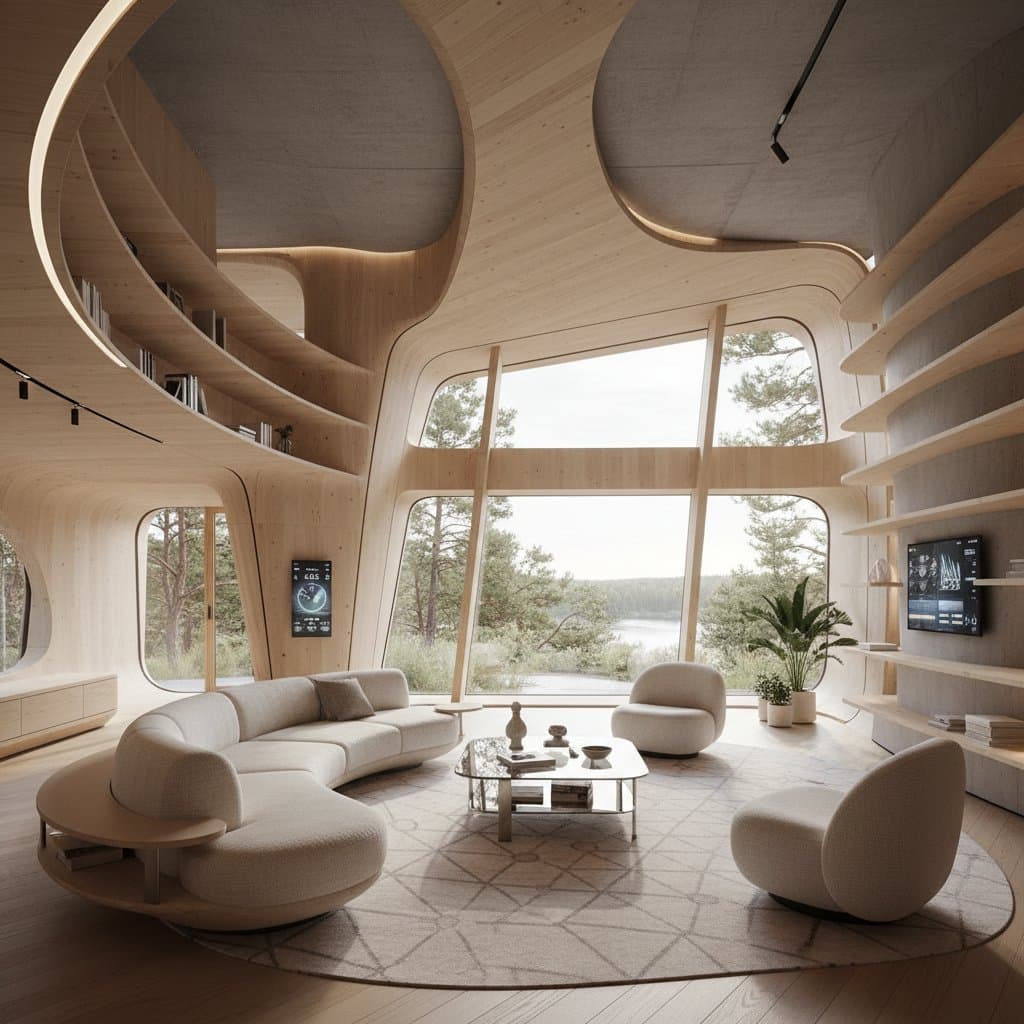
Parametric Design: Building Algorithmic Homes
Consider a residence where every element integrates seamlessly, from curved walls that maximize views to layouts that optimize daily routines. Such precision often stems from parametric design, an architectural method that employs algorithms to generate structures blending innovation with personalization. This approach empowers homeowners to realize spaces that evolve with their requirements, surpassing conventional limitations.
For those contemplating a new build or renovation, parametric design merges computational power with artistic vision. It enables the creation of forms and functions previously unattainable through manual drafting alone.
Understanding Parametric Design in Residential Architecture
Parametric design operates on a foundational principle: architects define parameters rather than static drawings. Specialized software then generates numerous iterations based on inputs like site constraints, occupant habits, and material properties. Adjustments to variables, such as solar exposure or spatial flow, trigger real-time recalculations, ensuring the design aligns precisely with objectives.
This process resembles configuring a system that self-adjusts to variables, much like optimizing a ventilation setup for varying weather patterns. The outcome delivers a residence attuned to its inhabitants and surroundings, promoting both practicality and elegance.
Key Benefits Driving Adoption of Algorithmic Architecture
Homeowners increasingly select parametric design for its superior adaptability and performance compared to traditional techniques. It facilitates precise customization that enhances livability and reduces long-term expenses.
Among the primary advantages are:
- Optimized Spatial Efficiency – Algorithms evaluate room configurations to eliminate wasted areas, such as integrating storage into structural elements for compact yet spacious interiors.
- Enhanced Energy Performance – Simulations assess environmental factors to position features like overhangs or glazing, potentially cutting utility bills by up to 30 percent through passive solar strategies.
- Distinctive Architectural Expression – Generated forms produce organic geometries, like undulating facades, that reflect personal style while maintaining structural integrity.
- Accelerated Iteration Cycles – Visualizations update instantaneously with modifications, allowing rapid exploration of options without repeated manual redraws.
Challenges exist, including the need for advanced tools and skilled practitioners, which can elevate preliminary expenses. Builders must also adapt to parametric outputs, such as CNC-machined components, to execute the vision accurately.
The Parametric Design Process Step by Step
Implementing parametric design follows a structured sequence that collaborates human insight with computational analysis.
- Define Core Objectives – Identify priorities, including desired light penetration, acoustic control, or integration with landscape features, to guide parameter selection.
- Enter Site and User Data – Input specifics like terrain slope, prevailing winds, family size, and preferred finishes into the modeling platform.
- Produce and Evaluate Variants – The system generates 3D renderings of compliant designs, enabling side-by-side comparisons via virtual walkthroughs.
- Iterate Collaboratively – Refine elements, such as adjusting atrium heights for better circulation, with the software propagating changes across the model.
- Finalize for Fabrication – Export the approved design into buildable files, including BIM-compatible plans that streamline on-site assembly and material procurement.
This workflow minimizes errors and fosters innovation throughout development.
Budgeting and Timeline Considerations
While parametric design invests more in upfront modeling, it often yields savings downstream. Architectural fees may increase by 5 to 15 percent due to software licensing and expert involvement, yet streamlined construction offsets this through precise material usage.
For instance, algorithmic optimization can reduce lumber waste by 20 percent in framing. Projects typically extend planning by 2 to 4 weeks but shorten building phases via prefabricated elements. On limited budgets, focus parametric techniques on high-impact areas, like facade systems or interior partitions, to capture benefits without full-scale application.
Selecting Experts for Parametric Projects
Success hinges on partnering with professionals versed in computational methods. Seek firms experienced in generative design, reviewing portfolios that demonstrate residential applications, from modular extensions to full custom estates.
Inquire about their workflow, including integration with permitting processes, where digital models convert to compliant 2D submissions. Verify builder compatibility with parametric deliverables, such as parametric scripts for automated cutting, to avoid execution hurdles.
Weighing Advantages Against Potential Drawbacks
Advantages
- Tailored outcomes that evolve with user feedback
- Superior sustainability through data-informed efficiencies
- Expedited prototyping for confident decision-making
- Minimized on-site adjustments and resource overuse
Drawbacks
- Dependence on niche software and trained specialists
- Elevated initial investments in design phases
- Requirement for contractors to adopt digital workflows
Overall, the methodology excels for those prioritizing forward-thinking, eco-conscious residences.
Experiencing Life in an Algorithmically Designed Home
Inhabitants of parametric homes often report intuitive spatial harmony. Natural illumination shifts gracefully across interiors, while forms that echo natural contours foster a sense of well-being. The design's responsiveness to climate ensures comfort year-round, from shaded summer patios to insulated winter enclosures.
Advancing Your Project with Parametric Tools
To initiate a parametric endeavor, compile a vision board of functional and stylistic aspirations, such as seamless indoor-outdoor transitions or smart energy zoning. Consult designers bridging artistry and technology, articulating your criteria clearly to unlock tailored proposals.
Embrace iterative feedback loops to refine the blueprint. This integration of algorithms and ambition crafts not merely shelter, but an enduring extension of your ideals.