
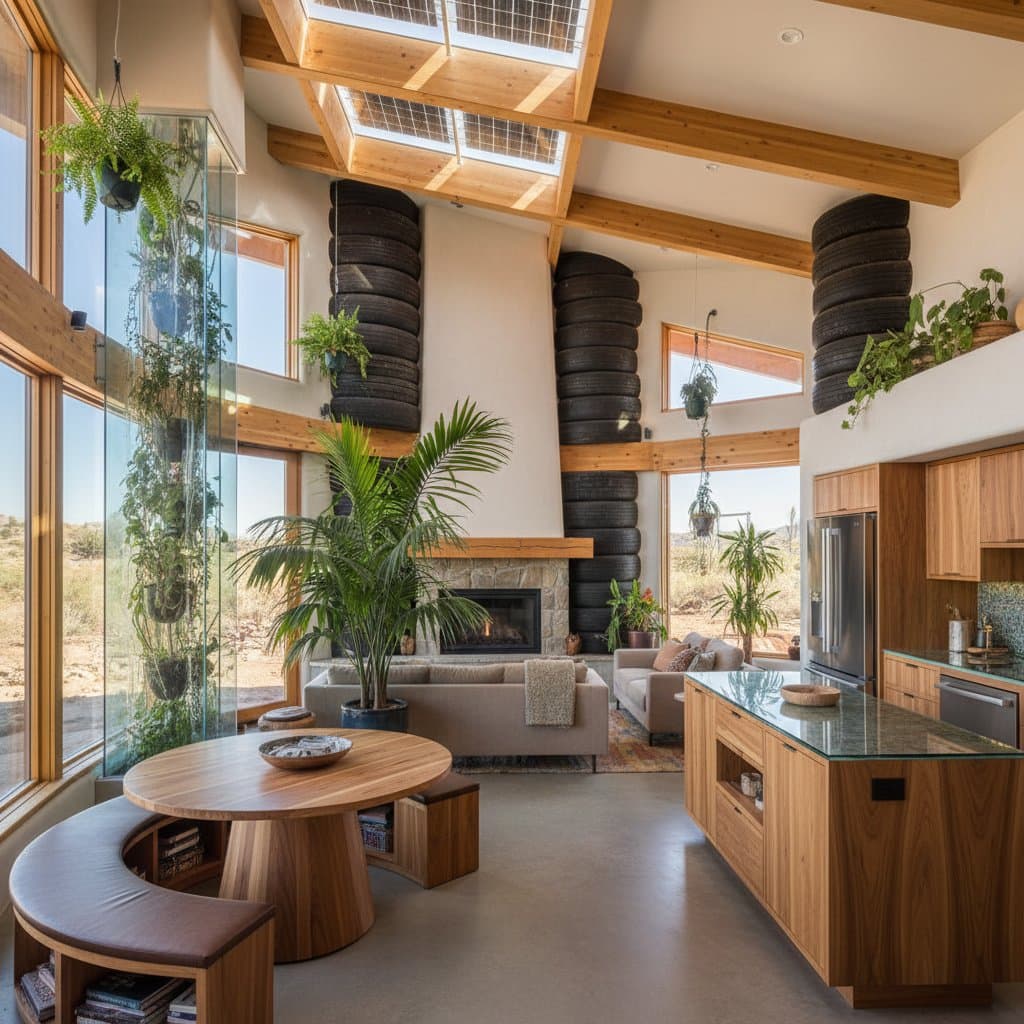
Why Tire Earthships Are Revolutionizing Off-Grid Living
Picture a residence constructed from repurposed tires, robust earthen walls, and expansive windows that capture natural light. This concept may seem unconventional initially, yet it reveals a practical solution for comfort, autonomy, and cost savings. For individuals considering off-grid existence or diminished energy expenses, a tire Earthship presents a compelling option.
Defining the Earthship Concept
An Earthship represents an off-grid dwelling engineered for complete self-reliance. It incorporates recycled components such as tires, glass bottles, and aluminum cans, integrated with natural substances like soil and clay. The core principle involves fabricating a structure that regulates its internal climate, harvests water independently, and supports indoor food production.
Tires form the primary framework for Earthship walls. Once filled with compacted earth, they yield dense, enduring thermal barriers that stabilize indoor temperatures with minimal reliance on artificial heating or cooling systems. This approach embeds the earth directly into the building's architecture, earning these homes the designation of earth-integrated structures.
Key Advantages Driving Adoption of Tire Earthships
Individuals frustrated by escalating utility costs or concerned about ecological impact find substantial benefits in Earthships. The following points highlight primary motivations for embracing this building method:
-
Energy Autonomy: Earthships employ passive solar principles to absorb winter sunlight and shade during summer months. Supplementary solar photovoltaic arrays or compact wind generators often provide electricity.
-
Resource Recycling: Utilizing tires diverts them from landfills; a standard Earthship reclaims several hundred tires, alongside bottles and cans for additional elements.
-
Reduced Ongoing Expenses: Post-construction, maintenance remains economical through rainwater catchment, greywater recycling, and composting sanitation systems that conserve water and waste.
-
Structural Resilience: Packed tires combined with earthen elements create thick barriers resistant to fire, extreme weather, and seismic activity.
-
Aesthetic Appeal: Curvilinear walls, embedded bottle glazing, and natural finishes impart a distinctive, harmonious aesthetic to each dwelling.
Essential Challenges in Earthship Construction
Constructing a tire Earthship demands significant effort and foresight, far beyond a brief endeavor. While the vision inspires, practical hurdles require careful consideration:
-
Intensive Physical Labor: Compacting earth into tires involves strenuous activity; each tire requires 10 to 15 minutes of pounding with a sledgehammer to achieve proper density.
-
Regulatory Compliance: Certain jurisdictions lack precedents for such designs in building codes, necessitating collaboration with local authorities or engagement of certified Earthship architects.
-
Initial Investment: Although long-term savings accrue, outlays for materials, solar installations, and water infrastructure may parallel those of a compact conventional residence.
-
Skill Acquisition: Off-grid operations introduce responsibilities like monitoring water yields and servicing photovoltaic batteries, demanding ongoing education.
Step-by-Step Guide to Constructing a Tire Earthship
For those committed to this path, divide the project into structured phases. Construction spans months, yet initiating with a modest greenhouse allows testing principles before full-scale commitment.
-
Select an Optimal Location
Identify a site with southern orientation to optimize solar gain. Verify soil permeability to prevent waterlogging and confirm zoning permits off-grid developments. -
Develop the Floor Plan
Traditional Earthships adopt a U-configuration with a southward greenhouse extension. Position living areas, sanitation, and utilities efficiently; cluster plumbing lines to streamline installation. -
Erect the Tire Foundations
Source tires from tire retailers or recycling facilities at no cost. Ram earth into each tire using a sledgehammer until firm, then stack in staggered courses resembling masonry, with walls battering inward at a 5-degree angle for stability. -
Incorporate Thermal Mass Features
Berm the exterior walls with soil to enhance heat retention, maintaining warmth through cold seasons and coolness in heat. In variable climates, layer additional insulating materials like straw or foam board. -
Install Roofing and Glazing
Employ salvaged timber, steel beams, or adobe for the roof structure. Fit generous south-facing glazing for passive heating; integrate the greenhouse zone to cultivate produce directly. -
Integrate Utilities for Self-Sufficiency
Outfit eaves with gutters directing flow to cisterns for storage. Implement multi-stage filtration for potable water. Mount solar panels on the roof or use ground-based wind turbines scaled to household demands, typically 2 to 5 kilowatts. -
Apply Interior Finishes
Coat walls with adobe plaster, lime render, or earthen mixtures. These permeable surfaces regulate moisture levels while providing a textured, inviting interior.
Balancing Benefits and Drawbacks
Benefits:
- Achieves near-total self-sufficiency upon completion
- Repurposes waste into functional, eco-friendly architecture
- Eliminates routine utility payments
- Delivers consistent thermal comfort across seasons
- Allows personalized, organic design expressions
Drawbacks:
- Demands extensive manual construction effort
- Involves substantial upfront financial commitment
- Faces potential barriers from municipal codes
- Necessitates expertise in sustaining independent systems
Estimating Expenses and Time Investment
A compact Earthship incurs costs comparable to a basic site-built home, varying with self-performed labor. Sourcing free tires and bottles minimizes material outlays, potentially limiting expenses to $20,000 to $50,000 for a 400-square-foot unit if DIY methods prevail. Professional services for electrical and hydraulic components elevate totals but guarantee code adherence and longevity.
Part-time builders allocate 6 to 12 months for assembly, progressing modularly as funds and supplies accumulate. The tire-packing phase proves most arduous, handling tons of soil, yet fosters a profound connection to the build.
Navigating Safety and Legal Requirements
Prioritize regulatory review at the outset. Municipalities may mandate engineered drawings or approved waste management solutions. Consult a civil engineer versed in rammed-earth techniques to validate designs. Although tire walls withstand compressive forces exceeding 2,000 pounds per square foot, adhere to protocols for overhead framing and wiring to avert hazards.
During construction, equip workers with sturdy gloves, steel-toed footwear, and safety goggles. Collaborate in pairs for handling loads over 50 pounds, and secure sites against unauthorized access. These measures enhance efficiency and mitigate risks.
Experiencing Daily Life in an Earthship
Upon occupancy, the inherent efficiency becomes evident. Massive walls store diurnal heat for nocturnal release, while the integrated greenhouse sustains fresh yields like leafy greens, tomatoes, and dwarf citrus. Harvested rainwater replenishes reserves, and photovoltaic systems silently energize essentials from lighting to refrigeration.
Residents realize utility independence, redirecting funds toward enhancements or leisure. Mastery over resource cycles builds resilience, transforming routine maintenance into empowering routines.
Steps to Launch Your Earthship Journey
Pursuing sustainable autonomy through a tire Earthship demands deliberate preparation. Begin by surveying regional ordinances, then tour established examples or attend hands-on seminars to observe operational dynamics firsthand.
This endeavor rewards persistence with a habitat that embodies efficiency and tranquility. By repurposing discards into enduring shelter, you contribute to planetary stewardship while securing personal liberation.