
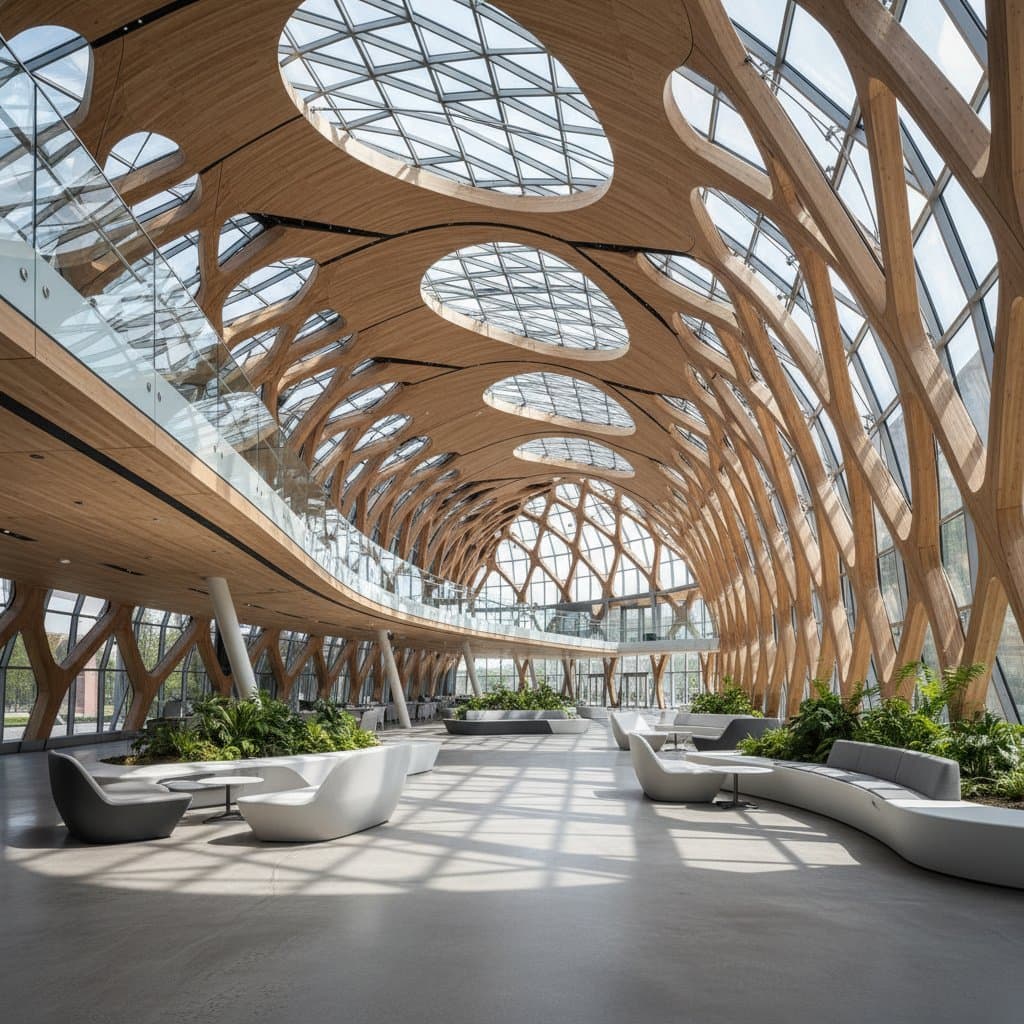
The Rise of Parametric Design in Modern Architecture
Consider a building that twists, ripples, or appears to breathe like a living entity. Such structures often result from parametric design, a method that revolutionizes how architects plan, test, and construct spaces. This technique enables designers to transcend static blueprints and develop buildings that dynamically respond to environmental conditions, material properties, and human requirements.
Parametric design has evolved from an experimental practice limited to high-budget endeavors into a practical tool applicable to projects of varying scales, from custom residences to civic landmarks. For property owners and clients, this evolution opens avenues for enhanced efficiency, sustainability, and aesthetic appeal in daily environments.
Understanding Parametric Design
Parametric design employs algorithms and variable parameters to determine a building's form and structure. Architects define relationships among elements rather than drawing each line by hand; alterations to one variable prompt automatic updates across the model. This capability permits rapid testing of iterations, incorporating factors such as natural light, airflow, construction costs, and visual preferences.
In essence, parametric design instructs software on a building's behavioral logic rather than merely its appearance. It forms part of computational design and algorithmic architecture, where digital tools address intricate spatial and environmental issues. For instance, parameters for window positions can account for annual sunlight variations, yielding configurations that optimize daylight while curbing heat accumulation and producing designs that harmonize artistry with functionality.
Factors Driving Parametric Design Adoption
Multiple elements propel the integration of parametric design into contemporary architecture, including advanced software, escalating sustainability imperatives, and demands for accelerated, adaptable workflows.
-
Advanced Digital Tools
Software such as Grasshopper, Rhino, and Revit democratizes algorithmic modeling for broader professional use. These platforms facilitate real-time experimentation and immediate visualization of outcomes. -
Sustainability Imperatives
Parametric modeling enables early assessment of energy efficiency. Adjustments to material thickness, shading orientations, or roof contours can minimize energy consumption prior to construction. -
Customization and Efficiency
Clients seek distinctive designs without excessive expenses. Parametric techniques strike this equilibrium; a foundational digital model accommodates minor modifications to generate diverse variants without complete redesigns. -
Fabrication Advancements
Technologies like CNC milling, laser cutting, and 3D printing translate complex geometries into reality. Parametric models integrate seamlessly with these systems, curbing waste and streamlining manufacturing.
Parametric Design Workflow
The parametric process commences with client requirements, mirroring traditional architecture. Architects then establish parameters shaping the outcome, such as site orientation, climate data, building dimensions, material attributes, structural constraints, and budgetary limits.
Algorithms subsequently harmonize these inputs to produce models. Designers evaluate and iterate upon generated options to align with performance and aesthetic objectives. Though technically oriented, this method fundamentally supports creative resolution of challenges; algorithms amplify exploration beyond manual feasibility.
Advantages for Architects and Clients
Parametric design delivers concrete advantages valued by practitioners and stakeholders alike.
-
Enhanced Performance
Structures adapt to solar, wind, and thermal patterns, elevating occupant comfort and energy conservation. -
Material Optimization
Simulations of material responses allow reduced quantities while preserving integrity and longevity. -
Greater Precision
Automatic model updates highlight dimensional or alignment discrepancies early in development. -
Expanded Design Liberty
Curvilinear facades, biomorphic forms, and non-uniform geometries become more viable for accurate modeling and execution. -
Streamlined Iterations
Late-stage adjustments occur effortlessly without necessitating full overhauls.
Budget Implications
Parametric design affects expenses variably based on project magnitude and intricacy. Initial algorithm and model development may extend the design phase, yet these efforts typically yield savings through minimized material overuse, construction inaccuracies, and superior operational efficiency.
-
Design Expenses: Fees may rise 10 to 20 percent over conventional projects when bespoke algorithms are involved.
-
Fabrication Expenses: Elaborate forms could elevate costs by 5 to 15 percent, offset by modeling precision that trims waste.
-
Long-Term Economies: Features like optimized daylighting, insulation, and airflow often generate substantial energy reductions.
For residential ventures, early dialogue on cost implications proves essential. Simplified parametric applications targeting environmental efficacy, rather than elaborate sculpting, suit modest undertakings.
Adapting to Regional and Regulatory Contexts
Parametric models require customization to local building codes and climates. In humid zones, emphasis falls on ventilation and humidity management; in temperate regions, on thermal retention and solar optimization. Compliance with structural and safety norms remains paramount.
Unconventional geometries may prolong permitting as officials confirm adherence to regulations. Engagement with firms proficient in computational design expedites approvals.
Engaging Professionals
Parametric design demands expertise beyond lay capabilities, encompassing specialized software, programming acumen, and structural insight. Seek architects or firms highlighting computational design or algorithmic architecture in their portfolios. Review prior projects and solicit explanations of parametric benefits tailored to your objectives.
Traditional architects can partner with computational specialists or fabrication consultants to integrate these elements.
Addressing Misconceptions
Parametric design does not invariably produce extravagant, futuristic edifices. It supports understated enhancements, such as seasonal shading systems, alongside bold museum exteriors.
Contrary to views of diminished humanity, algorithms adhere strictly to architect-defined rules. Creative essence derives from the designer's grasp of spatial dynamics, utility, and sentiment.
Navigating Challenges
Parametric design presents obstacles requiring mitigation.
-
Skill Acquisition: Professionals dedicate time to software and logic proficiency.
-
Team Synchronization: Engineers, contractors, and fabricators must adeptly translate digital outputs.
-
Expense Oversight: Parametric flexibility risks cost overruns from unchecked alterations.
-
Buildability Constraints: Digital elegance may necessitate costly bespoke tooling or materials.
Robust documentation and collaborative platforms bridge digital and physical realms effectively.
Practical Implementations
Parametric design informs diverse endeavors, from transient pavilions to homes. It crafts rainwater-directing roofs, light-responsive facades, and growth-inspired frameworks. Educational and public facilities leverage it for intuitive circulation, averting bottlenecks.
In homes, it customizes window arrays, ventilation paths, and orientation-specific shading, curbing energy demands and boosting livability sans excess complication.
Aesthetic Integration
Parametric forms often exhibit fluidity and sculpture, rooted in functional imperatives like light maximization or stress minimization. This yields purposeful expressiveness.
For clients, such aesthetics stem from rationale, blending utility with visual impact in parametric architecture.
Evolving Horizons in Computational Design
Parametric techniques now intersect with analytics and generative algorithms that suggest layouts from preferences. Sensor-integrated materials herald self-regulating buildings that automate ventilation, panel adjustments, or illumination.
Architects retain pivotal influence, infusing computations with sociocultural and emotional discernment. Equilibrium between digital prowess and artisanal skill charts the path forward.
Implementing Parametric Strategies
For new constructions or remodels, inquire how parametric methods enhance your vision. Computational logic benefits even straightforward adjustments, like shading optimization or roof reconfiguration, fostering comfort and efficiency.
Articulate priorities—energy savings, distinctiveness, or fiscal prudence—to guide parameter definition. This fusion of technique and ingenuity yields intuitive, responsive spaces.
Parametric design signifies architecture's adaptation to tangible contexts. Through data synthesis, logical frameworks, and material expertise, it forges intelligent, attuned, and individualized environments, broadening modern possibilities.