
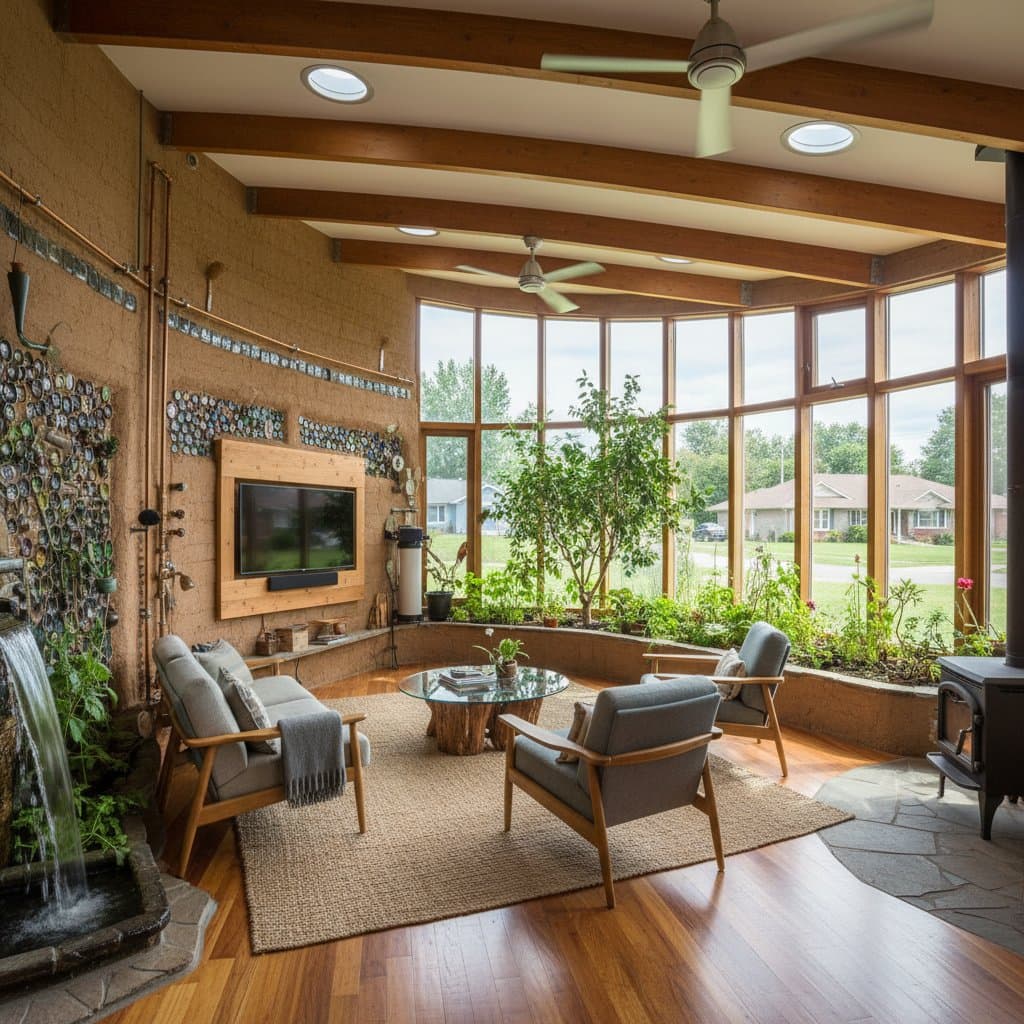
Earthships: Off-Grid Self-Sufficiency in Suburban Settings
Picture arriving home after a demanding day to a residence that generates its own electricity, harvests rainwater, and maintains consistent indoor temperatures. Monthly utility statements become obsolete, reliance on external power networks diminishes, and vulnerability to disruptions fades. For numerous suburban residents, this scenario evolves from aspiration to achievement via Earthship architecture, a method originally developed for remote arid regions and now adapted for neighborhood integration.
Evolving Preferences for Independent Residences
Contemporary homeowners prioritize enhanced comfort, reduced expenses, and greater autonomy. Escalating energy costs and unreliable grid infrastructure prompt many to explore off-grid options. Suburban developments, however, typically lack provisions for complete self-reliance. Earthship principles address this gap by incorporating passive solar strategies, eco-friendly materials, and on-site solutions for water, waste, and power management. The outcome resembles a self-regulating ecosystem that fulfills essential requirements internally.
Defining Earthship Architecture
An Earthship constitutes a sustainable structure employing natural and upcycled elements, such as earth-filled tires, glass bottles, and metal cans. These components create robust, thermally efficient walls that absorb daytime heat and radiate it during cooler evenings. Standard features encompass south-oriented glazing for solar exposure, attached greenhouses for cultivation, and integrated mechanisms for water harvesting and purification.
Originally constructed in secluded locales, contemporary Earthships undergo modifications for suburban parcels. Builders ensure compliance with municipal ordinances while preserving core tenets of autonomy and minimal ecological footprint.
Adapting Earthship Systems to Suburban Constraints
Integrating Earthship elements into suburban environments demands innovative adjustments. Core functionalities persist, yet scale and configuration align with compact sites and regulatory frameworks.
-
Thermal Mass and Insulation: Iconic tire-based walls provide primary structure, though spatial restrictions may necessitate alternatives like rammed earth or stabilized soil blocks to satisfy zoning aesthetics or dimensions.
-
Power Production: Photovoltaic arrays on roofs generate electricity, stored in deep-cycle batteries. For a standard three-bedroom suburban Earthship, a 6- to 10-kilowatt system with reserves suffices. Initial outlay typically spans $15,000 to $25,000, influenced by scale and locale.
-
Water Harvesting and Treatment: Roofing captures precipitation, which undergoes filtration into underground cisterns. A household-scale installation, priced at $8,000 to $12,000, meets demands in precipitation-adequate zones. Backup municipal connections serve as safeguards in drier climates.
-
Waste Processing: Greywater from lavatories and bathing areas irrigates interior flora, facilitating natural filtration for toilet flushing. Blackwater management employs contained septic units, necessitating approvals from public health authorities.
-
On-Site Cultivation: Front-facing planters or greenhouse bays along windows support year-round production of herbs, leafy vegetables, and compact produce, enhancing overall autonomy.
Guide to Constructing a Suburban Earthship
Prospective builders or renovators should follow a structured approach to realize an Earthship-inspired home.
-
Examine Municipal Regulations: Consult local planning offices to identify permissible practices. Certain jurisdictions endorse green materials; others mandate certified blueprints or enhanced fire resistance.
-
Engage Specialized Professionals: Select architects or contractors versed in Earthship or solar-passive methodologies. Experts tailor designs to site specifics, including topography, solar access, and weather patterns.
-
Establish a Practical Budget: Suburban Earthship projects generally range from $250 to $400 per square foot, varying with material selections and interior detailing. Although initial investments exceed conventional builds, operational savings accrue substantially over time.
-
Obtain Funding: Traditional financing may hesitate on non-standard builds, yet eco-focused loans proliferate. Submit comprehensive schematics and performance simulations to bolster applications.
-
Anticipate Upkeep Needs: Independent systems demand periodic attention. Battery lifespans extend 8 to 12 years, filtration media requires replacement, and reservoirs need periodic sanitization. Incorporate these into ongoing financial planning.
Key Factors in Suburban Earthship Development
Regulatory Compliance: Earthships in residential zones adhere to prevailing safety protocols. Wiring installations undergo scrutiny, and hydraulic setups conform to hygiene benchmarks. Partial grid ties permit hybrid operations, leveraging personal systems predominantly.
Environmental Compatibility: Optimal performance occurs in climates with balanced diurnal variations and ample insolation. Extreme cold or excessive moisture may require supplemental barriers, airflow enhancements, or moisture control measures for occupant well-being.
Market Implications: Popularity rises, yet suburban resale markets remain specialized. Valuation experts might reference energy efficiency and eco-credentials, appealing to discerning purchasers despite limited comparables.
Structural Integrity: Earthen barriers offer exceptional durability, provided engineering verifies weight distribution and earthquake resilience. Collaborate with licensed engineers throughout the process.
Financial Analysis and Benefits
Economic viability hinges on off-grid commitment level. Comprehensive setups encompassing solar generation, water capture, and effluent reuse slash utility expenditures by 80 to 100 percent. Return on investment for power and hydration infrastructure averages 8 to 15 years, contingent on consumption and local tariffs.
Beyond monetary gains, residents gain security and adaptability. Premiums for coverage may elevate marginally for novel components, though normalization of green practices narrows this disparity. Incentives like rebates for sustainable features or tax relief further mitigate expenses.
Experiencing Daily Life in a Suburban Earthship
Inhabitants enjoy thermal consistency, with interiors holding steady at 65 to 75 degrees Fahrenheit absent mechanical intervention. Enhanced ventilation and vegetation contribute to superior air purity. Dense walls foster serene acoustics, distinct from typical dwellings.
Designs harmonize utility with contemporary appeal, incorporating smooth concrete surfacing, refined joinery, and integrated automation. The distinction lies in internalized resource provision, elevating lifestyle quality.
Advancing Toward Suburban Self-Reliance
Commence with incremental modifications to existing properties, such as installing photovoltaic units or rainwater barrels, progressing to thermal retrofits or water recycling. Each phase builds capacity for full independence.
Suburban evolution favors intelligent, resilient habitation. Earthships transcend remote origins, embedding seamlessly into community fabrics to deliver enduring comfort, fortitude, and liberation from recurring charges.