
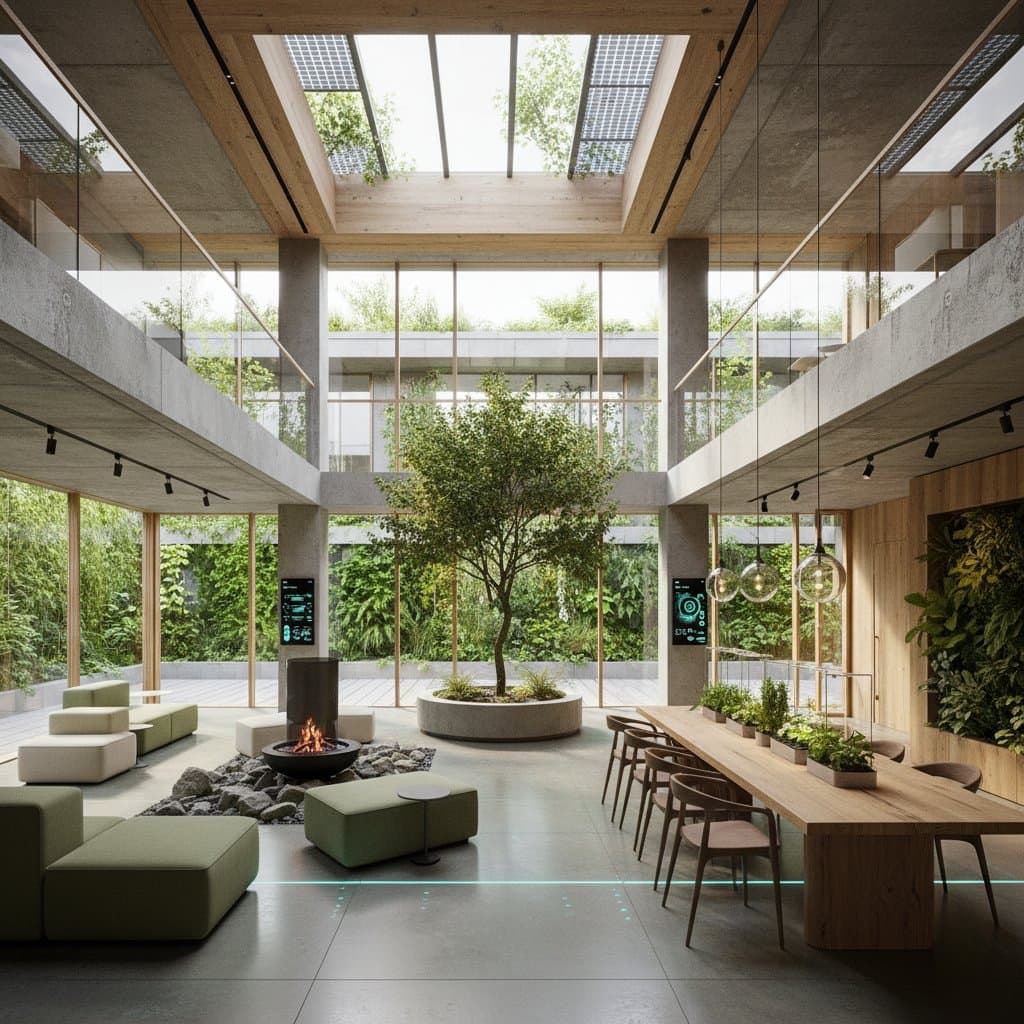
Solarpunk Architecture: Principles for a Balanced Future
Envision a neighborhood where solar panels shimmer on rooftops, climbing vines provide shade over expansive windows, and community gardens deliver fresh produce mere steps from doorways. The atmosphere carries a sense of purity, homes operate with minimal noise, and the layout prioritizes human interaction over vehicular dominance or stark concrete expanses. This scene embodies solarpunk thinking.
Solarpunk extends beyond visual appeal. It represents a comprehensive design philosophy that integrates renewable energy sources, eco-conscious building techniques, and communal living arrangements. The approach envisions a world where technological advancements and natural ecosystems support each other harmoniously. Homeowners, architects, and builders can implement these concepts immediately to foster sustainability.
This article examines solarpunk architecture in real-world applications, outlines methods to incorporate its core principles into residential designs, and evaluates the financial aspects of realization.
Implementing Solarpunk Principles in Residential Spaces
Individuals seeking to enhance home sustainability find a structured guide in solarpunk methodology. Options range from modest adjustments to comprehensive overhauls, aligned with personal objectives and financial capacity.
Prioritize Energy Autonomy
Clean energy forms the cornerstone of solarpunk residences. Solar panel installations offer a proven method to diminish grid dependency. Standard residential systems cost between $12,000 and $25,000 after applicable rebates, influenced by array scale and local installation fees.
Complementing solar arrays with battery storage incurs an additional $8,000 to $14,000, yet delivers reliable power reserves and enhanced autonomy amid disruptions. Residents in regions with limited sunlight or heavy shading may explore community solar initiatives or compact wind turbines, subject to zoning permissions. Efficiency enhancements prove equally vital: improved insulation, leak sealing, and window upgrades reduce consumption by 20 to 40 percent, frequently within a $6,000 budget.
Leverage Natural Elements for Climate Control
Passive design principles anchor solarpunk architecture, minimizing dependence on mechanical systems for temperature regulation by aligning structures with environmental dynamics.
South-oriented windows maximize winter solar gain, while pronounced overhangs block summer heat. Materials with thermal mass, like stone or concrete flooring, absorb daytime warmth and radiate it nocturnally. Adjustable skylights facilitate airflow through natural convection.
Remodeling efforts simplify these integrations. Replacing windows and adding shading elements for an average home totals $8,000 to $15,000, with energy cost reductions recouping expenses over time.
Integrate Greenery Inside and Outside
Solarpunk environments dissolve boundaries between interiors and exteriors. Green roofs and vertical gardens serve aesthetic, insulative, and ecological roles, mitigating stormwater and purifying air.
A basic green roof on a garage or porch begins at $3,500, whereas comprehensive vegetative coverings for entire homes escalate to $20,000 or higher, factoring in structural support and watering mechanisms. Budget-conscious alternatives include wall-mounted vertical gardens or native plant containers on balconies.
Indoor botanicals elevate air quality and regulate moisture. Select resilient species such as pothos, ferns, or peace lilies, which require little maintenance and adapt to varied light conditions.
Select Materials for Durability and Low Impact
Choices in materials shape both aesthetics and ecological profiles in solarpunk builds. Preference goes to renewables, salvaged goods, or recyclables that curb resource depletion.
Bamboo provides a rapidly renewable substitute for traditional hardwoods in flooring. Recycled steel offers robust, recyclable options for structural frames and roofs. Breathable finishes like earthen plasters and lime paints preserve indoor air purity.
Pricing fluctuates: bamboo installation averages $6 to $12 per square foot, and reclaimed wood exteriors range from $10 to $20 per square foot. Initial premiums yield returns through extended service life and reduced environmental costs.
Manage Water and Waste as Valuable Assets
Solarpunk strategies view water and waste through a resource lens, emphasizing conservation over concealment. Basic rainwater collection setups commence at $2,000, supporting landscape irrigation or non-potable uses.
Greywater recycling from sinks and showers for outdoor applications operates legally in select areas with filtration compliance. Advanced solutions like composting toilets and localized treatment systems suit off-grid scenarios, demanding regulatory clearance and expert setup to slash water demands significantly.
Key Factors for Solarpunk Projects
Prospective implementers must address logistical elements prior to commencement.
Navigating Regulations and Standards
Sustainable modifications generally align with existing building codes, though rainwater or greywater systems often necessitate permits. Consult municipal guidelines early. Solar arrays and green roofs may require structural assessments to confirm load-bearing adequacy.
Evaluating Expenses and Returns
Project scopes vary: comprehensive renovations approach $80,000, while targeted improvements begin at $5,000. Financial recovery hinges on regional energy tariffs, available subsidies, and occupancy duration.
Solar and efficiency measures recoup investments in 7 to 12 years via bill reductions. Water conservation and roofing enhancements offer gradual monetary gains alongside pronounced ecological and livability advantages.
Ensuring Expertise and Security
Certain tasks suit DIY approaches, including vertical planting or rain barrel placement. Electrical solar integrations or roof reinforcements demand certified specialists. Heights and wiring pose substantial hazards without proper training.
Adapting to Local Conditions
Solarpunk flourishes by tailoring to geographic contexts, eschewing uniform templates.
Arid zones thrive with enclosed shaded patios, substantial adobe barriers, and light-reflecting surfaces. Humid areas prioritize airflow, dampness-resistant builds, and screening foliage. Temperate winters call for superior insulation, multi-glazed windows, and solar-aligned layouts.
Effective designs weave indigenous methods with contemporary tools. Time-honored earthen builds in arid locales now enhance with photovoltaic systems and high-performance seals.
Embracing Solarpunk Daily Life
Solarpunk allure stems from its holistic lifestyle integration. Residents interact routinely with their spaces: observing sunlight patterns through specialized glazing, gathering edibles from integrated planters, and monitoring consumption via smart displays. These routines cultivate environmental stewardship.
Upkeep integrates seamlessly. Annual solar cleanings, periodic green roof trims, and system checks maintain optimal function. Such routines demand foresight but ensure sustained performance.
Homeowners often value intangible gains most: purified atmospheres, diminished expenses, and outage preparedness foster tranquility.
Steps to Realize Your Solarpunk Vision
Transitioning to solarpunk requires methodical planning.
- Evaluate existing home efficiency to pinpoint energy, water, or thermal inefficiencies.
- Define focus areas, such as renewables, barriers, conservation, or landscaping.
- Develop a feasible budget and schedule, targeting high-impact initiatives first.
- Engage specialists like designers, auditors, and contractors for site-specific guidance.
- Remain adaptable, incorporating emerging innovations and local insights.
Each advancement bridges the gap to equilibrated living with technology and ecology. Solarpunk materializes as viable progress toward planetary stewardship, realized through individual structures, landscapes, and collectives.