
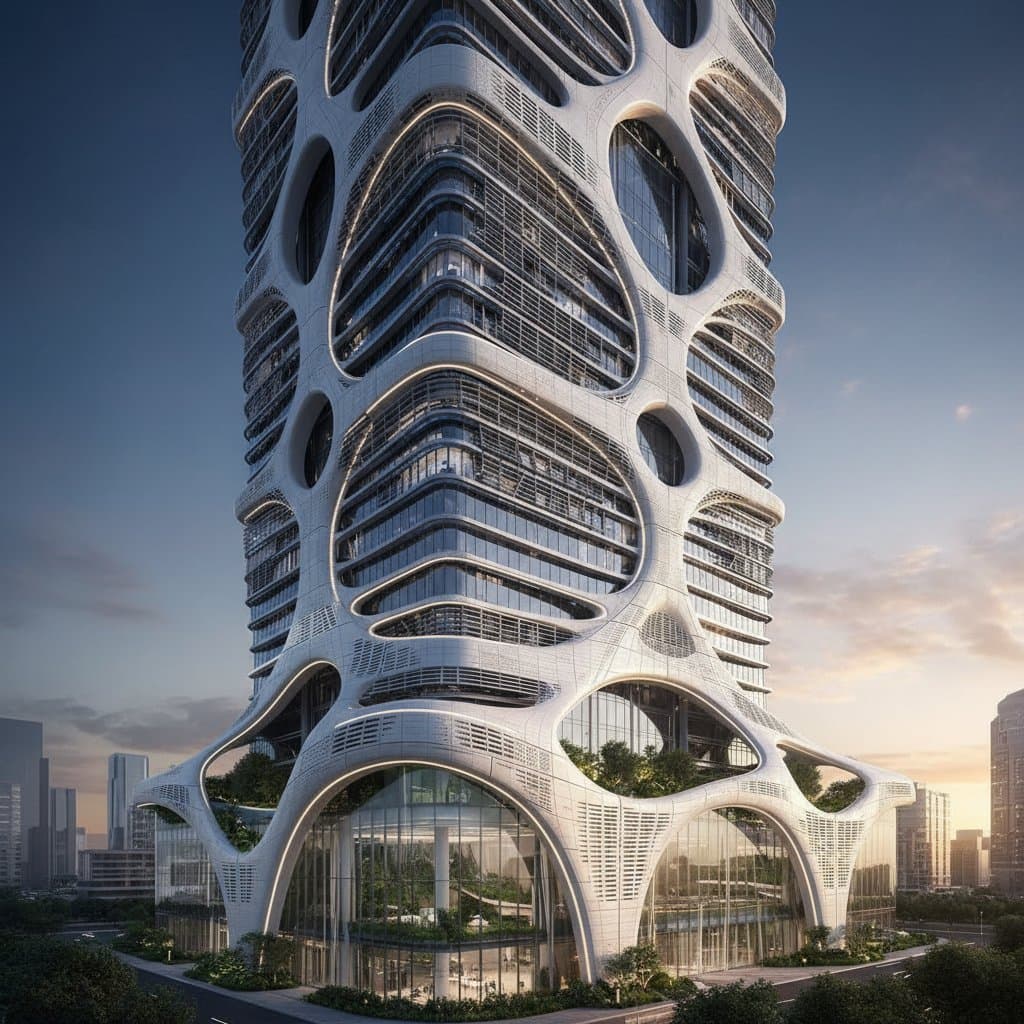
Future of Architecture: 3D-Printed Parametric Facades
Imagine walking past a building whose walls ripple like waves, catching sunlight in a way that shifts through the day. The facade feels alive, breathing with the rhythm of its environment. This scene represents the direction of modern architecture, where designers integrate computation, parametric design, and 3D printing into a seamless process. The outcome creates an architectural skin that responds, adapts, and transforms experiences in built spaces.
The Promise of Parametric Design
Stunning architectural renderings often feature buildings that fold, twist, or undulate. This fluid quality arises from parametric design, a computational approach that employs algorithms to define relationships between design elements. Architects use parameters such as sunlight exposure, wind direction, or structural load to shape geometry dynamically, rather than drawing a single static form.
This method establishes design as a responsive system. An adjustment to one factor recalibrates the entire form. The approach mirrors natural logic, much like leaves that adjust angles to capture sunlight. A parametric facade adapts its pattern to regulate heat or direct airflow, allowing creativity to align with measurable performance.
Where 3D Printing Changes Everything
Parametric design provides the foundation, while 3D printing realizes it in physical form. Traditional facade construction relies on repetitive molds or rigid assembly methods, which limit complexity. Large-scale 3D printing enables customization of each panel without escalating costs or production time. Intricate geometries, once demanding extensive craftsmanship, now emerge layer by layer with high precision.
The transformation extends beyond aesthetics to efficiency and sustainability. Additive manufacturing minimizes material waste significantly. Printing integrates insulation, shading, or structural reinforcement directly into the facade, eliminating multiple assembly steps. Consider a wall printed with built-in channels for air circulation or pockets for greenery. Such innovations yield functional beauty on a grand scale.
Bridging Digital Design and Physical Construction
Computational modeling and 3D fabrication converge to produce remarkable results. Architects develop a digital model responsive to environmental data, which then guides the printer's toolpath for physical components that match digital accuracy. This integration dissolves boundaries between design and construction.
For instance, a parametric facade on a coastal building responds to prevailing winds through aerodynamic surface curves. The algorithm varies printed material density to balance weight and strength. Assembled panels interlock like puzzle pieces, creating a seamless surface that performs as effectively as it appears.
How Parametric Facades Transform Spaces
The technology's impact lies in enhancing spatial experiences. A 3D-printed parametric facade achieves several key functions:
- Regulates natural light by varying perforation density to provide shade in targeted areas.
- Improves thermal comfort with integrated ventilation channels that direct airflow.
- Reduces energy demand through optimized orientation and surface geometry for passive cooling.
- Expresses identity via patterns drawn from local culture, topography, or environmental data.
These advantages originate in the digital model and materialize through fabrication. The architecture emerges as responsive, purposeful, and integrated with its surroundings.
Material Innovations Driving Change
Architects and engineers test materials that broaden 3D printing's capabilities. Concrete serves as the primary option for structural facades, yet blends with recycled aggregates and lightweight polymers lessen environmental effects. Biodegradable composites or clay-based mixtures produce breathable, natural finishes. Metallic or carbon-fiber reinforcements enable ultra-thin, durable panels.
Material selection aligns with climate and local resources. In humid regions, porous printed panels facilitate ventilation. In arid areas, dense facades retain cool air. This adaptability influences building performance under diverse conditions, extending beyond mere form.
The Practical Side: Cost, Time, and Feasibility
Builders and clients often inquire about budget constraints. The response grows affirmative as technology advances. Initial investments in 3D printing equipment prove substantial, yet savings in labor, material waste, and time offset these costs. On-site or nearby printing cuts transportation expenses and accelerates installation.
A printed panel may incur a modest premium over conventional cladding, but performance benefits justify the expense. Energy savings and enhanced durability underscore long-term value. Permitting requires attention, as building codes evolve. Collaboration with experts versed in technology and compliance ensures smooth execution.
Aesthetic Versatility and Cultural Expression
Parametric facades excel in storytelling through form. Curves, folds, or perforations convey meaning. Architects incorporate local motifs, natural patterns, or community identity directly into the geometry, making design the ornament itself.
Visualize a civic building whose printed facade mirrors a nearby river's flow, or a university campus with shading patterns echoing tree canopies. These elements foster emotional ties between inhabitants and their environment. Buildings become active participants in cultural narratives.
Environmental Responsibility and Future Potential
3D-printed parametric facades advance sustainable fabrication principles. Precision printing employs only necessary materials. Digital modeling simulates energy use pre-construction, informing choices on orientation, insulation, and ventilation.
The approach supports adaptive reuse, where printed cladding upgrades older structures for better insulation and appeal without major demolition. Cities benefit from reduced waste in renovation efforts.
Future developments may include real-time responsiveness via embedded sensors. Panels could alter opacity or airflow dynamically, evolving buildings into learning systems. Architecture and technology will merge further, yielding structures that interact intuitively with their contexts.
Implementing Parametric Facades
Architects, builders, and developers interested in 3D-printed parametric facades should begin exploration promptly. Develop small-scale prototypes to evaluate materials and geometry. Partner with computational designers to convert environmental data into parametric models. Engage certified printing specialists for accuracy and safety in fabrication.
Collaboration proves essential. Structural engineers, environmental consultants, and artists contribute unique insights that enhance outcomes. Compliance with local codes demands early involvement from permitting authorities to facilitate approvals.
Sustaining Evolving Design
The appeal of 3D-printed parametric facades rests in their adaptability to changing demands. Structures need not remain fixed for decades. Panels allow reprinting, replacement, or reconfiguration based on updated environmental data or design preferences. This versatility promotes sustainable architecture over time.
Standing before a building clad in such a facade reveals more than construction. It embodies dialogue between art and engineering, human vision and mechanical precision. The focus shifts from mere form to enriched experience, performance, and environmental harmony.