
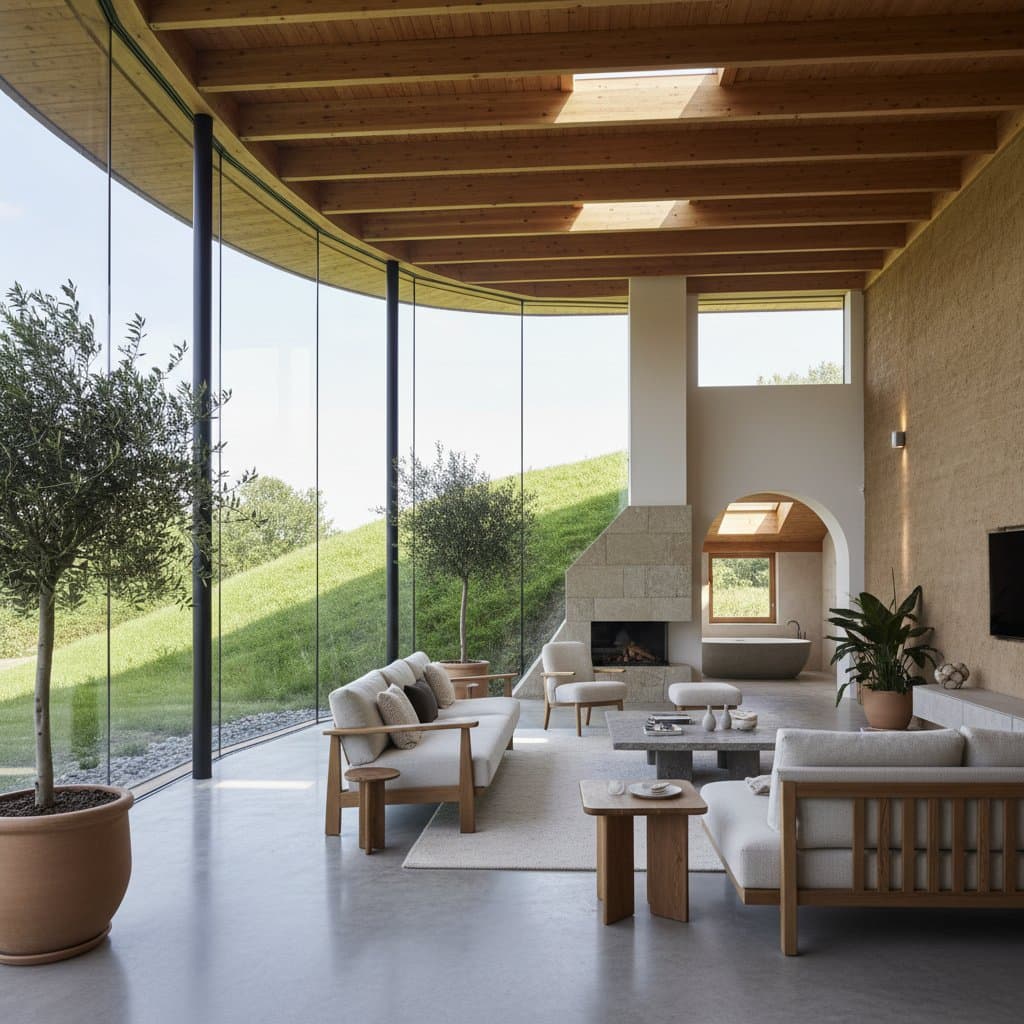
Earth-Sheltered Homes Redefining Underground Luxury
Homeowners seek residences that connect deeply with nature while delivering quiet luxury. Consider a space where temperatures remain steady, sunlight enters gently through skylights, and external disturbances fade into the background. Earth-sheltered living fulfills this vision, elevating underground architecture to remarkable levels.
The Appeal of Subsurface Living
The concept of underground residences may evoke images from science fiction. In reality, earth-sheltered homes attract interest for their aesthetic qualities, operational efficiency, and expansive feel. Builders embed these structures into the earth or cover them with soil, forming a natural insulating barrier. This approach maintains cool interiors during summer and warmth in winter, while shielding against severe weather.
These homes integrate seamlessly with surrounding terrain. Options include hillside integration or living green roofs that mimic natural landscapes. Far from dim, enclosed spaces, contemporary designs incorporate strategic orientation, skylights, and fluid layouts to produce luminous, welcoming environments comparable to premium surface-level homes.
Reasons Earth-Sheltered Designs Gain Popularity
Contemporary homeowners prioritize reduced energy consumption alongside preserved comfort and elegance. Earth-sheltered construction achieves these goals effectively. Soil serves as a thermal regulator, minimizing reliance on artificial heating and cooling systems. Consequently, utility costs decrease over time, and environmental impact diminishes.
These structures convey enduring stability. Construction materials such as reinforced concrete, stone, and steel withstand winds, fires, and external noise. Individuals desiring seclusion and tranquility benefit from the substantial earthen barriers, which create sanctuaries unmatched by standard homes.
Variations in Earth-Sheltered Construction
Multiple approaches exist for earth-integrated building, each providing distinct advantages based on terrain and owner preferences.
-
Bermed Structures
Partial above-ground construction with soil on three sides allows the front facade to capture sunlight through expansive windows overlooking vistas. These designs suit inclined sites and optimize views while enhancing energy performance. -
Fully Recessed or Underground Homes
Complete submersion below grade often features interior courtyards or light shafts for illumination. Such configurations deliver superior insulation and elemental protection. Architects employ innovative plans and overhead glazing to ensure ventilation and vitality within. -
Earth-Covered Roof Systems
Ground-level builds topped with soil and plants forge visual unity with the environment. Green roofs facilitate water management and support biodiversity by hosting native flora and fauna.
Strategies for Illumination, Ventilation, and Livability
Luxury in subsurface homes depends on effective management of light and air circulation. Introduce daylight via high-level windows, enclosed gardens, or transparent panels facing unobstructed areas. Employ reflective materials, pale interior surfaces, and positioned mirrors to amplify interior brightness.
Prioritize airflow through passive convection and buried conduits that precondition incoming air. Integrate geothermal systems for supplemental temperature control, promoting both ease and efficiency. Interiors feature elements echoing external nature, such as honed concrete flooring, masonry walls, salvaged timber supports, and plush fabrics. This combination yields grounded yet elegant atmospheres.
Essential Planning and Construction Factors
Site evaluation precedes excavation. Terrain gradient, soil composition, and hydrology dictate design viability. Opt for permeable soils like sand or gravel to avoid water accumulation.
Implement robust waterproofing with advanced barriers and drainage networks that permit vapor escape. Decide on insulation location: exterior placement leverages soil's thermal inertia, whereas interior application simplifies upkeep. Regulations differ by locale, necessitating consultation with regional experts in subsurface building. Required documentation may include geotechnical assessments or erosion control strategies. Collaborate with seasoned builders to comply with codes and ensure safety.
Financial Aspects and Enduring Benefits
Upfront expenses for earth-sheltered projects may exceed those of traditional builds, primarily from earthmoving and moisture-proofing needs. Costs align with mid-tier conventional homes for basic setups and escalate for bespoke luxury installations.
Ongoing advantages offset initial outlays. Reduced utilities, limited upkeep, and prolonged durability enhance economic viability. Resilient materials endure, and the protected setting minimizes exposure to deterioration, curtailing future interventions. Owners realize returns through fiscal savings, heightened livability, and assurance.
Balancing Sustainability and Elegance
Earth-sheltered architecture excels in merging ecological responsibility with visual allure. Use of organic materials, alternative energy solutions, and indigenous planting schemes produces residences that honor their settings.
Position photovoltaic arrays on exposed surfaces or integrate them into facades. Harvest precipitation for landscape needs, and utilize vegetated coverings to purify air and curb flooding. Interior choices extend this ethos with efficient illumination, low-consumption devices, and regionally procured resources. The outcome is a high-performing home intrinsically linked to its locale.
Selecting Qualified Experts
Subsurface projects demand specialized knowledge. Engage structural engineers, designers, and builders adept at subsurface forces and humidity issues. Choose professionals with proven track records in comparable endeavors.
List your initiative on Doric South at no charge to connect with reliable specialists in earth-sheltered work. Profiles undergo thorough vetting for competence, dependability, and expertise, enabling confident progression. From modest bermed dwellings to expansive below-grade properties, expert collaboration proves essential.
Realizing Your Underground Residence
Earth-sheltered homes embody subtle resilience, harmonizing with rather than dominating the terrain. Envision a lounge adjacent to a planted atrium lush with greenery, or a culinary area drawing fresh produce from an overhead garden. Such elements transform ideas into daily realities.
Partner with designers to assess airflow paths, illumination patterns, and site blending. Evaluate spatial navigation, diurnal light shifts, and outdoor linkages per room. Selections, from window placements to rooftop flora, foster cohesive designs.
Experiencing Subsurface Comfort
Upon completion, earth-sheltered living imparts a profound sense of well-being. Ambient silence deepens, climate stability persists, and environmental bonds strengthen. Upkeep remains straightforward, and security endures regardless of meteorological conditions.