
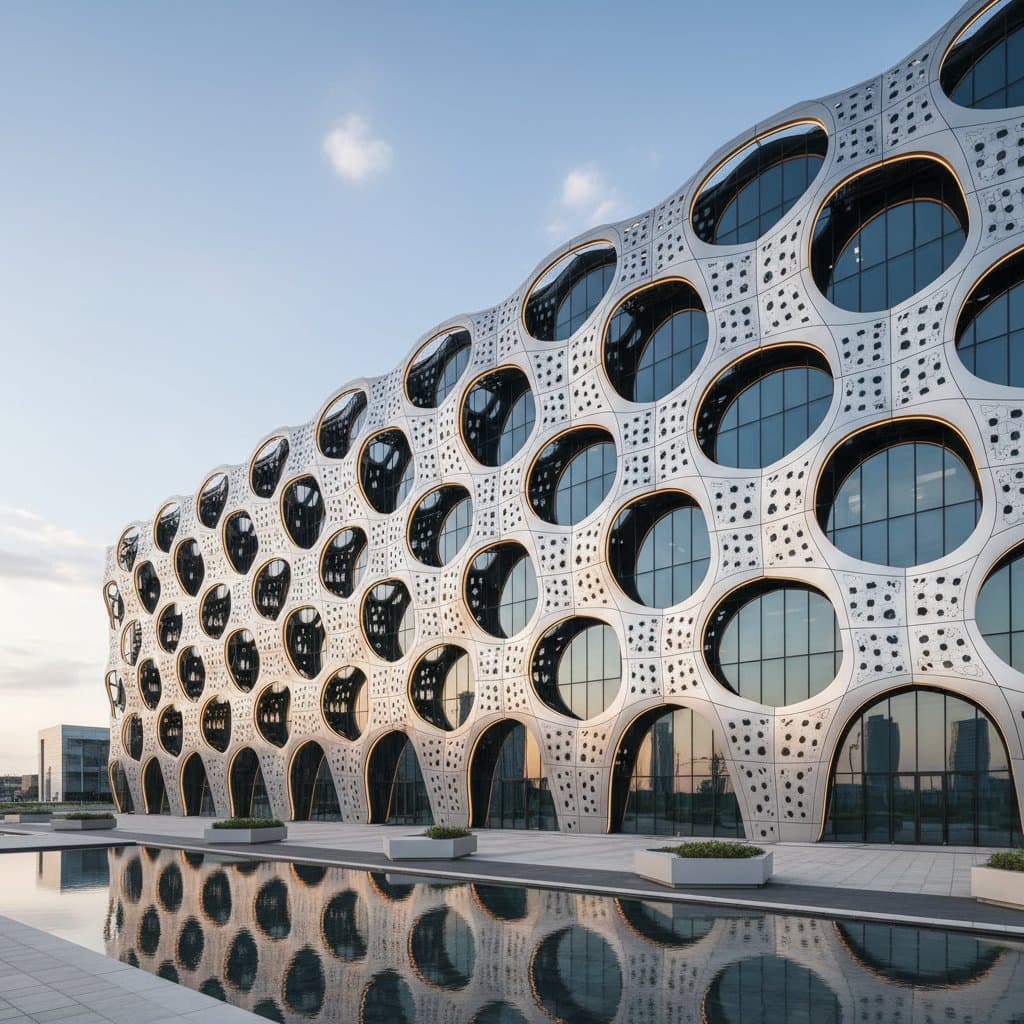
Why Parametric Facades Are Redefining Architecture
Picture a building whose exterior adjusts to the day's light, creating patterns that evoke natural movement. Parametric facades deliver this vision through intelligent, algorithm-driven surfaces. Architects employ these designs to craft structures that harmonize functionality with visual elegance, altering urban landscapes in profound ways.
The innovation stems from a shift beyond mere enclosure. These facades actively engage with their context, fostering buildings that enhance occupant comfort and environmental integration. As a result, architecture evolves from rigid forms to responsive systems.
Unlocking Potential Through Surface Intelligence
Conventional facades primarily shield interiors from external forces. Parametric facades extend this role by incorporating sensors and algorithms to monitor and react to conditions like solar exposure or airflow. This data informs real-time adjustments, such as tilting panels to block harsh rays during peak hours.
Designers achieve this integration via software like Grasshopper or Rhino, which simulate environmental interactions. For instance, in a high-rise project, parameters might dictate panel curvature based on prevailing winds, minimizing structural stress. Such precision ensures that aesthetic choices support operational goals without compromise.
The true value emerges in unified outcomes. Teams balance intricate patterns with practical needs, producing facades that elevate both form and function. This method transforms the building envelope into a multifaceted asset.
Core Principles of Parametric Design
Parametric design relies on mathematical rules to generate forms from input variables. Architects define constraints, such as panel dimensions or material flexibility, then let algorithms iterate possibilities. This process yields optimized solutions tailored to site-specific demands.
- Environmental Data Gathering: Collect metrics on local climate, including hourly sunlight paths and seasonal wind patterns, using tools like weather simulations.
- Rule-Based Modeling: Develop parametric scripts that link data to geometric outputs, allowing instant previews of facade behavior under varying conditions.
- Iterative Evaluation: Assess prototypes for metrics like daylight penetration and thermal bridging, refining until performance thresholds are met.
- Precision Manufacturing: Employ techniques such as laser cutting or robotic assembly to fabricate components with tolerances under one millimeter.
These steps produce facades that appear fluid and purposeful. Every element serves a dual role in aesthetics and utility, creating cohesive architectural expressions.
Advantages Extending Far Beyond Visual Appeal
Energy savings represent a primary benefit of parametric facades. Adaptive elements, like louvers that rotate with the sun, can cut cooling loads by up to 30 percent in sunny regions. This reduces operational costs and carbon footprints without sacrificing interior quality.
Visual dynamics add another layer. Facades with undulating profiles mimic natural phenomena, such as wave formations, infusing static structures with vitality. In urban settings, these features draw attention and foster community interaction around innovative design.
Sustainability amplifies the impact. Materials like recycled composites or low-emission coatings align with green standards, while the facades' responsiveness minimizes resource waste. Overall, they promote buildings that contribute positively to their ecosystems.
Key Factors for Implementation in Actual Projects
Successful parametric facade projects demand interdisciplinary teamwork. Architects outline the vision, engineers validate load-bearing capacities, and fabricators handle production logistics. Early involvement of all parties prevents costly revisions downstream.
Budget considerations influence material selection. Opt for cost-effective options like extruded aluminum for simple shading arrays, or invest in advanced composites for intricate, lightweight assemblies. Initial expenses often offset through long-term energy reductions.
Compliance with codes ensures viability. Verify wind resistance via finite element analysis and fire performance through standardized testing. Maintenance plans, including access points for cleaning actuators, safeguard durability over decades.
Steps to Integrate Parametric Facades into Your Build
Start by assessing project needs, such as optimizing natural light in a commercial space or enhancing ventilation in a residential tower. Engage specialists in parametric tools to prototype concepts early. This collaboration refines designs to fit budget and timeline constraints.
Prototype at scale to test real-world performance, adjusting for factors like local humidity or seismic activity. Finalize with detailed drawings that guide on-site assembly. The outcome is a facade that not only meets specifications but exceeds expectations in adaptability.
Parametric facades mark a pivotal advance in architectural practice. They fuse analytical rigor with expressive potential, yielding structures that thrive in harmony with their environments. This approach invites designers to push boundaries, creating enduring legacies in built form.