
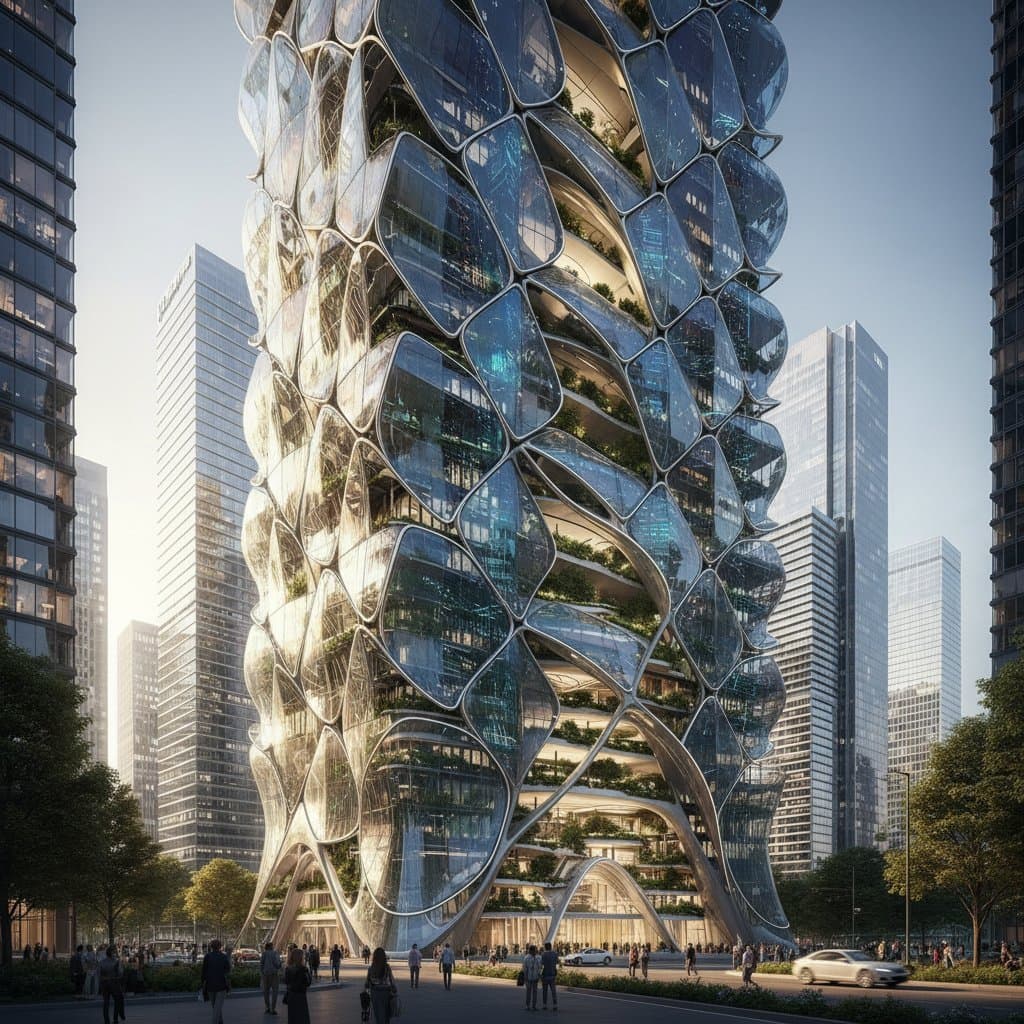
Why Parametric Facades Revolutionize Architecture
Buildings in modern cities respond to their surroundings in ways that mimic natural processes. Facades adjust to light, temperature, and environmental shifts, creating structures that feel dynamic and integrated with their context. Parametric design drives this evolution by combining computational algorithms with architectural creativity to produce facades that optimize performance and aesthetics.
Architects employ parametric facades to move beyond rigid forms. These systems integrate data on climate and site conditions to generate responsive surfaces. The result supports sustainability goals while enhancing visual appeal in urban landscapes.
Understanding Parametric Design
Parametric design relies on algorithms to establish relationships among design elements. Architects define parameters such as panel angles or material densities, which the system adjusts based on inputs like solar exposure or wind patterns. This method generates facades that evolve without manual redrawing.
Consider the process akin to programming a responsive mechanism. Variables control outcomes, allowing the design to adapt dynamically. Software tools simulate changes, ensuring the facade balances form, function, and efficiency from the outset.
Significance in Contemporary Architecture
Static facades limit buildings to fixed responses, regardless of external conditions. Parametric facades introduce adaptability, enabling structures to modulate sunlight intake or ventilation in real time. This integration of environmental data elevates architecture from passive enclosure to interactive system.
Designers leverage geometry to manage light diffusion and thermal control. Shadows and reflections become tools for energy management, reducing reliance on artificial systems. Such innovation aligns with global demands for resilient, low-impact buildings.
Key Benefits of Parametric Facades
Parametric facades deliver measurable advantages across operational and aesthetic dimensions. These systems enhance building performance while minimizing environmental footprint.
-
Energy Efficiency
Parametric facades optimize solar gain through adjustable louvers or shading elements. Sensors track sunlight angles to reposition components, capturing heat in cooler months and blocking excess in warmer periods. This strategy cuts HVAC energy use by up to 30 percent in optimized designs. -
Material Optimization
Algorithms calculate precise component dimensions to eliminate excess. Fabrication data ensures minimal waste during production of panels and connectors. Sustainable materials like recycled aluminum integrate seamlessly, lowering overall project costs. -
Integrated Aesthetics and Performance
Form follows function in parametric designs, where curves and patterns serve structural and environmental roles. Organic shapes inspired by nature distribute loads evenly while filtering light effectively. Occupants experience visual interest tied directly to practical benefits. -
Scalable Customization
Digital tools enable unique panels within a unified framework, ideal for site-specific needs. Parametric models support rapid prototyping and adjustments, making bespoke designs feasible for large-scale projects. This approach accelerates timelines without compromising quality. -
Improved Occupant Comfort
Controlled daylight and airflow create stable interior environments. Facades reduce glare and maintain even temperatures, fostering productivity and well-being. Users report higher satisfaction in spaces with these adaptive features.
The Design and Implementation Process
Parametric facade development starts with site analysis. Teams input data on orientation, climate, and performance criteria into modeling software. Iterative simulations refine the design for optimal results.
-
Parameter Definition
Identify core variables, including shading depth or panel curvature, based on project goals. -
Model Development
Tools like Grasshopper create interconnected rules, where alterations to one element update the whole system. -
Performance Evaluation
Run virtual tests for thermal efficiency, light distribution, and durability under load. -
Fabrication Preparation
Export specifications to CNC machines for accurate production of components. -
On-Site Integration
Install with embedded sensors for ongoing adjustments, ensuring long-term responsiveness.
This streamlined workflow bridges digital conception and physical execution, reducing errors and iterations.
Artistry in Algorithmic Design
Parametric facades fuse technical precision with expressive potential. Patterns drawn from biological forms, such as fractal leaves or fluid waves, embed narrative into surfaces. The result evokes motion and vitality, transforming buildings into sculptural landmarks.
Viewers perceive depth and rhythm in these designs, fostering emotional resonance. Architects draw from diverse inspirations to craft facades that harmonize with local culture and landscape. This synthesis elevates everyday structures to artistic statements.
Adapting to Local Conditions
Parametric systems tailor responses to regional climates. Coastal installations might incorporate wind-deflecting fins, while arid zones feature multi-layered screens for shade. Data-driven customization ensures passive regulation of natural elements.
In variable weather areas, facades mitigate extremes without heavy mechanical intervention. This adaptability promotes resilience, aligning buildings with ecological contexts. Designers prioritize local materials to further embed sustainability.
Practical and Financial Aspects
Initial costs for parametric facades vary with scale and materials, yet long-term savings justify investment. Select cost-effective options like modular aluminum panels to control expenses. Energy reductions often recoup outlays within three to five years.
Plan for maintenance by choosing robust components and simple access points. Compliance with codes requires early engineering input to validate structural integrity. Collaborative planning with fabricators streamlines execution and avoids overruns.
Case Studies in Adaptive Facades
A performing arts center employs parametric louvers that track the sun, flooding interiors with natural light during events while shielding against afternoon heat. This setup enhances ambiance and slashes lighting costs.
Office buildings with kinetic panels facilitate natural ventilation, drawing breezes across surfaces to cool interiors passively. Simulations confirm airflow patterns, validating energy projections before construction. These examples demonstrate practical innovation in diverse settings.
Shaping Urban Environments
Parametric facades infuse dynamism into cityscapes, softening the dominance of uniform towers. Structures contribute to vibrant public realms, encouraging pedestrian interaction. Collaborative processes involving engineers and artists drive holistic urban development.
Communities benefit from landmarks that reflect environmental stewardship. Increased foot traffic around adaptive buildings boosts local economies and civic pride. This trend redefines skylines as responsive ecosystems.
Implementing Parametric Solutions
For new builds or retrofits, assess priorities like thermal regulation or visual impact. Engage specialists in computational design to model options. Prototype key elements to test feasibility and refine details.
Team coordination ensures seamless integration from concept to completion. Budget for software and expertise, but focus on performance metrics to demonstrate value. This proactive approach yields buildings that perform and inspire.
Sustaining Adaptive Architecture
Installed parametric facades integrate into daily operations through automated controls. Routine sensor checks maintain efficiency, with data informing upgrades. Over years, these systems evolve, adapting to changing needs.
Users appreciate the serene interplay of light and form, which mirrors natural cycles. This responsiveness deepens connections to surroundings, making spaces more humane. Parametric design thus endures as a cornerstone of forward-thinking architecture.
Advancing Facade Technology
Future iterations will incorporate smarter materials and AI-driven predictions. Lighter composites and advanced sensors promise greater adaptability. These developments will expand access, embedding intelligence in architecture worldwide.