
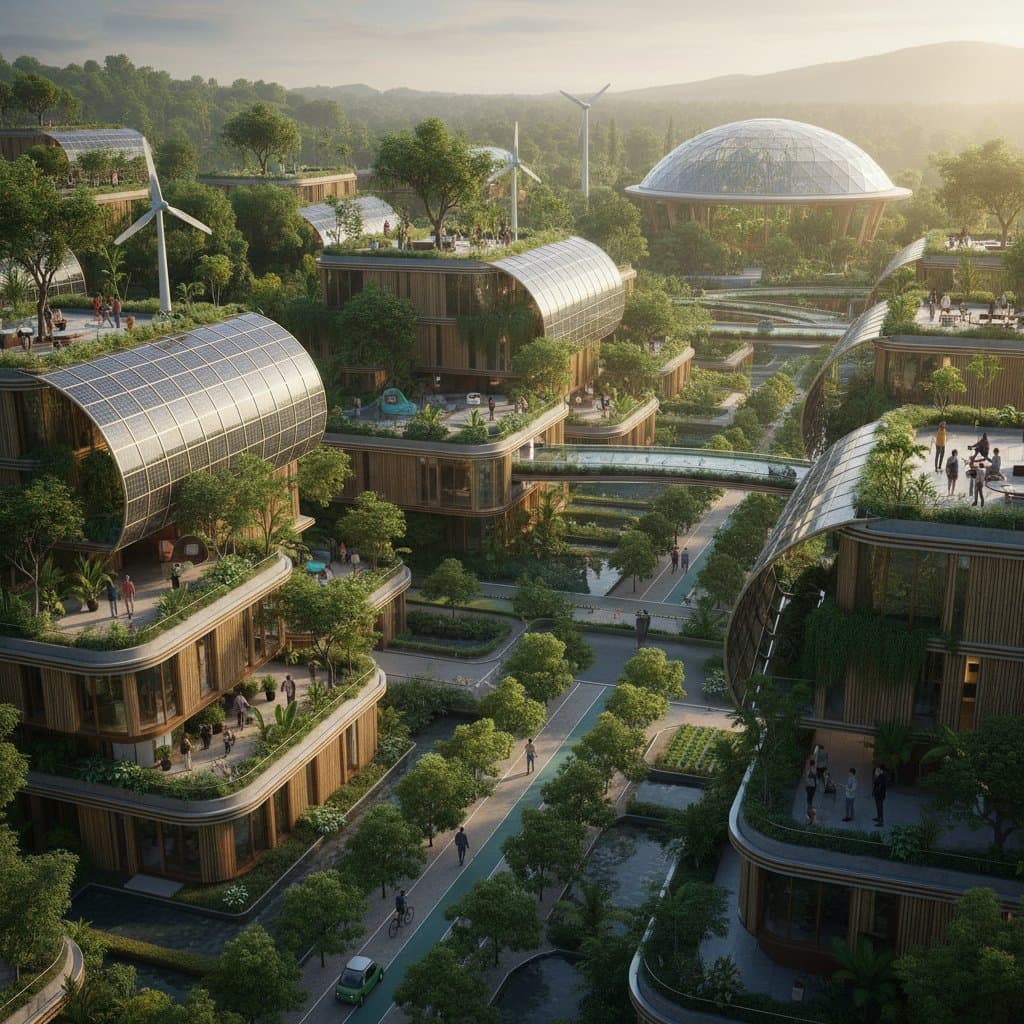
Solarpunk's Green Utopias: Designing Tomorrow's World
Imagine standing on a balcony enveloped by lush climbing vines alongside sleek solar panels that provide both shade and power. Below, a serene street bustles with electric bicycles and communal gardens. The atmosphere remains crisp, structures appear to respire, and energy derives purely from sunlight and breezes. This scene represents more than a fantasy; it embodies the essence of solarpunk architecture, a movement dedicated to crafting aesthetically pleasing, efficient, and environmentally sound habitats.
The Problem and the Promise
Homeowners and architects frequently encounter the challenge of balancing contemporary comforts with ecological stewardship. Urban areas demand enormous energy resources, while conventional building practices depend on resource-intensive materials and mechanisms that degrade the environment. Solarpunk architecture confronts this dilemma by posing a fundamental query: What if structures collaborated with the natural world rather than opposing it?
This paradigm fuses advanced technology, biological principles, and artistic expression to develop environments that produce their own electricity, conserve water through recycling, and nurture surrounding biodiversity. Solarpunk promotes an affirmative, participatory methodology that prioritizes renewable sources, collective assets, and designs shaped by community input.
The Core of Solarpunk Design
Integration forms the foundation of solarpunk principles. Rather than concealing solar arrays on rooftops or isolating gardens in secluded areas, solarpunk showcases them prominently. Each architectural decision serves dual purposes of utility and visual appeal. Consider verdant rooftops brimming with edible vegetation, photovoltaic glass that energizes interior illumination, or exteriors contoured to harness wind currents and direct precipitation flow.
Essential elements frequently encompass:
- Passive solar orientation to minimize expenses on heating and cooling by optimizing natural light and thermal mass.
- Sustainable materials such as bamboo for flexibility, rammed earth for thermal regulation, and reclaimed timber for durability.
- Integrated urban agriculture on rooftops and in courtyards to supply fresh produce and enhance biodiversity.
- Communal energy networks like solar microgrids that distribute power equitably among residents.
- Repurposing of structures to extend the lifespan of existing buildings and curtail construction waste.
Solarpunk transcends a uniform stylistic framework; it functions as a philosophy adaptable to regional weather patterns, cultural traditions, and available materials. For instance, in arid zones, designs might emphasize water-harvesting berms and drought-resistant flora, whereas temperate regions could incorporate geothermal heating loops alongside deciduous shading trees.
How to Bring Solarpunk Home
Implementing solarpunk concepts requires no complete overhaul of one's residence. Incremental, feasible modifications can enhance ecological footprint and autonomy.
-
Optimize energy consumption. Evaluate site suitability for photovoltaic panels or compact wind generators. A modest array of four to six panels, producing 2-5 kilowatts, can offset 50-70 percent of household electricity needs, slashing utility costs by hundreds annually.
-
Maximize rooftop potential. Opt for a sedum-based green roof to insulate against heat or install modular planters with native herbs and flowers that attract pollinators. These additions lower indoor temperatures by up to 10 degrees Fahrenheit in summer and mitigate urban runoff by absorbing 50-75 percent of rainfall.
-
Select eco-friendly materials. During updates, source FSC-certified lumber from nearby forests, utilize recycled steel for framing, or apply sheep's wool insulation that sequesters carbon while regulating humidity. Such choices cut embodied carbon emissions by 30-50 percent compared to virgin synthetics.
-
Implement water conservation. Deploy 55-gallon rain barrels connected to downspouts for garden watering, or install a greywater diversion system from sinks to irrigate landscapes. These setups can recapture 20-40 percent of household water use, easing municipal strain during dry spells.
-
Foster community ties. Engage with regional eco-initiatives or form block-level tool-sharing networks. Collaborative efforts, such as joint solar purchases, reduce individual expenses by 15-25 percent through bulk pricing and shared maintenance.
Practical Considerations
Financial Aspects: Entry-level solar installations, including inverters and basic batteries, typically range from $3,000 to $8,000 after federal incentives like the 30 percent Investment Tax Credit. Extensive green roofs cost $10-25 per square foot for lightweight systems versus $25-50 for soil-intensive versions supporting vegetables. State-specific rebates, such as California's SGIP for energy storage, can offset 20-50 percent of expenses.
Regulatory Compliance: Consult municipal building departments prior to any installations. Solar permits often process in 2-4 weeks with standardized approvals, but rainwater harvesting may necessitate plumbing inspections in water-scarce regions. Structural assessments ensure green roofs do not exceed load capacities, typically limited to 15-30 pounds per square foot.
Project Duration: Simple additions like programmable thermostats or barrel setups complete in hours. Comprehensive endeavors, including full solar arrays or facade retrofits, span 1-3 months, factoring in engineering reviews and weather-dependent work.
Safety Protocols: Engage certified electricians for wiring to comply with NEC standards and prevent fire risks. Plumbers versed in greywater must adhere to health codes to avoid contamination. Limit personal projects to surface-level tasks, such as affixing vertical gardens or swapping fixtures for low-flow alternatives.
Living the Vision
Embracing solarpunk extends beyond superficial style; it cultivates routines that prioritize planetary health. A well-rounded dwelling harmonizes user well-being, operational thrift, and ecological guardianship. From substituting high-efficiency fixtures to orchestrating neighborhood energy cooperatives, each initiative fortifies long-term viability.
Implementing Sustainable Choices
Solarpunk manifests through tangible decisions by everyday inhabitants, not elusive visions of verdant megastructures. Pair deliberate aesthetics with robust renewables and neighborly partnerships to forge residences that pulse with vitality and rootedness in the earth. Initiate modestly, strategize meticulously, and witness each enhancement propel toward an illuminated, symbiotic existence.