
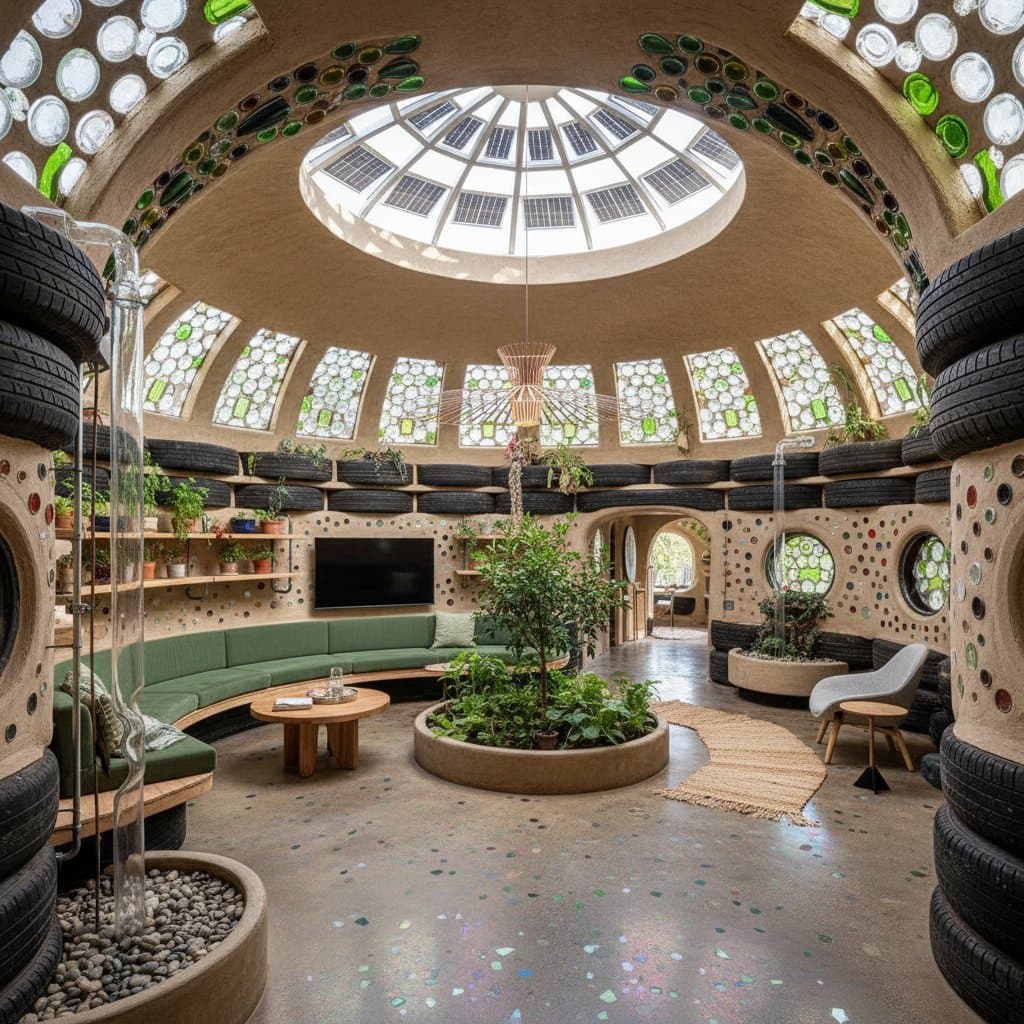
Earthships: Off-Grid Homes from Recycled Materials
Picture a residence that generates its own electricity, maintains stable indoor temperatures through natural means, and recycles nearly all of its resources. Residents enjoy freedom from monthly utility payments and disruptions in service because the dwelling operates independently. This vision defines the earthship, an off-grid home constructed primarily from repurposed materials.
Defining Features of Earthships
Earthships prioritize self-sufficiency in their design. They capture rainwater for use, process waste on-site, and produce electricity without connection to municipal grids. Builders typically employ discarded items like tires, glass bottles, and aluminum cans, filling them with soil to form robust, thermally efficient walls that stabilize internal climates.
The underlying objective remains straightforward: minimize dependence on outside infrastructure while delivering a durable and livable space. Individuals committed to autonomy and ecological responsibility find earthships to embody a viable strategy for disconnected living, with numerous examples demonstrating long-term success worldwide.
Integrated Systems in Operation
Every earthship incorporates interconnected mechanisms to function without conventional services. These elements work in harmony to support daily needs while conserving resources.
-
Passive Thermal Regulation and Solar Gain
The massive walls, constructed from earth-packed tires, absorb solar heat during daylight hours and release it gradually at night to warm interiors in cold seasons. During summer, this thermal mass blocks external heat, keeping spaces cool. Large, south-oriented windows maximize passive solar collection, supplemented by vents and overhangs that facilitate cross-breezes for additional cooling. -
Renewable Energy Generation
Solar photovoltaic panels form the core of power production, often augmented by compact wind turbines in suitable locations. Excess energy charges deep-cycle batteries, ensuring a steady supply for essentials such as LED lighting, refrigeration, and small appliances. Owners monitor systems through simple charge controllers to optimize performance and extend battery life. -
Water Harvesting and Conservation
Sloped roofs channel rainfall into gutters, directing it to filtration units and underground cisterns for storage. Purified water serves initial purposes like potable use and personal hygiene, then cascades through greywater systems for plant irrigation, and ultimately supports septic functions. This multi-stage reuse can achieve up to 90 percent water efficiency in arid environments. -
On-Site Food Cultivation
The south-facing facade functions as a semi-enclosed greenhouse, where banana plants, vegetables, and herbs thrive under diffused sunlight. Integrated planters utilize greywater nutrients, yielding fresh produce year-round and cutting reliance on external food sources. Proper plant selection based on local climate enhances productivity and biodiversity. -
Waste Management Solutions
Greywater from laundry and bathing flows into constructed wetlands or sand filters for natural purification before garden application. Blackwater undergoes anaerobic digestion in sealed septic tanks, preventing contamination while allowing safe nutrient recovery. These closed-loop methods reduce landfill contributions and protect local ecosystems.
Estimating Costs and Planning Construction
Earthship development often proves more economical than standard housing, though expenses fluctuate with scale, features, and site conditions. A basic, self-constructed unit spanning 1,000 square feet may total $150,000 to $250,000, equating to $150 to $250 per square foot. Professional builds with advanced customizations can exceed $300 per square foot, offset partially by material scavenging.
The endeavor demands moderate to advanced skills, involving labor-intensive steps like ramming 300 pounds of dirt into each tire for wall foundations. Prospective builders should acquire tools such as pneumatic packers and assess site soil quality early. Engaging a certified earthship consultant ensures structural integrity, particularly for electrical and plumbing integrations, and can shorten the typical six-to-twelve-month timeline.
Adapting to Local Conditions and Regulations
These structures excel in arid, high-sunlight areas where passive solar principles shine, achieving temperature swings of less than 15 degrees Fahrenheit daily. In humid or frigid zones, builders add extra insulation layers, such as rubble berms or reflective roofing, and implement robust drainage to handle excess moisture. Site analysis, including solar exposure and wind patterns, guides optimal orientation.
Local ordinances present key hurdles, as earthships may fall under experimental or alternative building categories. Submit comprehensive blueprints detailing energy calculations, water flow diagrams, and waste protocols to secure approvals. Collaborate with zoning authorities from the outset; in permissive regions like parts of New Mexico, streamlined processes exist, while stricter areas benefit from engineer-stamped designs.
Balancing Benefits and Drawbacks
Key Advantages
- Near-elimination of utility expenses after initial setup
- Resilient construction using abundant, low-cost recycled elements
- Consistent comfort without mechanical heating or cooling
- Enhanced personal sovereignty through integrated resource systems
- Potential for community-sourced materials to lower environmental footprints
Notable Challenges
- Substantial initial investment in time and physical work
- Varied permitting requirements that delay projects
- Skill development needed for system upkeep and troubleshooting
- Niche appeal affecting property liquidity in resale scenarios
Sustaining Performance Over Time
Routine care mirrors that of typical residences, focusing on preventive measures. Replace solar batteries every five to ten years based on usage, and inspect rainwater filters quarterly to maintain purity. The adobe-like walls, once coated with natural plasters, withstand decades with minimal intervention, resisting pests and weathering effectively.
Financial returns accrue through energy independence, with payback periods of five to seven years in sunny locales. Market value appreciates in eco-conscious areas, where demand from like-minded buyers supports premiums. Track local trends in sustainable real estate to position the property advantageously.
Steps to Realize Your Earthship
Begin by studying established installations through books, documentaries, or site tours to grasp real-world applications. Evaluate your site for feasibility, budgeting for permits, materials, and potential professional input. Choose a construction path—pre-designed plans, contractor oversight, or full DIY—and assemble a team if sharing labor appeals.
Secure financing options like green loans or grants for sustainable projects. Adhere to a phased schedule: foundation and walls first, followed by systems installation, to manage momentum. The completed earthship not only shelters but actively contributes to a regenerative way of life, transforming waste into wealth and dependence into resilience.