
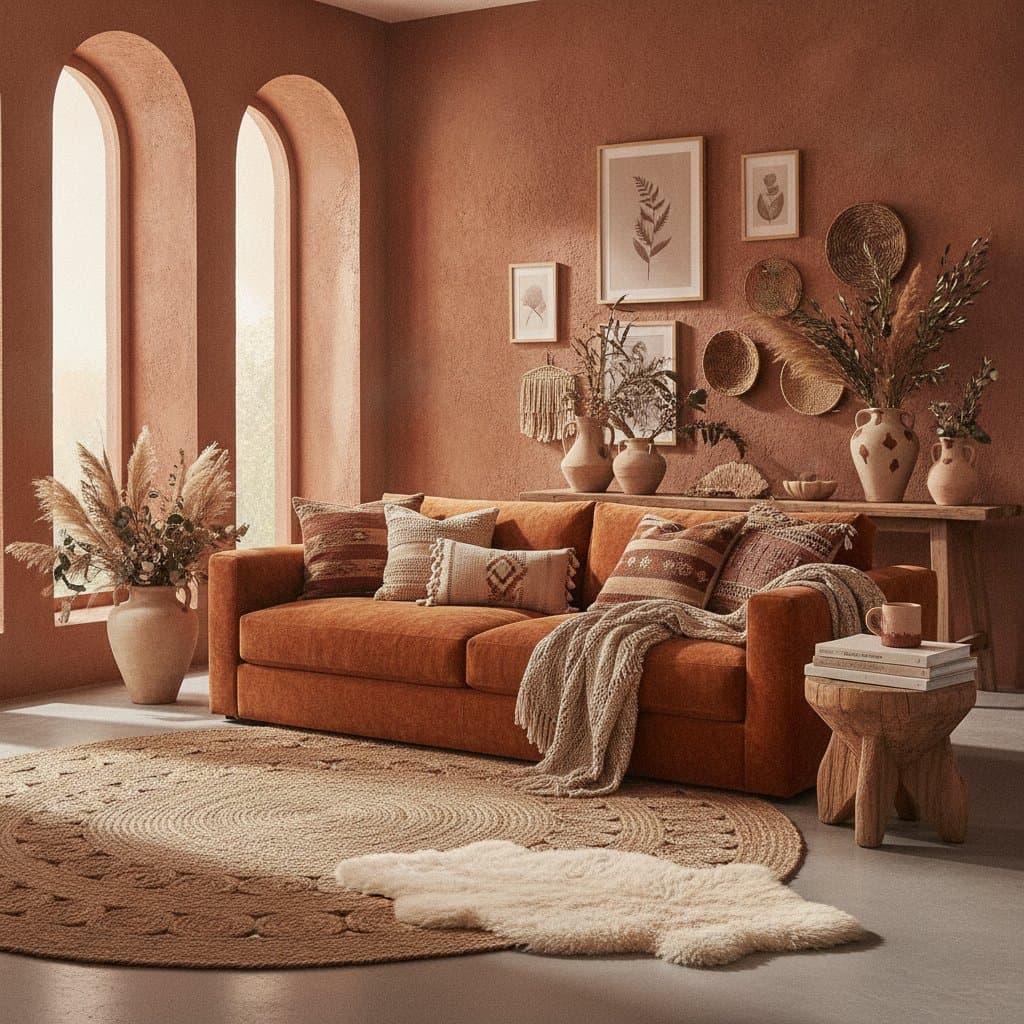
Earthy Maximalism Trends in Warm Terracotta Interiors
Many homeowners seek spaces that feel both expressive and grounded. Earthy maximalism paired with terracotta tones delivers layered interiors that remain calm and inviting. This approach favors rich textures and natural hues over stark minimalism.
Terracotta introduces organic warmth that supports abundance without chaos. Readers can apply the style through targeted accents or full room transformations. The result is a home that feels personal and connected to natural elements.
Core Qualities of Terracotta
Terracotta occupies a balanced position between rustic charm and refined elegance. Its earthy reddish brown tone adds depth while complementing materials such as brass, linen, and velvet. The hue evokes clay and soil, creating an immediate sense of calm.
Key attributes include consistent warmth under soft lighting, strong compatibility with greens and muted blues, and proven longevity across centuries of interior use. Application options range from painted walls and tiled floors to woven textiles and ceramic accessories. The color adapts equally well to contemporary and traditional architecture.
Defining Earthy Maximalism
Maximalism celebrates personality through collected objects and varied patterns. The earthy variant replaces clashing brights with nature inspired materials and warm neutrals. Wood, stone, clay, and handcrafted textiles form the foundation.
Patterns draw from botanical motifs, global artisan traditions, and organic textures. Plants and pottery provide living accents that prevent visual overload. Terracotta serves as the unifying thread that maintains cohesion across multiple layers.
Step by Step Implementation
Begin with Wall Color
Apply a matte terracotta paint to one or two focal walls in living rooms or bedrooms. An accent wall behind seating creates immediate depth. Limewash finishes add subtle texture when full coverage feels excessive.
Layer Complementary Textures
Combine smooth ceramics with rough timber, rattan seating, and aged metal fixtures. Place a terracotta cushion against a linen sofa, then introduce an ochre throw. These pairings produce a collected appearance that still feels intentional.
Introduce Patterns with Restraint
Select two or three nature derived prints that share terracotta undertones. Tribal or leaf motifs work well when repeated across cushions and rugs. Cohesive color prevents the mix from becoming disjointed.
Select Meaningful Accessories
Choose handmade pottery, framed textiles, and sculptural vessels that carry visible craft. Position these items with breathing room so each piece remains prominent. Avoid filling every surface.
Refine Lighting Conditions
Install warm bulbs in table lamps and wall sconces. Add dimmers to adjust evening ambiance. Brass and bronze surfaces reflect terracotta tones effectively under this lighting.
Incorporate Living Elements
Position large leafy plants in terracotta pots against the colored walls. Fiddle leaf figs and snake plants supply contrast and freshness. Smaller succulents occupy shelves without crowding.
Maintaining Visual Balance
Cohesive palettes of two or three repeated colors prevent clutter. Partial clearing of surfaces allows favorite objects to stand out. Baskets and trunks store everyday items while preserving the layered aesthetic.
Regular review from multiple angles confirms the space remains calm. Earthy maximalism rewards thoughtful editing rather than constant addition.
Advantages and Limitations
The style produces warm, timeless rooms that adapt to many architectural contexts. Personalization occurs easily through art and textiles. Full commitment requires patience during the layering process.
Low light can mute some terracotta shades, making layered lighting essential. Those who prefer simplicity may adopt the color alone without embracing full maximalist density.
Planning and Execution Details
Small projects begin with paint and accessories. Larger renovations involving tile or wiring benefit from professional installation. Sealing terracotta floors protects against stains, while painted surfaces need only occasional touch ups.
Create a mood board with fabric swatches and paint samples before purchasing. This preparation reduces later adjustments and ensures harmony across materials.
Sustaining the Finished Interior
Rotate accessories with the seasons to keep the room dynamic. Replace or reposition plants as they mature. Adjust lighting sources to match changing daylight and mood. The approach succeeds when the space continues to reflect personal evolution rather than rigid rules.