
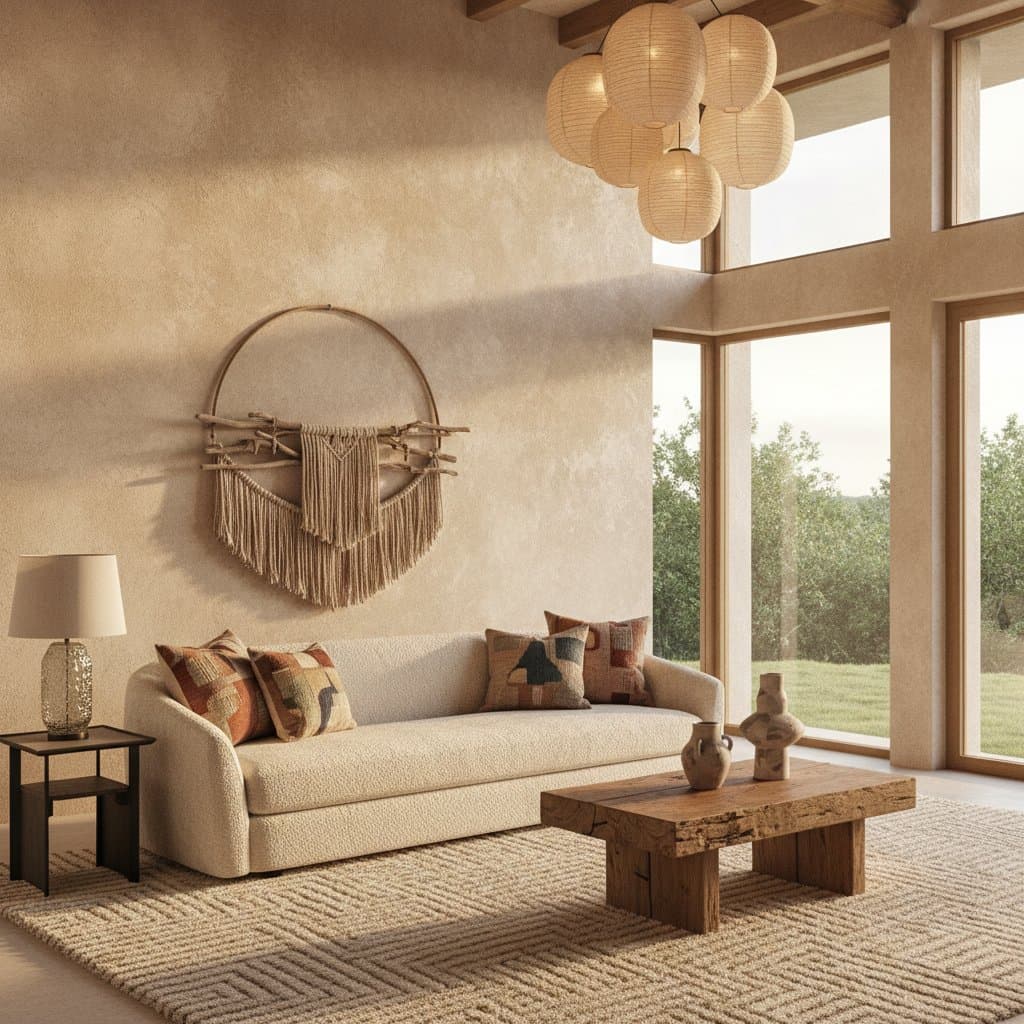
Handcrafted Textures Making a Comeback in Modern Design
Smooth, glossy finishes can feel overly polished in current interiors. Homeowners and designers increasingly seek handcrafted textures that introduce warmth and character absent from uniform factory surfaces. The minimal aesthetic retains support, yet the prevailing direction favors blending it with tactile, personal elements.
Running a hand across lime plaster or a handmade ceramic tile reveals immediate satisfaction from authentic texture. These surfaces convey grounded permanence and human involvement. The movement toward handcrafted finishes centers on connection, material quality, and acceptance of natural variation.
Reasons Texture Returns to Contemporary Interiors
Modern rooms often feature uniform planes, crisp edges, and restrained color schemes. These choices produce clarity yet can appear detached. Handcrafted textures restore visual layering and genuine presence by showing evidence of individual shaping.
The approach appears across architecture, furnishings, lighting, and accents. It complements clean layouts by softening edges without disrupting restraint. A plaster wall beside streamlined cabinetry or a woven rug under simple seating creates immediate balance.
Contrast drives the effect. Handmade details placed against modern forms produce spaces that read both current and enduring.
Practical Handcrafted Texture Options
Handcrafted surfaces suit nearly every area of a residence. Some applications call for specialists while others suit direct homeowner effort. Several options now receive frequent use:
-
Limewash and Venetian plaster walls produce gentle color shifts and a matte surface suited to living areas, kitchens, and baths. Budget for higher material and labor costs due to specialized application. The finish shifts subtly with changing light throughout the day.
-
Handmade ceramic tiles display individual glaze and surface differences that distinguish each piece. They command higher prices than standard tiles yet elevate backsplashes and shower surrounds at once.
-
Natural wood showing visible grain replaces heavily sanded or coated boards. Brushed or reclaimed selections add touchable quality to cabinetry and furniture while suggesting settled use.
-
Textured stone surfaces such as rough limestone or honed marble retain organic marks that feel lasting. These pair effectively with metal or glass details.
-
Woven and handcrafted fabrics offer an accessible starting point. Rugs, linen panels, and wool throws introduce comfort without structural work. Even limited additions shift room atmosphere noticeably.
Integrating Textured Elements into Existing Modern Rooms
Homes already oriented toward minimal design benefit from gradual layering rather than overhaul. Begin with limited changes and assess the outcome.
- Replace a single flat wall with plaster or reclaimed wood paneling to alter room perception without visual clutter.
- Introduce pottery, baskets, or sculptural fixtures that supply subtle irregularity and allow easy repositioning.
- Position smooth counters beside textured backsplashes or pair matte paint with a textured rug to heighten depth.
- Retain a restrained color range so natural material variation remains the primary interest.
Advantages and Trade-offs
Handcrafted selections carry distinct benefits alongside practical considerations.
Advantages
- Each installation differs, producing spaces with individual presence.
- Textured surfaces encourage contact and foster a settled atmosphere.
- Materials such as plaster and stone develop character over time.
- Local sourcing frequently supports smaller-scale, lower-impact production.
Trade-offs
- Skilled work and custom materials increase expense.
- Application processes extend project duration.
- Certain finishes require periodic attention to maintain appearance.
- Availability depends on locating suitable makers or suppliers.
Budget-conscious projects can combine limited handmade accents with standard materials. An accent strip of handmade tile amid conventional field tiles supplies texture while controlling cost.
Budget and Schedule Factors
Wall treatments typically require two to three times the outlay of standard paint. Handmade tiles begin at moderate per-square-foot rates that rise with finish complexity. Plaster work spans multiple days for proper layering and curing, whereas wood or textile updates may complete within a weekend.
Homeowners handling portions of the work should examine material specifications in advance. Many artisans supply small-batch kits suitable for trial areas. Larger surfaces benefit from professional installation to secure lasting results.
Connecting with Regional Makers
Local sourcing adds relevance to the project and yields materials attuned to place. Useful channels include artisan markets for direct examination of samples, salvage outlets for reclaimed stock, community workshops listing specialists, and verified directories of small-batch producers.
Provide images or sketches when reaching makers. Discuss samples, care requirements, and timelines to align expectations before work begins.
How Texture Alters Room Perception
Surface variation influences both visual and sensory experience. Rough finishes scatter light differently than smooth ones, creating depth. A plaster wall softens brightness in sunlit rooms. Clay tile underfoot adds warmth, and a woven shade modifies light diffusion.
Rooms that register as impersonal often lack this layer. Texture supplies quiet focus that makes spaces more inviting.
Maintaining Textured Surfaces
Hand-applied finishes develop differently than manufactured ones. Minor irregularities contribute to appeal when addressed early.
- Clean with soft tools to prevent surface abrasion.
- Use mild solutions rather than strong chemicals on most natural materials.
- Apply sealers to stone and certain plasters as needed.
- Check surfaces annually for moisture or wear to address issues promptly.
Applying These Changes
Select one wall, furnishing, or set of accents to introduce first. Observe daily responses to the altered atmosphere before expanding. Each addition layers story and substance into the room. The outcome is a setting that feels authentic and intentionally formed.