
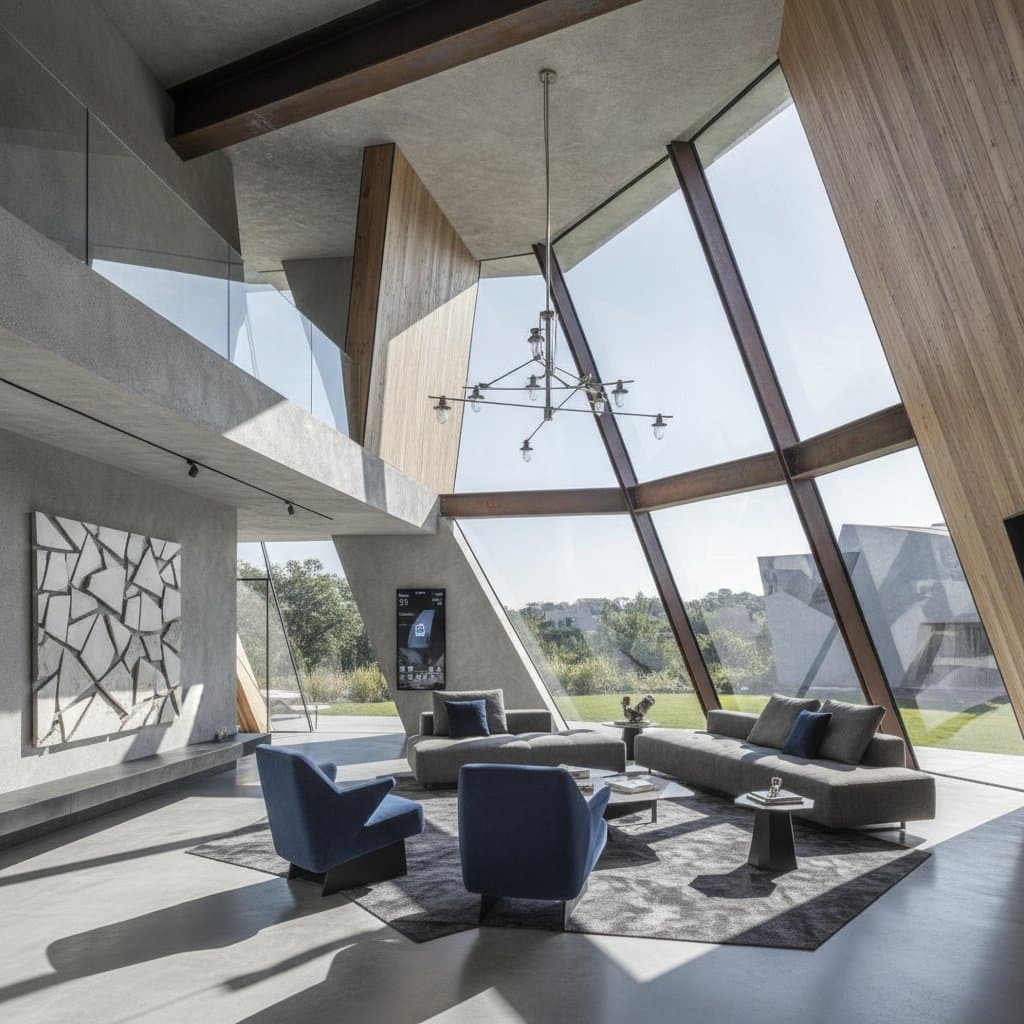
The Rise of Fragmented Deconstructivist Architecture in 2026
Many observers notice buildings that twist, tilt, or fracture in unexpected directions. This style challenges conventional ideas of balance. Fragmented deconstructivist architecture now ranks among the most discussed approaches in residential design.
Core Principles of the Style
This approach discards requirements for neat symmetry. Designs instead favor sharp angles, overlapping planes, floating panels, and visible materials. The intent centers on motion, visual surprise, and personal expression rather than disorder.
The movement began with civic structures yet now appears in private residences. Owners select it for sculptural qualities that differentiate each project. The result allows personality to appear through form instead of surface ornament.
Reasons for Growing Interest
Owners often seek escape from repetitive layouts. Fragmented designs create distinction from every viewpoint and prompt discussion about contemporary living. The method also grants flexibility once structural principles are understood.
Traditional rules of proportion give way to calculated deviations. Success requires both technical knowledge and willingness to explore unconventional solutions.
Observable Design Elements
Several recurring features appear in completed projects:
- Angular intersections that replace right angles.
- Contrasting materials placed in direct contact.
- Walls or roofs that cant or appear detached.
- Structural members left visible as aesthetic components.
- Surface treatments that emphasize differences in texture.
Scale these elements according to project scope. Extensive new builds can incorporate dramatic cantilevers, while modest updates may involve only selective material changes or offset openings.
Practical Steps for Implementation
Owners can introduce the language without full reconstruction. Begin with interior finishes such as herringbone tile patterns set at thirty degree angles or floating shelves that project at odd angles from walls. Next, introduce material contrasts like polished concrete against matte steel. Adjust room divisions through partial partitions or staggered doorways.
Always consult an engineer early. Unusual geometry must satisfy code requirements for load paths and seismic performance.
Advantages and Trade-offs
Advantages
- Distinct appearance that resists duplication.
- Greater latitude for custom solutions.
- Surfaces that shift in appearance throughout the day.
Trade-offs
- Elevated expenses from custom fabrication and additional engineering.
- Extended review periods for permits and structural calculations.
- Increased attention required for cleaning and joint inspection.
Partial adoption often balances impact against cost.
Budget and Schedule Expectations
Limited interventions, such as an angled entry or mixed material elevation, align with mid range renovation costs. Complete homes built in the style typically require two to three times the budget of conventional construction.
Design modeling extends timelines because each joint needs verification. Construction may add several months when components arrive from specialized suppliers.
Regulatory and Safety Considerations
Local zoning ordinances frequently limit projections and heights. Submit preliminary sketches to planning staff before detailed development. Engage a licensed engineer to confirm stability of any suspended or slanted members.
Assembling the Project Team
Select professionals with demonstrated experience:
- An architect who has executed irregular residential forms.
- A structural engineer comfortable with nonstandard load paths.
- A contractor who maintains relationships with fabricators of custom components.
Review completed work and discuss specific obstacles encountered on prior jobs.
Daily Experience and Upkeep
Completed spaces alter light patterns and circulation. Angled glazing casts moving shadows. Overlapping volumes encourage movement between areas. Warm wood flooring and textiles soften harder surfaces when desired.
Schedule periodic reviews of flashings, sealants, and drainage points. Document cleaning procedures for layered cladding during the final construction phase.
Maintenance Routines
Inspect joints and sealants twice each year. Keep records of any movement or water intrusion. These steps preserve both appearance and structural integrity over decades of use.