
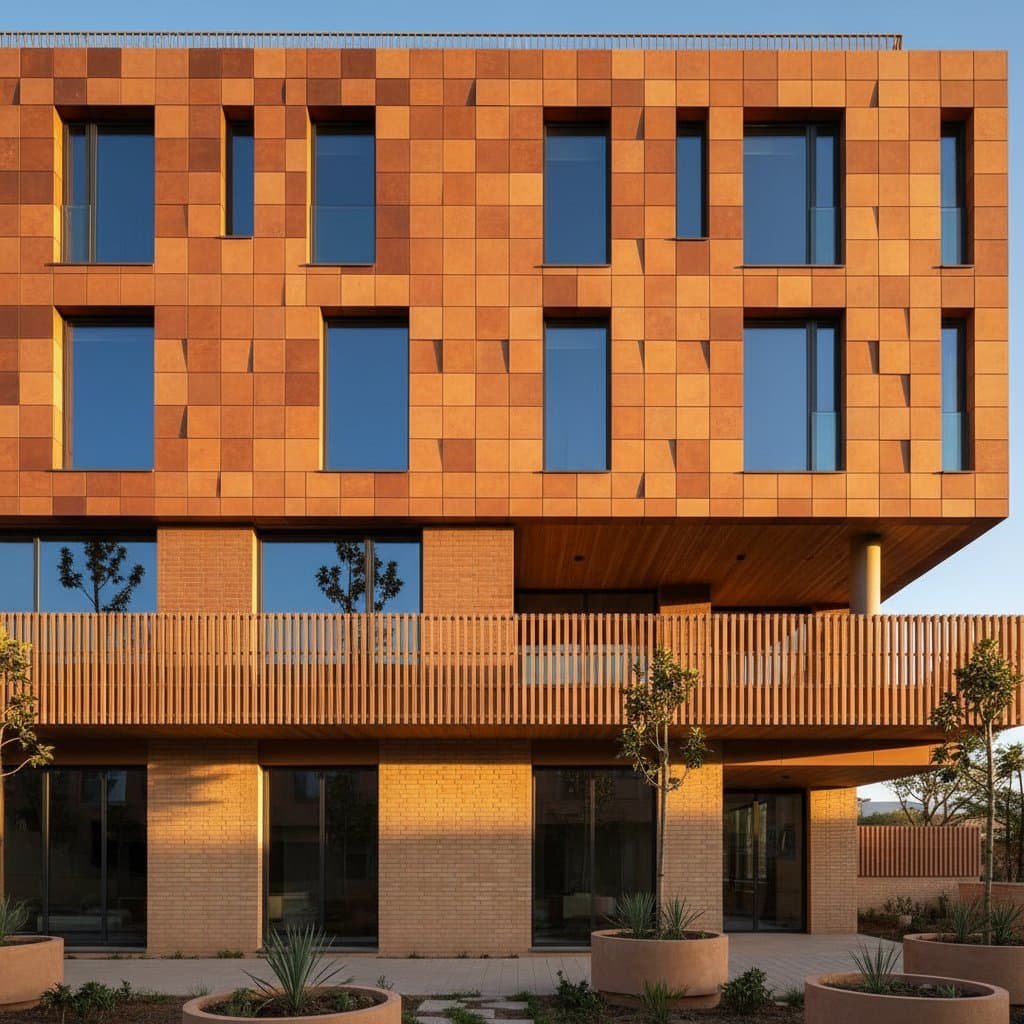
The Terracotta Revival Redefining 2026 Architecture
Buildings increasingly feature a warm, earthy glow on their surfaces. This reddish clay hue on contemporary facades signals more than a fleeting style choice. It represents a broader shift toward reintegrating terracotta into architecture. Although once associated with historic villas and artisanal pottery, this material now serves innovative roles. For those considering a new construction or remodel, terracotta warrants serious evaluation.
The Return of an Ancient Material
Terracotta dates back centuries, but recent innovations breathe new vitality into its application. Improvements in firing processes and glazing techniques enhance its strength, weather resistance, and customization options. Architects select it for its authentic aesthetic, thermal regulation, and adaptability. Examples appear in multifamily housing, commercial skyscrapers, and compact garden structures. This resurgence emphasizes practicality, environmental responsibility, and the serene ambiance provided by organic elements.
Why Terracotta Aligns with Contemporary Design
Terracotta harmonizes with the rising demand for tactile, nature-inspired finishes. Unlike the stark chill of concrete or glass, terracotta infuses immediate coziness into any form. Its inherent red and brown shades integrate seamlessly with timber, rock, and foliage. Over years, the material patinas gracefully, acquiring nuanced shifts that imbue structures with character. Individuals seeking genuine expression and effortless care find these attributes compelling.
Several functional benefits contribute to its renewed popularity:
- Durability: High-temperature firing ensures terracotta withstands decades of exposure with scant intervention.
- Energy Efficiency: The material moderates internal climates by limiting thermal bridging.
- Sustainability: Derived from plentiful clay deposits, frequently local, it minimizes transportation emissions.
- Design Versatility: Current offerings include diverse hues, surfaces, and geometries, empowering creative expression.
Applications in Current Architectural Projects
Terracotta extends beyond traditional roofing to diverse implementations in projects of varying scales.
-
Façade Cladding: Panels of terracotta introduce depth and cordiality to outer shells. Arrangements can run vertical, horizontal, or patterned to achieve varied optical impacts.
-
Roofing Systems: Classic clay tiles persist for their visual allure and extended service life. In sunny regions, they deflect solar rays while promoting airflow beneath.
-
Interior Applications: Clay flooring, accent partitions, and ornamental dividers infuse subtle rusticity within living areas.
-
Ornamental Elements: Terracotta shapes balconies, supports, and frame surrounds, delivering elegance with reduced ongoing care.
Advantages and Drawbacks to Consider
Prospective users benefit from evaluating both strengths and limitations before incorporating terracotta.
Advantages
- Derived from natural, renewable resources
- Superior insulation characteristics
- Extended durability requiring minimal maintenance
- Unique, perennial visual identity
- Compatible with minimalist and classical aesthetics
Drawbacks
- Elevated initial expense relative to vinyl or plain concrete
- Substantial mass necessitating structural reinforcements
- Placement demands expert craftsmanship to prevent fractures or misalignments
- Narrower palette than engineered substitutes
With prudent financial planning and qualified installation, benefits generally surpass obstacles.
Incorporating Terracotta: A Practical Guide
Approach terracotta integration with a structured strategy, whether for modest highlights or comprehensive coverage. Thorough preparation streamlines execution.
-
Define Objectives: Identify zones where terracotta maximizes aesthetic or operational impact. Front elevations and thresholds often prove effective entry points.
-
Engage Specialists Promptly: Collaborate with architects or contractors experienced in clay systems to assess load-bearing needs and assembly methods. Early involvement avoids expensive modifications later.
-
Select Surface Treatments: Options span unglazed matte, glossy enamel, or embossed profiles. Enamels simplify upkeep yet reflect light more prominently; raw versions evoke artisanal authenticity.
-
Account for Environmental Factors: In humid areas, integrate robust seals and barriers against moisture ingress. Despite resilience, routine sweeps and periodic checks preserve appearance.
-
Estimate Costs Accurately: Materials fall into moderate-to-premium categories versus conventional exteriors. Variations stem from processing and dimensions, while labor premiums reflect meticulous handling.
Terracotta Versus Alternative Materials
Contextual comparisons aid material selection.
| Material | Appearance | Maintenance | Longevity | Cost Range | Sustainability |
|---|---|---|---|---|---|
| Terracotta | Warm, organic, tactile | Low | High | Medium-High | Excellent |
| Concrete | Utilitarian, even | Low | High | Medium | Moderate |
| Metal Panels | Polished, contemporary | Medium | Medium | Medium | Moderate |
| Vinyl Siding | Smooth, consistent | Low | Medium | Low | Poor |
Terracotta distinguishes itself through organic charm and ecological merits, albeit with greater preliminary outlay.
Emphasizing Sustainability
Environmental considerations now guide material choices centrally. Terracotta integrates effortlessly into green building protocols. Production utilizes abundant clay, processed in optimized kilns that conserve fuel. Progressive facilities reclaim process water and scraps, reducing waste. At project end, panels lend themselves to disassembly and relocation.
Paired with adequate barriers, terracotta curbs energy demands for climate control. It absorbs daytime warmth and dissipates it gradually, fostering equilibrium inside. Such traits suit locales with pronounced diurnal fluctuations, lowering operational expenses over time.
Integrating Terracotta in Interior Spaces
Full exterior adoption proves unnecessary to appreciate terracotta's allure. Within homes, it contributes subtle hue and grain without dominating schemes. Backsplashes in clay tiles or focal walls in living zones introduce gentle tonal play. Tile underlayments offer tactile comfort and complement diverse furnishings, from rugged to sleek.
Ambient illumination accentuates its strata, particularly daylight that reveals clay's inherent richness. To maintain vibrancy, apply protective coatings at intervals against soiling. Routine care involves gentle detergent solutions and soft cloths.
Shaping Trends in Contemporary Architecture
Terracotta's upswing mirrors a pivot to elemental, personable substances. Practitioners depart from impersonal, transparent envelopes for forms attuned to surroundings. Terracotta strikes this equilibrium: artisanal in visage, engineered in function. It graces spare compositions alongside fluid, biomorphic expressions.
Advanced panels bend to arcs or lattice arrays. Initiatives employ louvered screens to modulate daylight, yielding ventilation and dynamic motifs. These approaches affirm that ecological integrity and aesthetic refinement coexist harmoniously.
Realizing Terracotta's Potential in Your Project
For construction or updates, terracotta imparts perennial essence. Experiment modestly if hesitant: a lone partition or terrace element tests compatibility with context. Consult proficient advisors to secure flawless execution. As performance unfolds, scale applications accordingly within fiscal bounds.
This material transcends ephemerality, embodying integrity in selection and execution. In urban towers or serene dwellings, it conveys substance, cordiality, and stability. For ventures aspiring to modernity alongside longevity, terracotta unifies vision and reality.