
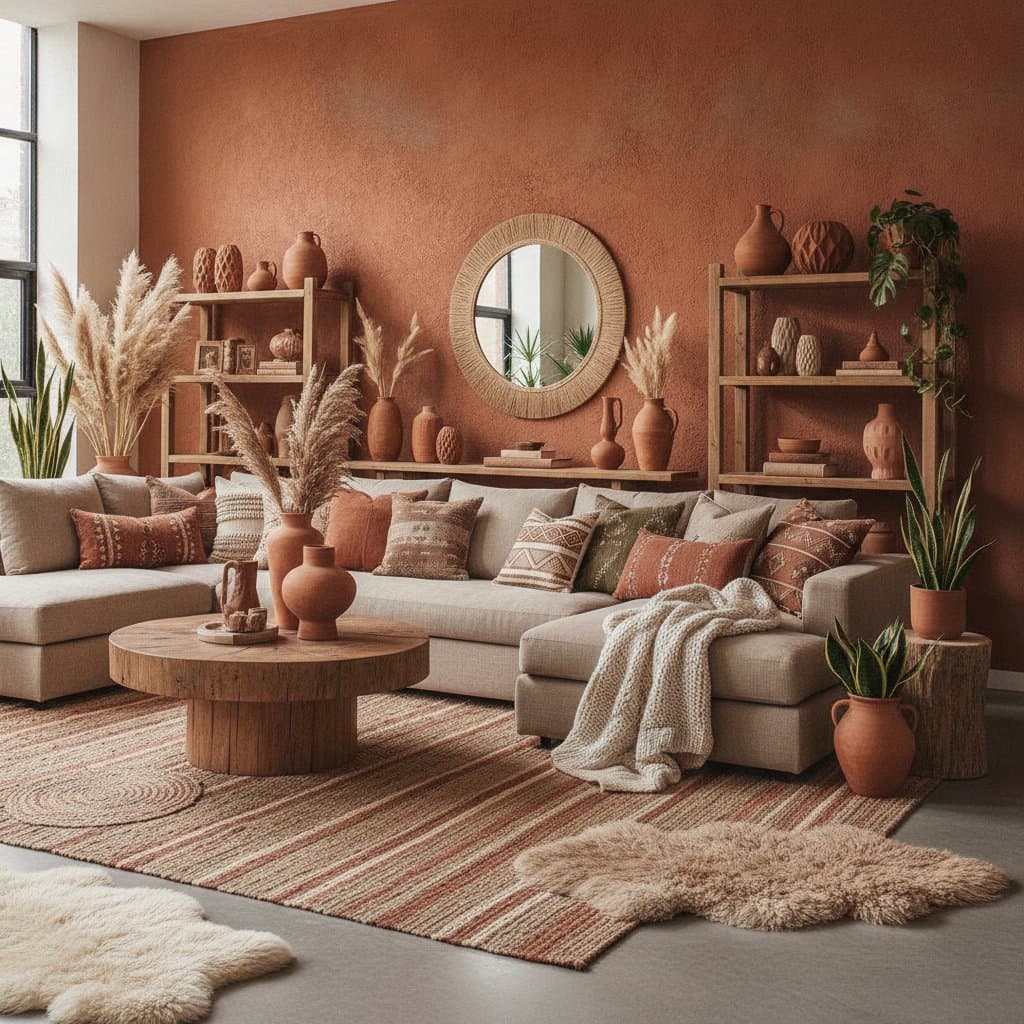
Terracotta Warm Tones Fuel Earthy Maximalism Trend
Home interiors have shifted from cool gray tones to richer warmer colors. Terracotta with its deep earthy warmth has been at the heart of that change. It feels familiar cozy and natural all at once. If rooms have started to look flat or cold terracotta can bring them back to life.
Earthy maximalism celebrates texture comfort and layers. It is not about clutter but about surrounding yourself with colors and materials that feel personal and grounded. Terracotta fits this approach. It brings warmth without being loud and helps tie other natural tones together into a space that feels balanced even with lots of pattern and movement.
You can introduce terracotta in many ways from small accents to full wall treatments. The challenge lies in deciding how bold to go and how to combine it with other colors and textures without overwhelming the room.
Why Terracotta Works So Well in Earthy Interiors
Terracotta has a natural charm that never feels forced. It reminds people of clay sunbaked tiles and hand formed pottery. In design it sits comfortably between red orange and brown which makes it both warm and neutral. It is easy to pair with other colors because it has depth without sharpness.
Here are a few reasons terracotta is such a good fit for earthy maximalism:
- It feels organic. Terracotta tones remind you of soil brick and fire. It connects modern interiors to the natural world.
- It softens bold layers. Even when you use many textures or patterns terracotta gives your space a sense of calm continuity.
- It works across styles. You can use it in rustic bohemian Mediterranean or contemporary rooms.
- It hides wear and tear. Unlike lighter colors terracotta handles daily use well which is practical for living rooms kitchens and entryways.
When you combine terracotta with natural fibers like jute or linen or with finishes like brass and wood you get a space that feels full but not fussy.
Getting Started with Terracotta
If you are curious but unsure how to start begin small. You do not need to paint a whole wall right away. Try adding terracotta through accessories or materials first. Look at how the color behaves in your lighting before making bigger choices.
Start with Accessories
A few terracotta cushions pottery vases or a woven rug can instantly shift the warmth of a room. These items are affordable and easy to swap if you change your mind later. You might find that just a few of these touches already make your space feel more grounded.
Move to Textiles
Curtains throws or upholstered chairs in terracotta velvet or linen add texture and depth. The fabric softens the intensity of the color and creates a cozy feel especially in living spaces or bedrooms.
Experiment with Paint
Once you see how the color behaves under your lighting you can decide whether you want to paint a wall or an entire room. Terracotta paint comes in many shades from pale clay to deep brick. Lighter shades feel airy and Mediterranean while darker tones feel dramatic and enveloping.
Try Tiles or Flooring
For kitchens bathrooms or patios terracotta tiles are a timeless choice. They are durable easy to clean and age beautifully. Real clay tiles usually cost more than ceramic imitations but they develop a natural patina that adds character. Expect to pay about the same as mid range ceramic tiles with installation adding extra labor cost if you hire a professional.
Add Natural Materials
Terracotta pairs beautifully with wood rattan marble and brass. These materials highlight its earthy tone without competing for attention. If your space already includes many cool materials like chrome or glass adding terracotta can balance them out.
Combining Terracotta with Other Warm Colors
Earthy maximalism is all about layers and warmth. To keep your palette cohesive think about the undertones of your terracotta shade. Some are more orange while others lean toward brown or pink. Matching undertones across your palette helps the space feel intentional instead of chaotic.
Here are a few color combinations that work especially well:
- Terracotta and Sage Green. The green cools the warmth just enough creating balance.
- Terracotta and Mustard Yellow. This pairing feels sunny and rich perfect for a cozy dining area.
- Terracotta and Cream. The cream lightens the space and keeps things from feeling heavy.
- Terracotta and Charcoal. The contrast adds sophistication making the terracotta pop.
- Terracotta and Blush Pink. For a softer look especially in bedrooms or relaxed living spaces.
When you use several warm tones together vary the materials so the space does not feel too uniform. A mix of matte glossy and textured surfaces keeps things interesting.
Weighing the Advantages and Drawbacks
Before you fully commit it helps to weigh what you gain and what you might need to adjust.
Advantages
- Warm and inviting. Terracotta instantly makes any space feel welcoming.
- Timeless appeal. It has been used for centuries and never truly goes out of style.
- Flexible. It works with many design aesthetics from rustic to modern.
- Low maintenance. It hides dust fingerprints and scuffs better than lighter tones.
Drawbacks
- Can feel heavy in small rooms. Darker shades may make a tight space seem smaller.
- Color matching can be tricky. Slight differences in terracotta shades can clash if not tested first.
- Commitment level. Painting or tiling in terracotta is a stronger design choice than neutral tones so plan carefully before going all in.
Achieving Balance in a Terracotta Room
The key to making terracotta work is balance. You want warmth and richness without feeling closed in. Think of contrast as your friend. If your walls are terracotta use lighter or cooler tones in furniture or fabrics. If your furniture is dark wood balance it with lighter terracotta accents.
Keep an Eye on Light
Natural light changes how terracotta looks. In bright light it feels sunny and vibrant. In dim light it becomes cozy and deep. Before committing paint a sample on your wall and check it at different times of day. If your space gets little daylight choose a lighter terracotta shade to avoid feeling enclosed.
Mix Textures
To keep your space lively combine smooth and rough textures. Pair a terracotta wall with woven baskets clay pots or soft linen. The variation gives depth which is what earthy maximalism thrives on.
Use Natural Accents
Plants wood and stone materials all enhance terracotta. Green leaves bring out its warmth and prevent it from feeling too heavy. Even a few houseplants can make a big difference.
Affordable Integration Methods
If you are working with a limited budget you can still enjoy the look without major renovations. Here are some smart ways to bring terracotta warmth into your space:
- Paint Only One Wall. A single accent wall can change the entire tone of a room. One gallon of quality paint is usually enough for a medium wall.
- Swap Out Fabrics. Change pillow covers curtains or a throw blanket. These updates cost far less than new furniture.
- Add Clay Accessories. Handmade pottery terracotta planters or clay candle holders are affordable and authentic.
- Use Peel and Stick Tiles. For renters or anyone avoiding major projects peel and stick terracotta look tiles can refresh a backsplash or floor with little effort.
- DIY Projects. Try painting old furniture in a muted terracotta tone for a second life. It works well on wooden side tables or picture frames.
Small changes can often create the same warmth as bigger ones. You can always layer more elements later once you feel confident about your direction.
Professional Assistance Considerations
Some projects are best handled by experts. If you plan to install real terracotta tile flooring or plaster walls professional installation ensures durability and prevents cracking. Prices vary by region but expect to pay more for genuine clay tiles than for standard ceramics. The labor cost can also be higher as the tiles need sealing and careful spacing.
If you are unsure about color saturation or how to coordinate tones an interior designer can help you test samples before making final choices. A short consultation may save you from expensive repainting or mismatched finishes later.
Care and Safety Practices
When working with terracotta materials a few safety and care points matter:
- Tile Sealing. Natural terracotta tiles are porous and need sealing to resist stains. Always follow manufacturer instructions for sealant type and application.
- Cleaning. Avoid harsh chemicals. A mild soap and warm water are usually enough. Acidic cleaners may damage the finish.
- Paint Care. If you use terracotta paint on walls choose washable finishes for high traffic areas. Matte finishes look beautiful but can be harder to clean.
- Ventilation. When painting or sealing keep the area well ventilated until odors fade.
Taking these steps will help your terracotta finishes look their best for years.
Extending Terracotta Throughout the Home
Terracotta is not limited to paint or tile. Its warmth works beautifully in furniture lighting and even artwork. A lamp base in a terracotta glaze or a pendant light with a clay finish brings subtle texture and color to your space. Terracotta colored leather or suede furniture also fits the earthy maximalism theme while adding comfort.
You can even use terracotta tones in unexpected places. Try a set of terracotta kitchen accessories such as storage jars or utensil holders to add warmth to a neutral kitchen. In a bathroom towels or bath mats in this tone can soften white fixtures and make the space more inviting.
Long Term Enjoyment of the Palette
Once you bring terracotta into your home you may notice how versatile it is. It shifts with the seasons. In summer it feels sunlit and fresh. In cooler months it feels cozy and grounding. That flexibility keeps it from feeling dated.