
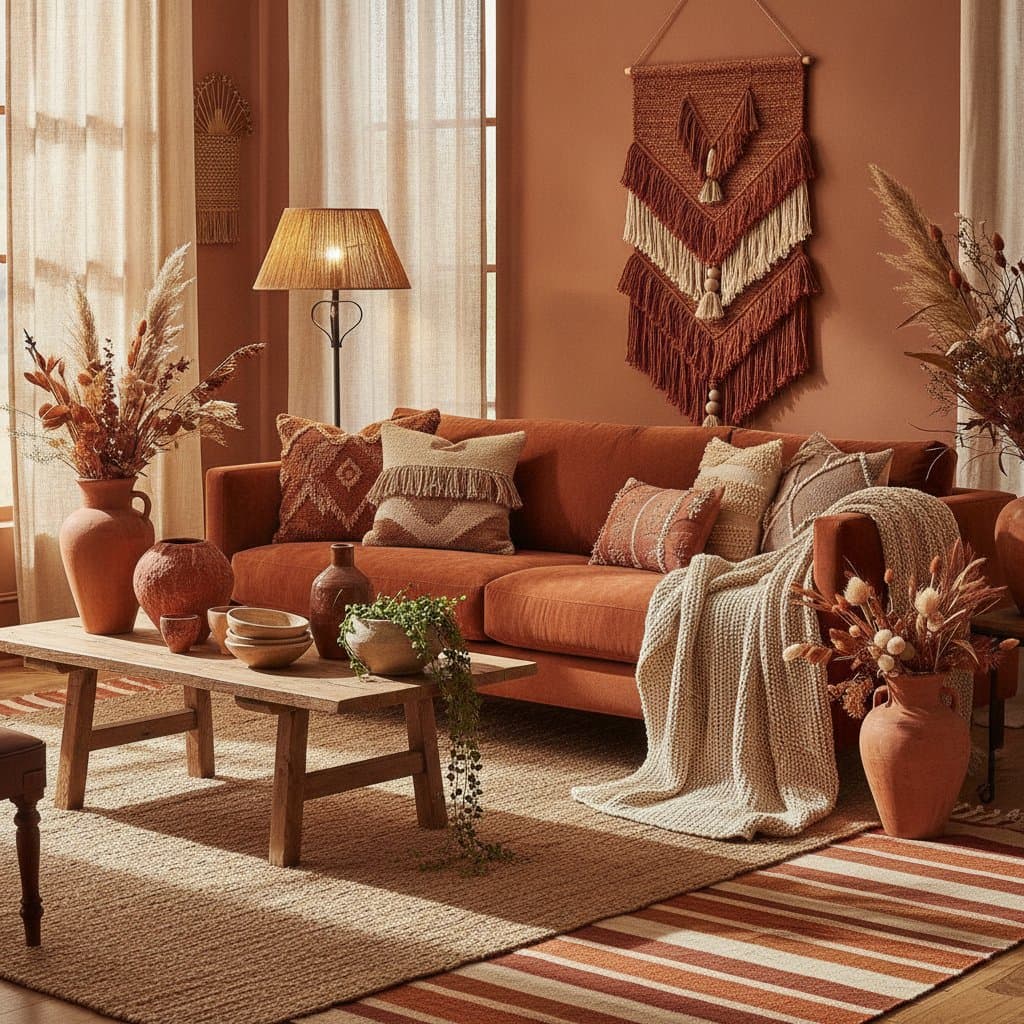
Embrace Earthy Maximalism with Terracotta and Rust Tones
Cold rooms often result from flat neutrals or sparse furnishings. Earthy maximalism counters this effect through bold yet grounded color choices, layered textures, and natural materials. Terracotta and rust tones supply the necessary depth and warmth.
These shades draw from clay, soil, and sunlit earth. Terracotta ranges from orange brick to muted clay, while rust introduces deeper red brown hues. Both integrate with wood, linen, leather, and clay surfaces.
Benefits and Limitations of These Tones
Terracotta and rust deliver consistent advantages across room types. They create inviting atmospheres, pair with beige, cream, olive, and black, and appear in durable materials such as sealed tile or vegetable tanned leather. Budget options include paint, woven textiles, and ceramic accessories.
Limitations require planning. Over application in small rooms can compress visual space. Low light mutes their richness. Unsealed terracotta flooring absorbs stains. Address each issue through measured placement, proper lighting, and surface sealing.
Step by Step Implementation
Select a Core Color Base
Choose one dominant terracotta or rust value for walls or major furniture. Apply rust accents through cushions, throws, or pottery on a neutral ivory or sand background when a lighter result is preferred.
Introduce Natural Textures
Combine raw wood, rattan, linen, and unglazed clay. Position a terracotta planter on a reclaimed wood table. Drape a rust linen throw across a beige sofa. Fill woven baskets with clay toned cushions to add tactile contrast.
Layer Patterns and Wall Elements
Mix geometric, tribal, and floral motifs that share terracotta or rust undertones. Anchor the room with a rust and cream patterned rug. Hang vintage frames alongside clay wall plates and woven textiles to build visual rhythm without clutter.
Optimize Lighting
Install warm spectrum bulbs in linen or brass fixtures. Position mirrors to reflect available daylight. These tones gain vibrancy under natural or soft artificial light.
Incorporate Indoor Plants
Place snake plants or pothos in terracotta pots against rust colored backdrops. The contrast between green foliage and earthy pigments refreshes the overall composition.
Room Specific Applications
Living areas benefit from warm textiles and layered rugs. Kitchens gain practicality from sealed terracotta tiles and pottery storage. Bedrooms receive warmth through rust bedding, wool rugs, and linen curtains rather than full wall coverage.
Renters achieve similar results with removable wallpaper panels, fabric hangings, and interchangeable cushions.
Recommended Color Combinations
Limit the palette to three tones for cohesion. Terracotta with cream and olive green produces a fresh earthy effect. Rust with ivory and charcoal yields a sophisticated balance. Clay orange with sand and deep brown creates a grounded, cozy setting. Copper or brass accents add subtle metallic warmth.
Maintenance and Budget Guidance
Test paint and fabric samples under actual room lighting before purchase. Refresh existing furniture with rust colored slipcovers or throws. Seal terracotta flooring after installation. Rotate accessories seasonally to maintain freshness without additional expense.
Sustaining the Style Over Time
These tones support gradual evolution. Add new textures or plants as needed while preserving the core palette. Lighten the scheme later with cream or natural wood accents if desired. The result remains functional, personal, and visually balanced.