
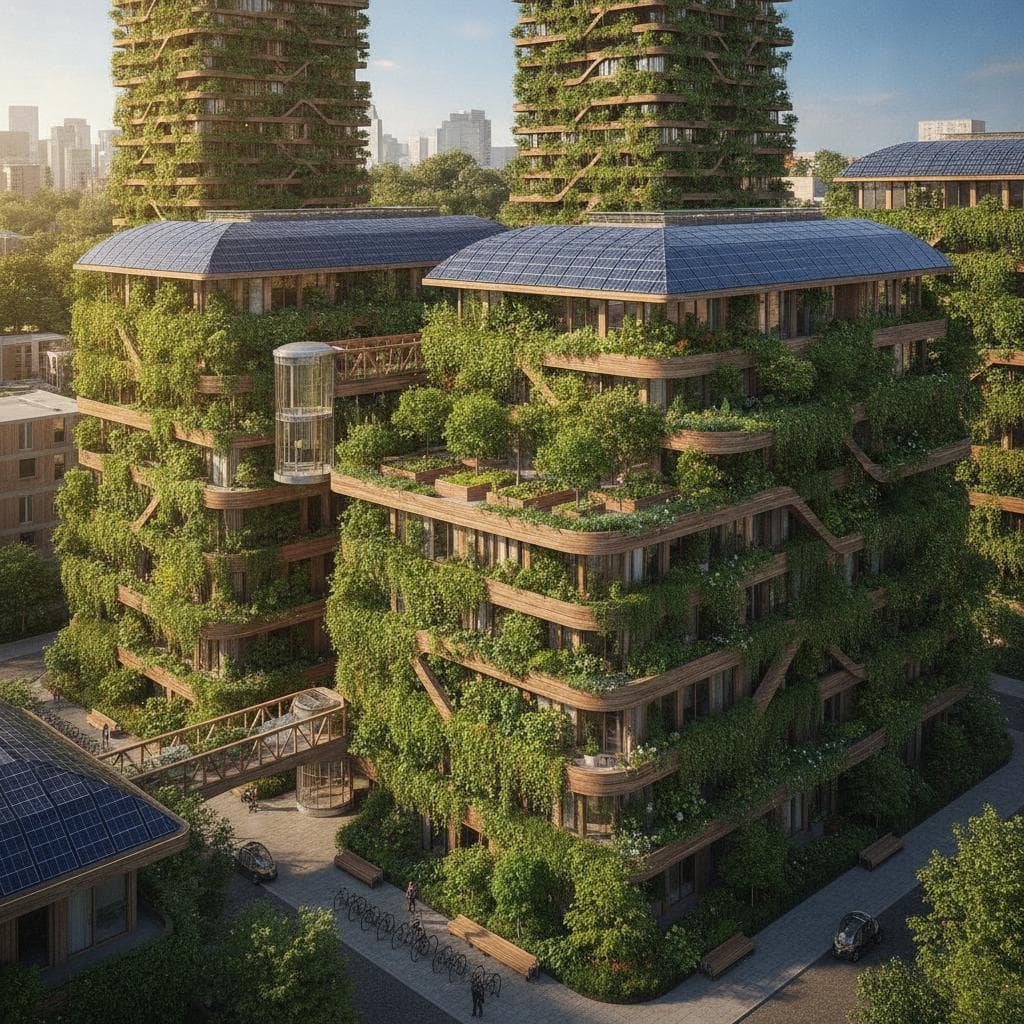
Solarpunk Architecture Redefines Green Building Practices
Imagine neighborhoods where buildings support climbing vines, solar arrays rest on rooftops, and shared garden paths connect homes. This balanced setting combines calm surroundings with practical energy systems. Solarpunk architecture brings such environments into reality as more residents seek ways to align their properties with these principles.
Homeowners who review rising energy expenses often seek options that reduce operating costs while supporting planetary health. Solarpunk design achieves this balance by merging efficient technology with natural materials and collective outdoor areas. The resulting structures emphasize optimism alongside everyday functionality.
This movement extends beyond temporary fashion. It unites thoughtful construction methods with enduring environmental priorities. The sections below explain how solarpunk principles reshape building standards and how individuals can apply them.
Distinctions From Conventional Green Building Approaches
Many property owners already recognize standard green building methods that emphasize reduced energy consumption, reclaimed resources, and responsible construction techniques. Solarpunk advances these ideas by considering entire neighborhoods as interconnected systems that function alongside local ecosystems.
Key differences include the following elements:
-
Neighborhood Orientation
Standard green residences typically function as isolated efforts. Solarpunk plans address the block level through collective gardens, shared energy networks, and accessible planted zones. -
Visible Technology Integration
Solar panels and water management features appear as intentional design elements rather than concealed components. Technology serves both visual and operational purposes. -
Flexible Configurations
Layouts allow adjustments over time. Movable partitions can reveal additional garden space, while rooftops convert between leisure areas and growing zones. -
Resource Cycling
Designs plan for material recovery. Kitchen waste becomes compost, and treated household water supports plant irrigation.
This framework positions solarpunk architecture as forward looking yet immediately useful. Emphasis rests on sustained performance rather than isolated efficiency gains.
Advantages and Limitations to Consider
Property owners benefit from evaluating specific factors before beginning work.
Advantages:
- Reduced utility expenses over multiple years
- Improved interior air quality and daylight exposure
- Higher resale value from documented sustainability measures
- Enhanced neighborhood relationships through shared facilities
Limitations:
- Elevated initial investment for renewable systems
- Ongoing care requirements for vegetation and water features
- Local approval processes for certain modifications
- Variable availability of specialized materials or installers
Careful sequencing allows most obstacles to be addressed. Many residents complete one or two targeted upgrades first, then scale efforts using accumulated savings.
Daily Experience in Solarpunk Spaces
Residents who adopt these concepts frequently report changes beyond monthly statements. Improved daylight supports steadier moods. Vegetation moderates temperatures and introduces living texture to interior surfaces. Common areas encourage regular interaction among neighbors.
The framework accommodates gradual adoption. A single photovoltaic module or set of wall mounted planters can serve as the starting point, with further additions added according to available time and funds.
Beginning Implementation Steps
Select one modest initiative matched to current resources. Options include solar powered pathway lights, a compact vertical planting system, or a basic rainwater collection barrel. Each completed action advances progress toward integrated sustainable living.
Solarpunk architecture focuses on present day improvements rather than historical reversion or distant speculation. Thoughtful choices produce environments that serve individual households, surrounding communities, and natural systems simultaneously.