
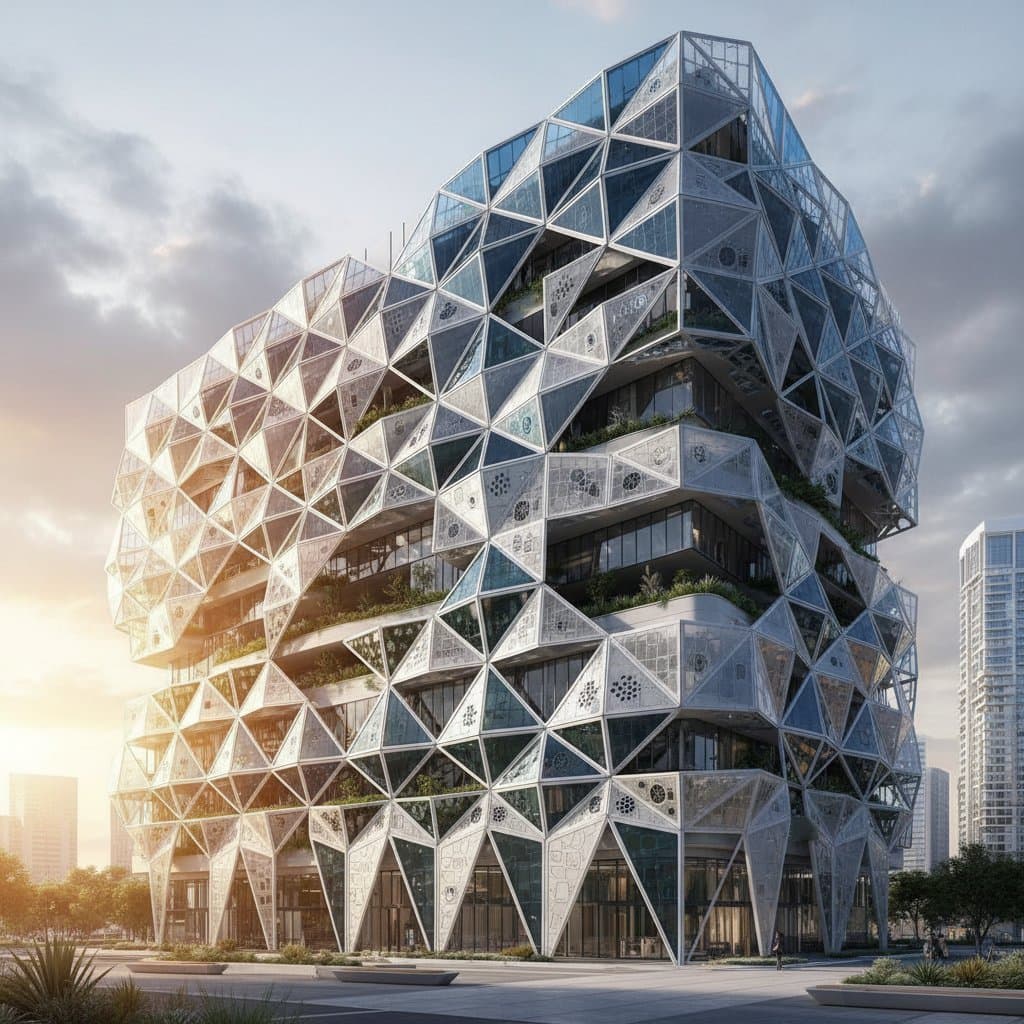
Algorithms Transforming Facades by 2026
Modern buildings increasingly feature exteriors that adjust to changing light and weather conditions. These adaptations result from algorithms that enhance efficiency, aesthetics, and functionality. For those considering renovations, new builds, or design trends, grasping these systems provides valuable insights into future architecture.
The Evolution of Building Design
Traditional architectural facades remained fixed after construction, requiring manual alterations for changes. Contemporary approaches leverage computational design and parametric modeling to enable real-time adaptations. These methods process data on sunlight, wind, temperature, and acoustics to optimize building interactions.
This evolution benefits homeowners, developers, and architects by enabling automatic energy conservation, variable privacy controls, and evolving visual effects. The primary task involves selecting designs that align with budgets while minimizing reliance on specialized expertise.
Understanding Parametric and Computational Design
Parametric and computational design employ algorithms to generate and evaluate options based on defined parameters, such as window dimensions, material selections, or solar exposure levels. Software produces varied configurations that meet these criteria, revealing impacts on performance and visuals without extensive manual work.
Consider a scenario where seasonal temperature control is essential: algorithms determine optimal shading panel positions and movements to maintain comfort. This technique reduces drafting time, prevents errors, and harmonizes form with utility for facades that excel in both appearance and operation.
Mechanisms of Dynamic Facades
Dynamic facades alter position, shape, or color using sensor inputs or programmed sequences. Panels may deploy to capture morning sunlight and retract to mitigate afternoon heat. Activation occurs through motorized components or stimuli-responsive materials that react to environmental shifts.
The operational sequence follows these steps:
-
Sensors gather information on illumination, thermal conditions, or user presence.
-
Algorithms analyze data to determine appropriate facade adjustments.
-
Components execute changes, including panel rotations or material expansions.
-
Feedback mechanisms assess outcomes and refine responses continuously.
This ongoing cycle ensures the building envelope maintains optimal conditions for efficiency and occupant satisfaction.
Budget-Appropriate Implementation Options
Algorithmic principles scale across project scopes and financial constraints, from static to fully automated solutions.
- Basic Parametric Design
Static components, such as algorithmically patterned screens or perforated panels, optimize light diffusion and ventilation. Installation costs align with conventional cladding, plus modest premiums for bespoke production, with no ongoing upkeep required.
- Semi-Dynamic Systems
Features like adjustable louvers permit seasonal repositioning for varying light or seclusion needs. Initial expenses exceed basic options, yet they offer versatility suitable for residential or commercial spaces with fluctuating demands.
- Fully Dynamic Facades
Integrated sensors, actuators, and control software enable solar tracking and thermal regulation, potentially halving energy expenditures. Although upfront costs may double traditional systems, long-term savings through reduced utility bills often justify the investment.
Core Advantages of Algorithm-Driven Facades
Beyond visual appeal, these facades deliver quantifiable improvements in usability, resource management, and durability.
-
Energy Optimization: Automated shading diminishes cooling requirements, while strategic daylighting lowers reliance on electric lights.
-
Enhanced Comfort: Controlled natural illumination boosts occupant morale and output; tunable facades foster agreeable interior climates.
-
Long-Term Savings: Elevated initial outlays yield decreased operational expenses over the building lifecycle.
-
Environmental Alignment: Reduced consumption supports sustainability targets and certification standards.
-
Creative Latitude: Computational tools facilitate intricate geometries unattainable through manual methods.
Anticipated Implementation Challenges
Advanced facades introduce complexities that demand proactive management.
-
Initial Investment: Sensor-equipped systems carry premium pricing; prioritize essential features to fit financial parameters.
-
Ongoing Upkeep: Mobile elements and controls necessitate routine inspections; incorporate accessible service points during planning.
-
Technological Reliance: Firmware updates sustain performance; establish contingency protocols for discontinued support.
-
Expertise Needs: Deployment and repairs call for contractors versed in digital fabrication; expand networks beyond standard vendors.
These considerations do not deter adoption, as the efficiency gains, aesthetic elevation, and value appreciation frequently surpass obstacles.
Steps to Initiate a Parametric Facade Project
Embarking on algorithmic facade integration starts with structured preparation.
- Establish Objectives
Identify priorities, such as thermal regulation, aesthetic enhancement, or user adaptability, to guide scope and avert overcomplication.
- Assemble a Competent Team
Select architects and engineers proficient in parametric workflows; review portfolios for relevant implementations, noting that even modest practices now employ these tools.
- Allocate Funds Strategically
Account for modeling software, custom manufacturing, and sustainment expenses; opt for phased execution to ensure completion within means.
- Verify Compliance Requirements
Dynamic elements may trigger permitting processes; consult local codes early to streamline material procurement.
- Schedule Maintenance Protocols
Budget for periodic evaluations, treating these systems akin to essential infrastructure for sustained reliability.
Traditional Versus Algorithmic Facades: A Comparison
Evaluating options clarifies decision-making for potential adopters.
| Feature | Traditional Facade | Algorithmic or Dynamic Facade |
|---|---|---|
| Design Process | Manual sketching with rigid specs | Parameter-based simulation and iteration |
| Energy Management | Relies on fixed insulation | Actively modulates solar and thermal inputs |
| Cost Structure | Modest initial, elevated ongoing | Substantial initial, reduced ongoing |
| Visual Customization | Constrained by conventional options | Enables bespoke forms and adaptive patterns |
| Upkeep Demands | Basic structural care | Regular sensor and mechanism servicing |
Static parametric elements suit low-maintenance preferences, whereas dynamic variants excel in efficiency and novelty.
Future Directions in Facade Algorithms
Emerging algorithms incorporate machine learning for autonomous refinement based on empirical data. Systems may evolve shading routines from occupancy patterns, prioritizing user preferences over static programming.
Interdisciplinary partnerships among designers, technicians, and programmers accelerate progress, blurring lines between structure and interface. Facades will soon rival personal devices in interactivity and responsiveness.