
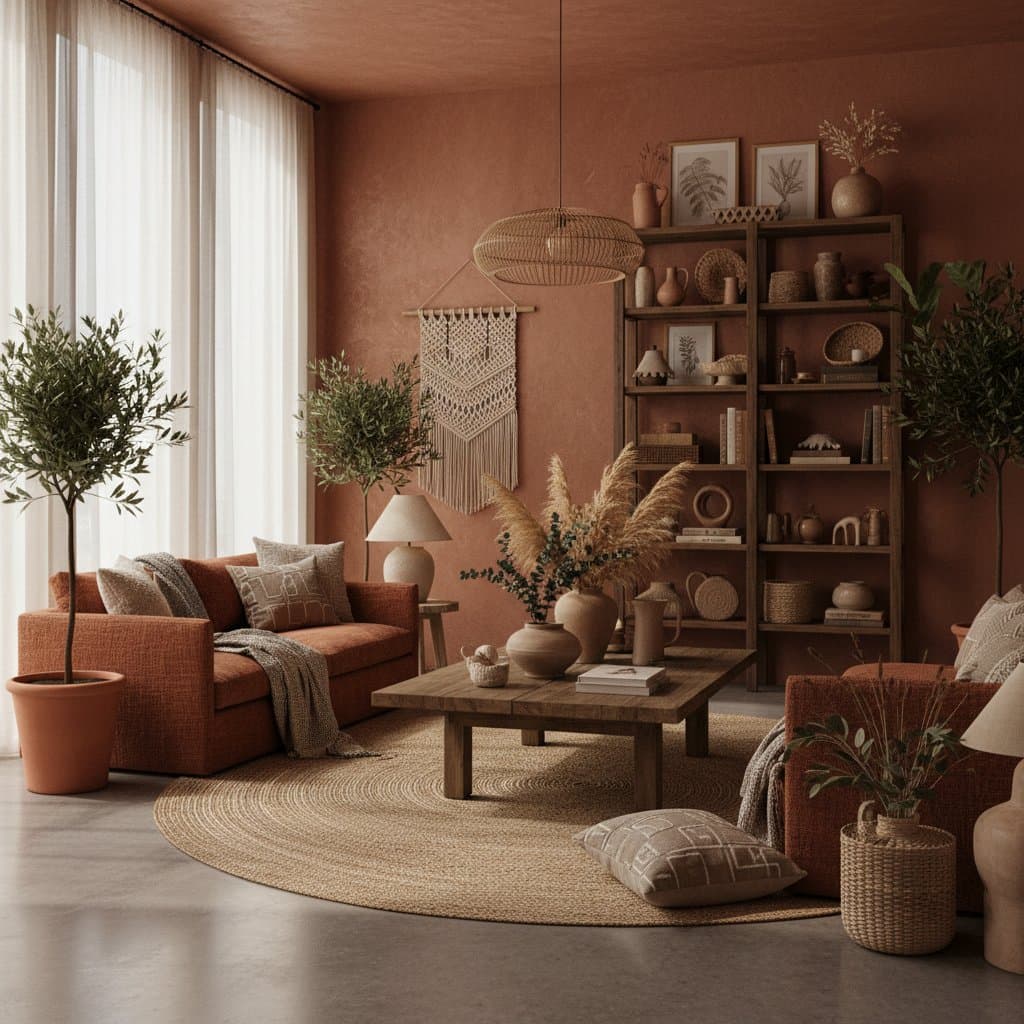
Earthy Maximalism: Terracotta Meets Natural Textures
Readers often seek interiors that provide coziness, grounding, and character. Those who appreciate color may grow weary of sleek, overly polished designs. Earthy maximalism offers an ideal balance. This approach embraces warmth, texture, and abundance while preserving the comfortable, lived-in quality essential to a welcoming home.
What Defines Earthy Maximalism
Earthy maximalism involves layering natural materials, rich tones, and tactile elements. It integrates the warmth of terracotta, the depth of wood grains, and the pliability of woven or organic fabrics. In contrast to minimalist designs that emphasize stark lines and light hues, this style encourages the incorporation of significant objects and vibrant surfaces that maintain a harmonious, organic essence.
The objective remains thoughtful abundance rather than disarray. Individuals may blend vintage acquisitions, artisanal ceramics, patterned rugs, and earth-toned paints, provided cohesion arises from shared palettes and substances.
The Central Role of Terracotta
Terracotta serves as the cornerstone in numerous earthy compositions. Its reddish-brown shade immediately infuses a space with warmth. This color harmonizes effectively with neutral or organic elements and conveys enduring appeal. Applications range from subtle highlights to comprehensive installations like terracotta tiles or plaster coatings.
Consider these methods to incorporate terracotta:
-
Wall Treatments with Paint or Plaster: Apply a matte terracotta finish to walls for a gentle, sun-warmed radiance. Such an effect suits living areas or kitchens particularly well. A gallon of premium paint costs approximately 40 to 60 dollars, and completing a modest room requires about a weekend.
-
Tiled Accents: Install terracotta tiles on floors, backsplashes, or around fireplaces to introduce distinctive charm. Mid-range options cost 5 to 10 dollars per square foot, with professional installation available for those avoiding do-it-yourself efforts.
-
Decorative Elements: For minimal involvement, select terracotta planters, vessels, or lamp bases. These items provide understated texture and hue at low expense and with little preparation.
Layering with Natural Textures
With terracotta establishing the foundational mood, natural textures complete the composition. Envision linen draperies, jute floor coverings, and cane furnishings. These selections temper bold colors and anchor the environment securely. Freely combine textures within an earthy color scheme.
Experiment with these layers:
-
Linen or Cotton Fabrics to introduce softness and airiness.
-
Wooden Pieces featuring exposed grains or patinated surfaces.
-
Stone or Clay Ornaments for solidity and tactile interest.
-
Woven Containers or Rattan Fixtures to contribute warmth and form.
This combination of organic components prevents the space from appearing excessive. It also delivers diverse sensory engagements, rendering earthy maximalism profoundly appealing.
Balancing Color and Texture Effectively
Success in earthy maximalism hinges on equilibrium. Richness must prevail over disorder. Begin with select foundational hues, then expand methodically.
-
Establish a Neutral Foundation: Opt for walls in beige, taupe, or clay shades to form a serene base.
-
Incorporate a Dominant Hue: Terracotta, rust, olive, or ochre integrate seamlessly.
-
Prioritize Texture Over Color Variety: Limit to three or four recurring shades across textiles, furnishings, and accessories.
-
Combine Matte and Glossy Surfaces: Pair a matte wall with a lustrous vessel or metallic detail to maintain vitality.
When uncertainty arises, photograph the room in monochrome. Prominent textures in grayscale indicate successful layering.
Implementing the Design Step by Step
Adopting this style requires no complete overhaul. Initiate modestly to gain assurance.
-
Select a Single Space: Living rooms or bedrooms offer suitable starting points.
-
Introduce a Terracotta Feature: Coat one wall or acquire several ceramic items.
-
Integrate Natural Textures: Replace artificial coverings or window treatments with organic alternatives.
-
Refine Illumination: Gentle, warm lighting amplifies earthy shades. Employ linen diffusers or reduced-wattage bulbs.
-
Add Foliage: Greenery accentuates the organic atmosphere and contrasts attractively with terracotta.
Each phase yields noticeable enhancements without demanding extensive alterations or significant investment.
Advantages and Drawbacks of Earthy Maximalism
Every design philosophy presents strengths alongside potential hurdles.
Advantages:
-
Conveys warmth and individuality, avoiding clinical detachment.
-
Accommodates pre-owned or crafted items effortlessly.
-
Allows gradual adaptation through hue or fabric exchanges.
-
Fosters innovation and ease.
Drawbacks:
-
Risks overcrowding with excessive colors or objects.
-
Demands upkeep for natural substances, such as conditioning wood or manually laundering linens.
-
Certain elements, including terracotta tiles, prove substantial in weight or installation expense.
Recognizing these aspects aids practical planning, particularly under financial constraints or in leased properties.
Key Practical Factors
Earthy maximalism appears spontaneous, yet addressing logistics ensures efficiency.
-
Budgeting: Allocate 300 to 800 dollars for revitalizing one area via paint, fabrics, and select accessories. Incorporating tiles or bespoke furnishings increases expenditures.
-
Timeline: Painting or reorganizing fits within a weekend, though procuring vintage or artisanal goods extends the process.
-
Upkeep: Textured areas accumulate dust, natural textiles require specific cleaning, and terracotta surfaces benefit from sealing more than synthetics do.
-
Regulations: Verify local codes for modifications like flooring or wall applications prior to commencement.
For complex endeavors, engage a regional specialist in contracting or painting. Simpler adjustments remain feasible independently.
Sustaining and Evolving Your Earthy Space
As terracotta and natural textures accumulate, the environment shifts palpably. The atmosphere grows serene, colors anchor firmly, and surfaces invite interaction. Extended presence in the room becomes natural. Earthy maximalism excels by forging connections with surrounding materials.
Maintain freshness through seasonal rotations of accents or inter-room fabric shifts. A terracotta container from the summer dining area might transition to an autumn entry console. Modest adjustments preserve dynamism alongside core earthy allure.
Gradually, the interior mirrors personal essence. This represents the style's core: eschewing rigid showroom ideals for a tactile, vibrant habitat brimming with vitality. Begin in one zone with a wall refresh, a clay addition, or a jute exchange to approach this layered, hospitable aesthetic.