
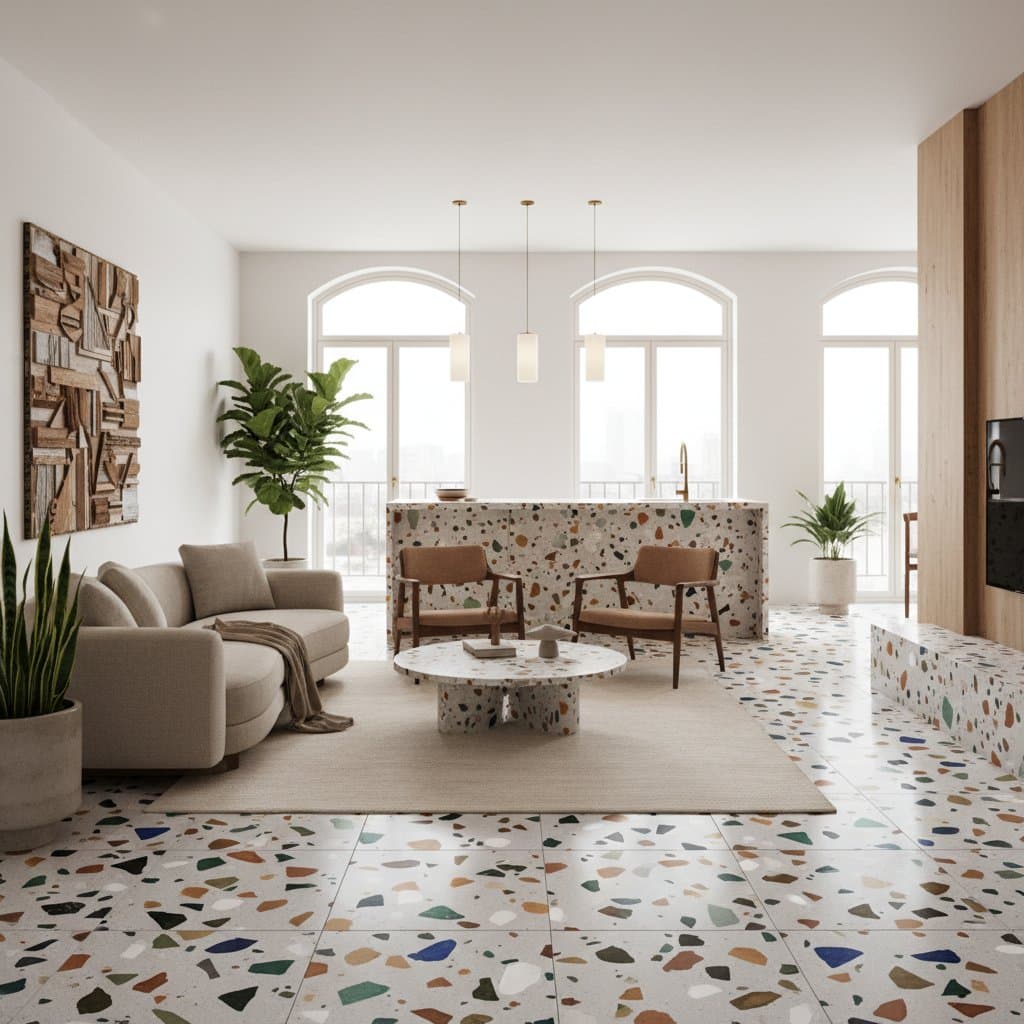
Why Recycled Terrazzo Will Dominate 2026 Design Trends
Terrazzo has reemerged in contemporary spaces such as kitchens, bathrooms, and living areas. Installations appear on countertops, flooring, and accents, prompting questions about its resurgence. Terrazzo has persisted through adaptations, and recycled variants now position it as a preferred selection for those seeking aesthetic appeal alongside reduced environmental impact.
For individuals planning renovations or new constructions, grasping the advantages of recycled terrazzo proves essential. This material balances sustainability, visual elegance, and functionality. It adapts seamlessly to diverse aesthetics, ranging from sleek modernism to warm rusticity.
The Rising Popularity of Recycled Terrazzo
Recycled terrazzo refines the traditional method of embedding aggregate into a binder by incorporating reclaimed elements. Materials include post-consumer glass, salvaged marble, quartz remnants, and discarded ceramics. These components yield distinctive patterns and hues while minimizing resource depletion.
Beyond environmental benefits, the material gains traction through extensive personalization. Professionals value the array of design possibilities. Residents favor its resilience, straightforward maintenance, and extended service life. Construction teams recognize its compatibility with certifications like LEED without compromising appearance.
This integration aligns with broader movements toward responsible material choices. Recycled terrazzo demonstrates that selections can prioritize planetary health while delivering refined finishes.
Key Distinctions of Recycled Terrazzo
Conventional terrazzo employs marble or granite aggregates within a cement matrix. Recycled versions substitute these with reclaimed sources, such as fragmented glass containers, shattered tiles, or manufacturing byproducts. The outcome forms a narrative-embedded surface.
Selections encompass aggregate dimensions, shades, and varieties, ensuring bespoke outcomes. Professionals might select earthy palettes for organic vibes or vibrant glass infusions for dynamic effects. Such adaptability elevates its status in inventive environments.
Production-wise, recycled terrazzo conserves raw resources and streamlines logistics. It demands reduced extraction and transportation, yielding a diminished carbon profile. Costs often align below premium natural stones on a per-square-foot basis.
Versatile Applications for Recycled Terrazzo
Recycled terrazzo accommodates numerous settings traditionally reserved for stone, tile, or concrete. Consider these implementations:
- Flooring: Its robustness suits demanding zones like entrances, kitchens, and public venues.
- Countertops: Sealed variants withstand stains and abrasions, fitting culinary and bathing areas.
- Walls and Backsplashes: Terrazzo introduces tactile interest and dimension without dominating layouts.
- Furniture: Custom pieces include tabletops, seating, and auxiliaries for personalized flair.
- Exterior Spaces: Appropriate sealants enable use in patios, pathways, and pool edges.
Available as poured installations, tiles, or slabs, it supports extensive overhauls or modest enhancements.
Guide to Selecting and Implementing Recycled Terrazzo
To incorporate recycled terrazzo effectively, follow this structured approach.
-
Identify the Application Area
Determine the location first. Common choices involve floors and counters, yet accents like walls or furnishings merit consideration. Tailor selections to demands: counters require heat and stain resistance, while floors prioritize non-slip properties. -
Select Color Schemes
Align choices with surrounding elements. Opt for muted bases or striking aggregates for emphasis. Suppliers often provide physical samples or virtual simulations to aid decisions. -
Determine Binder Composition
Cement binders offer a subdued finish at accessible prices. Resin binders deliver sheen, minimal joints, and vivid tones, plus reduced weight for contemporary builds. -
Arrange Installation Logistics
On-site pouring achieves uniformity but demands expertise and extended timelines. Prefabricated tiles or slabs simplify smaller or self-directed efforts. Verify installer proficiency, as sealing and polishing influence longevity. -
Address Sealing and Upkeep
Apply sealant post-installation. Refresh periodically to avert discoloration. Employ neutral pH cleaners and warm water for routine care; steer clear of corrosives that erode finish.
Advantages and Considerations
Recycled terrazzo presents clear benefits alongside potential drawbacks. Awareness of both informs prudent decisions.
Advantages:
- Environmental Responsibility: Incorporates reclaimed elements, diverts waste from landfills, and bolsters green initiatives.
- Enduring Performance: Withstands years of use, representing a sound long-term investment.
- Bespoke Aesthetics: Unique compositions allow boundless customization.
- Simplified Care: Resists wear and cleans effortlessly after sealing.
- Property Enhancement: Premium visuals and eco-attributes attract prospective purchasers.
Considerations:
- Upfront Expenses: Labor-intensive methods elevate initial outlays, varying by intricacy from moderate to premium rates per square foot.
- Timeline Demands: Curing phases extend project durations.
- Structural Load: Cement formulations add heft, necessitating reinforcements for expansive surfaces.
- Restoration Challenges: Damage repairs require precise matching for seamless results.
These factors rarely overshadow gains when projects receive meticulous oversight from skilled teams.
Pricing and Timeline Insights
Recycled terrazzo pricing occupies a mid-to-high tier among surfacing options, comparable to quartz or granite. Variables include aggregates, binders, and methods; prefabricated forms typically prove more economical than custom pours.
Project durations fluctuate with scope. Compact counters may conclude in days, whereas broad floors span weeks from preparation to completion. Post-installation, anticipate minimal intervention for decades.
Designer Perspectives on Current Adoption
Professionals navigate aesthetics, utility, and principles simultaneously. Recycled terrazzo fulfills these criteria adeptly. It advances eco-targets, unleashes creativity, and excels in homes and businesses alike.
It resonates with demands for tactile depth over uniformity. Integrations with timber, alloys, and subdued textures foster complexity. In sparse designs, it serves as focal points.
The material enables hue infusion sans paints or motifs. Aggregate control permits fine dispersions or prominent accents that interact with illumination.
Visible Commitment to Sustainability
Sustainability frequently operates unseen. Recycled terrazzo renders it tangible on the surface. Each installation showcases transformed discards into enduring art. Suppliers may detail origins, from consumer glass to quarry residues or salvaged ceramics.
Such openness empowers informed selections. Opting for this material advances resource cycling over disposal.
For certification pursuits like green building standards, it contributes toward points in recycled usage and emissions reduction. Certain producers employ aqueous binders or regional sourcing to amplify benefits.
Maintenance Strategies for Optimal Appearance
Though resilient, terrazzo benefits from consistent attention. Adopt these practices:
- Address spills promptly, particularly acidic substances like citrus or vinegar.
- Position protective pads beneath movable items to prevent scoring.
- Clean using gentle detergents and water, avoiding abrasives.
- Renew sealant per professional guidance.
For impairments like chips, experts can patch and buff affected zones. Diligent routines preserve pristine condition over generations.
Practical Preparations for Implementation
Prior to proceeding, evaluate key aspects. This material suits professional handling over hasty endeavors, barring simple prefabricated uses. Installation generates particulates and sounds, so schedule disruptions.
Financially, account for supplies, workmanship, and protections. Solicit bids for sizable areas; standard aggregates may trim expenses over tailored blends.
Assess load-bearing capacity. Ensure substrates support the weight, consulting engineers for vintage structures.
Integrating Recycled Terrazzo into Your Vision
Recycled terrazzo unites elegance, strength, and stewardship seamlessly. Its adaptability fits varied contexts, while sophistication endures. For upcoming projects, evaluate its potential to elevate both form and function.