
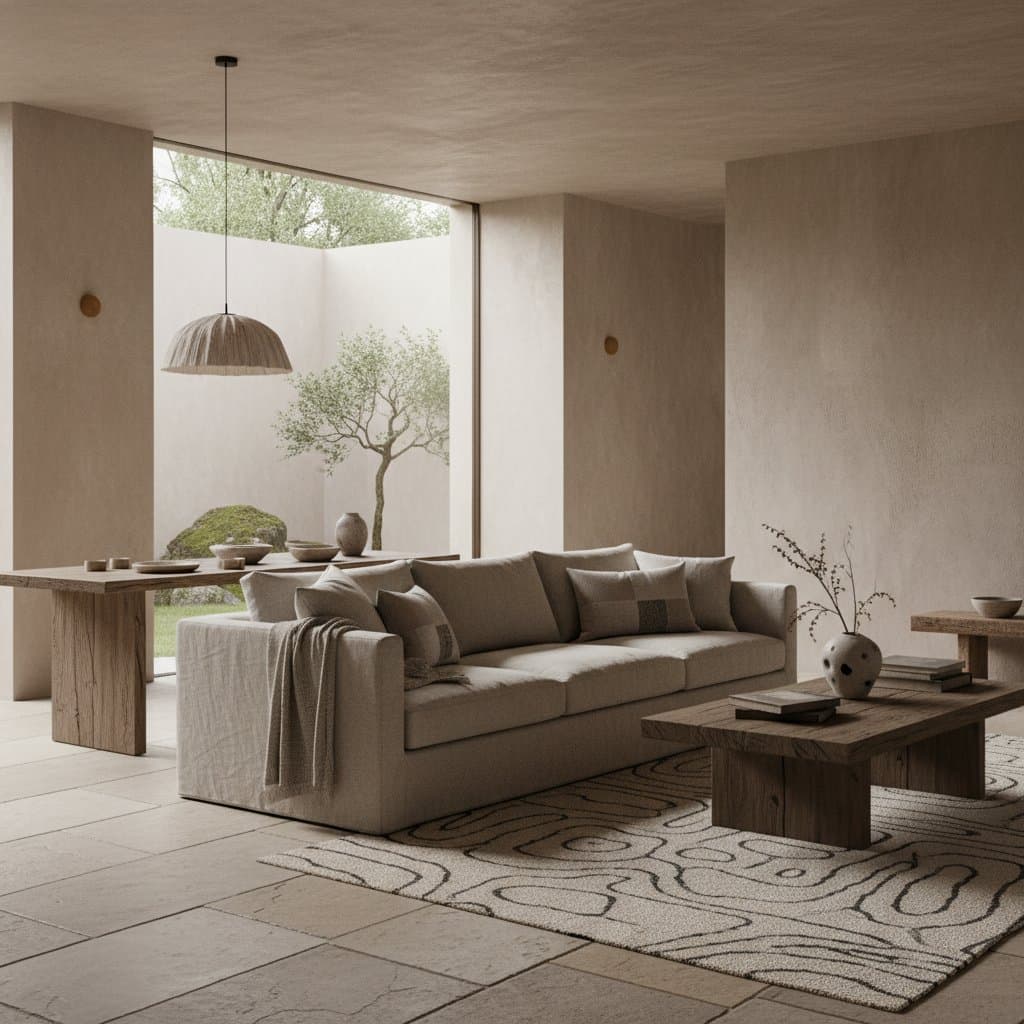
Understanding Wabi-Sabi for Contemporary Interiors
Consider the constant effort required to maintain a pristine home environment, from aligning decorative items precisely to eliminating every visible mark. Such demands often lead to unnecessary stress. Wabi-Sabi offers a refreshing alternative, rooted in Japanese aesthetics that value transience and natural flaws.
This philosophy shifts focus from idealized perfection to the inherent beauty of asymmetry and wear. For instance, a ceramic bowl with a subtle crack or a wooden shelf showing years of use gains depth through its history. In 2026, Wabi-Sabi interiors appeal to those seeking authentic, low-pressure living spaces that evolve organically.
Homeowners appreciate how this style integrates seamlessly with existing furnishings. Simple adjustments, such as repositioning inherited pieces or introducing textured fabrics, can evoke a sense of grounded tranquility without major renovations.
Reasons Wabi-Sabi Aligns with Current Lifestyles
Contemporary design frequently emphasizes sleek surfaces and uniform aesthetics, which, while elegant, can appear impersonal and labor-intensive. Wabi-Sabi counters this with organic forms, varied patinas, and understated elegance that invite relaxation.
Several factors contribute to its rising popularity:
- Reduced Maintenance Demands: Imperfections integrate naturally, turning minor wear into intentional features that tell a narrative.
- Personalized Expression: Combining vintage finds with contemporary items creates eclectic yet cohesive arrangements that reflect individual experiences.
- Serene Atmosphere: Earthy palettes, including soft taupes, muted sages, and warm ochres, paired with diffused natural light, promote mental ease.
- Eco-Conscious Practices: Repurposing items like reclaimed wood or upcycled textiles minimizes environmental impact and extends the life of possessions.
- Budget-Friendly Transformations: Emphasize editing existing collections over acquisitions, focusing on quality over quantity to achieve refined results affordably.
These elements make Wabi-Sabi not just a trend, but a practical framework for mindful habitation.
Achieving Harmony Between Rustic and Minimal Elements
Wabi-Sabi thrives on equilibrium, avoiding extremes of sparseness or clutter. Excessive minimalism risks sterility, while unchecked rusticity may overwhelm. The ideal approach layers subtle contrasts to build visual interest without excess.
Incorporate diverse textures for depth: position a hand-hewn oak console against crisp cotton drapes, or display irregular stone vessels on sleek metal trays. In a living area, for example, anchor the space with a low-slung rattan sofa, softened by wool throws in neutral hues.
Apply this in kitchens by selecting matte clay tiles alongside polished concrete counters, ensuring functionality complements the aesthetic. The result resembles understated sophistication, where comfort takes precedence over ostentation.
Engaging Professionals for Key Updates
Most Wabi-Sabi enhancements require minimal intervention, such as decluttering surfaces or introducing potted ferns for organic accents. However, certain projects benefit from expert involvement to maintain safety and precision.
For resurfacing hardwood floors with natural oils or applying limewash to walls for a soft, uneven finish, consult a skilled artisan. Electricians ensure ambient fixtures, like exposed-bulb pendants, comply with codes while enhancing the mood.
Verify local regulations for any modifications involving plumbing or load-bearing elements. Professional input prevents haphazard outcomes, preserving the philosophy's emphasis on thoughtful imperfection.
Integrating Wabi-Sabi into Daily Routines
As Wabi-Sabi principles permeate a home, daily interactions transform. Routine upkeep becomes streamlined, as dust on a textured vase or patina on brass hardware enhances rather than detracts from the ambiance.
In bedrooms, opt for linen bedding in faded tones and asymmetrical nightstands crafted from reclaimed timber to encourage restful nights. Social gatherings in such spaces feel unhurried, with guests drawn to the tactile allure of woven baskets or irregular glassware.
Sustain this ethos through periodic assessments: every season, evaluate items for alignment with core values, donating those that disrupt harmony. Introduce additions deliberately, prioritizing pieces with visible craftsmanship, such as hand-thrown pottery or vintage linens.
Steps to Introduce Wabi-Sabi Authenticity
Begin the journey by selecting one area for initial focus, like a entryway console where you arrange foraged branches in a mismatched vase alongside a single, well-loved book. This small act cultivates awareness of surrounding beauty.
Progress to broader applications, such as refinishing a dining table with tung oil to highlight its grain variations or layering floor coverings with jute rugs over existing carpets for added warmth. Track progress by noting how these changes influence mood and efficiency.
Ultimately, Wabi-Sabi fosters homes that adapt to inhabitants, celebrating the patina of time as a testament to lived experiences. This mindset not only simplifies design but enriches appreciation for the transient qualities that define meaningful spaces.