
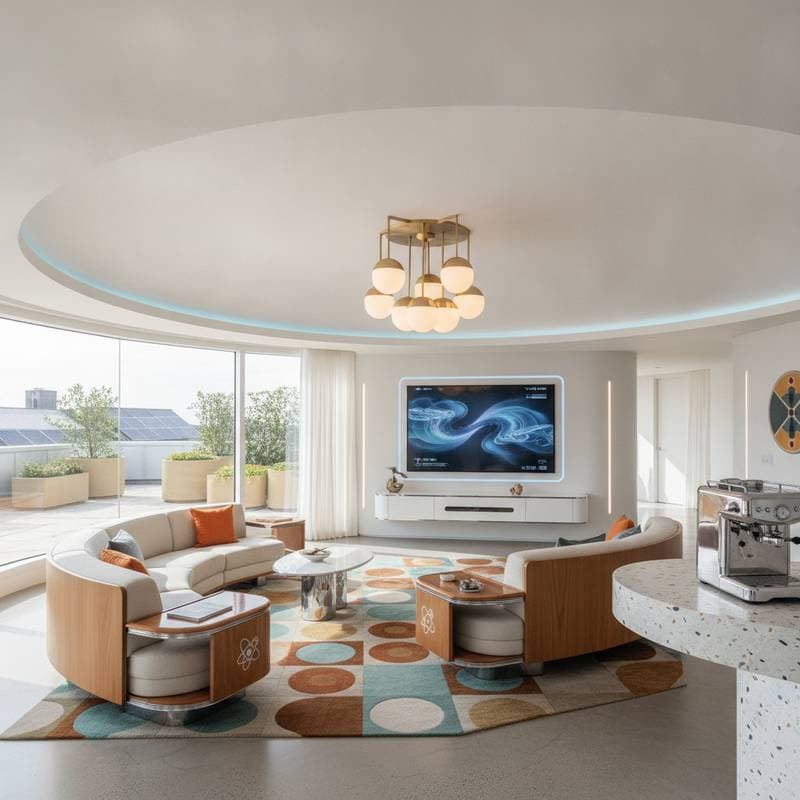
Space-Age Interiors Return with Retro-Futurism
You walk into a newly remodeled kitchen and feel as though you have stepped onto a movie set from the atomic age. Chrome accents, pastel cabinets, and curving furniture pieces give the space a futuristic yet nostalgic charm. This is the look of retro-futurism, and it is making a strong comeback in home interiors. Homeowners are rediscovering the optimism of the mid-century space race era, yet they pair it with updated materials, smart lighting, and energy-efficient systems.
The appeal lies in the blend of sleek space-age design with the comfort and practicality expected today. The style creates a home that feels playful but grounded.
Addressing Cold Minimalism with Warmth and Color
Many homeowners seek an alternative to the minimalist and industrial trends that have dominated interiors. Flat white walls and concrete floors often feel cold and repetitive. Retro-futurism brings warmth, color, and imagination back into home design while preserving the efficiency of modern construction.
Balance remains essential. The goal is to introduce futuristic flair without turning a residence into a theme park. Subtle integration, smart material choices, and thoughtful updates that respect the existing structure achieve this result.
Core Elements of the Retro-Futurist Aesthetic
Retro-futurism celebrates the optimism of early space exploration. It draws from the atomic era, mid-century modern furniture, and science fiction visions of future living. Hallmark features include curved furniture and architecture, chrome and aluminum finishes, soft pastel palettes with bold accents such as turquoise or coral, geometric lighting fixtures, and organic forms inspired by rockets and atomic structures.
Contemporary interpretations update these elements with smart materials and efficient systems that satisfy current standards for sustainability and comfort.
How to Incorporate Retro-Futurism
Creating a retro-futurist interior does not require a full rebuild. Begin with decor and progress to larger architectural updates as needed.
Establish the Color Scheme First
Retro-futurist interiors typically combine pastel tones with metallic finishes. Soft turquoise walls paired with polished chrome details set the tone. Introduce accents of coral, yellow, or mint to add warmth. Neutral walls with accent furniture in atomic-era shades offer a subtler path. Professional painting costs between three and six dollars per square foot.
Select Appropriate Materials
Materials establish the character of the style. Glossy plastics, molded fiberglass, and metal trim represent classic choices. Modern substitutes such as acrylic, powder-coated steel, and engineered quartz recreate the appearance while meeting performance standards.
Polished concrete or terrazzo suits floors in kitchens and bathrooms. Quartz or solid-surface counters with subtle metallic flecks provide durability. Curved cabinetry with handle-free doors enhances the futuristic feel.
Install Statement Lighting
Lighting captures the space-age aesthetic effectively. Globe pendants, sputnik chandeliers, and recessed ambient fixtures align with the theme. Smart LED systems introduce color-changing effects. A full lighting upgrade for a mid-range home typically ranges from two thousand to six thousand dollars.
Choose Furniture with Curves
Mid-century modern pieces supply the foundation. Items with tapered legs, molded seats, and organic shapes evoke the era. Fresh upholstery in performance fabrics modernizes these selections. Reupholstery averages fifty to one hundred dollars per yard of fabric.
Layer Art and Decor Thoughtfully
Visual storytelling strengthens the theme. Framed prints of atomic diagrams or early space imagery anchor a room. Sculptural pieces in glass, chrome, or resin reinforce the concept without overwhelming the space. Mixing a few retro-futurist items into a modern setting maintains freshness.
Budget, Permits, and Professional Support
A cosmetic refresh with paint, lighting, and decor ranges from five thousand to ten thousand dollars. More extensive work involving cabinetry and flooring can reach forty thousand to eighty thousand dollars. Urban labor rates often exceed those in other regions. Request multiple quotes from contractors experienced with curved construction.
Most updates do not require permits unless structural walls or electrical systems are altered. Verify requirements with the local building department. Hire licensed professionals for wiring, gas lines, and structural framing.
Matching the Style to Daily Life
Retro-futurism performs best when it supports actual routines. Durable modern materials protect surfaces in homes with children or pets. Open layouts with sculptural lighting suit frequent entertaining. Smart thermostats and insulated windows deliver efficiency behind the nostalgic surface.
Moving Forward with a Single Room
Start with one room such as a kitchen or living area. Apply paint, lighting, and decor before larger changes. Collaborate with contractors familiar with mid-century detailing and seek local artisans for custom metalwork. The result captures a sense of wonder while remaining practical for contemporary living.