
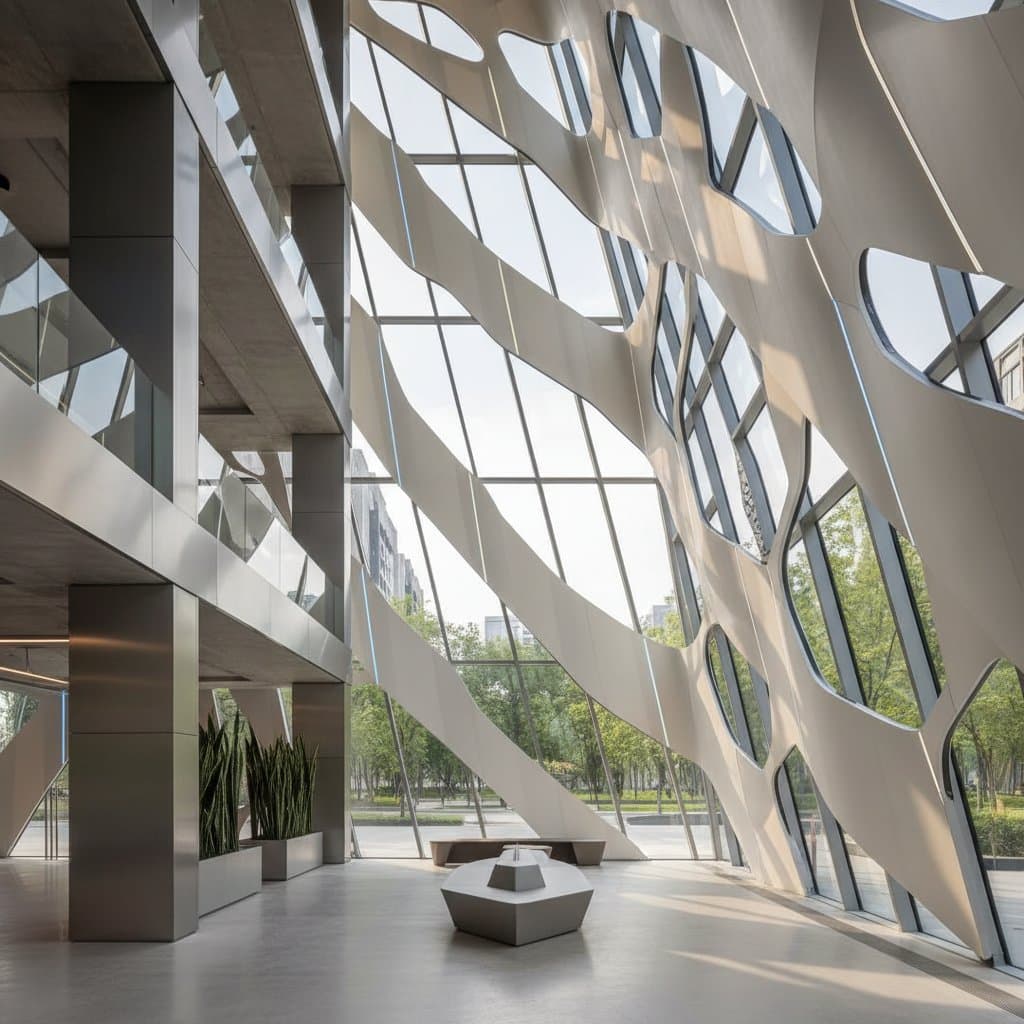
Parametric Waves Revolutionize Modern Building Facades
Buildings with surfaces that undulate like gentle waves or capture sunlight in mesmerizing patterns often draw admiration from passersby. These effects stem from parametric design, an approach that employs algorithms to craft architecture with exacting detail and imaginative flair. Architects, engineers, and construction professionals increasingly rely on parametric facades to influence not only appearance but also functionality and sensory experience.
Limitations of Conventional Facade Approaches
Standard facades depend on fixed shapes and uniform components, which restrict responses to elements like sunlight, wind, and thermal variations. In expanding urban areas where energy demands intensify, this inflexibility poses challenges. Property owners and developers seek structures that stand out visually while operating effectively, prompting the need for surfaces that adjust to site conditions without excessive expense or technical hurdles.
Parametric Waves as an Adaptive Alternative
Parametric design provides the necessary adaptability by tying geometric forms to modifiable parameters. Architects thereby produce facades that account for solar paths, air currents, and material properties. These designs yield parametric waves, undulating motifs that traverse a building's exterior to blend aesthetic appeal with practical utility.
At the foundation, parametric systems integrate design variables with mathematical principles. A shift in any input triggers immediate geometric reconfiguration, enabling rapid iteration across numerous facade iterations prior to final selection. Such optimization enhances energy use, natural lighting, and sound control within the building envelope.
Steps in Developing a Parametric Facade
The creation of a parametric facade merges specialized software, technical knowledge, and advanced manufacturing techniques through a structured sequence.
-
Establish Key Parameters
Identify controlling factors such as solar orientation, prevailing winds, load capacities, and desired visual cadence. -
Develop the Governing Algorithm
Employ platforms like Grasshopper or Dynamo to connect parameters to facade panel geometries. -
Conduct Performance Simulations
Evaluate the design against varied scenarios, refining until aesthetic and operational objectives align. -
Produce Custom Components
Export finalized specifications to computer numerical control machines or 3D printers for accurate shaping of individual elements. -
Install on Location
Position labeled panels per the digital blueprint, forming a seamless, interlocking exterior.
Budgeting and Implementation Factors
Expenses for parametric facades range from economical to upscale, influenced by material choices and intricacy. Basic aluminum screening systems typically cost between $40 and $70 per square foot, whereas advanced composites or glass assemblies may exceed $120 per square foot. Initial investments in modeling and custom production often yield returns through lower energy bills and minimal upkeep.
Local conditions affect overall pricing; for instance, seaside locations demand rust-proof materials, and northern climates require enhanced thermal barriers. Confirm compliance with regional codes for selected materials and attachment methods. Projects on mid-sized structures generally span two to three months for installation, with durations extending for non-standard geometries. Engage contractors versed in parametric methods to ensure smooth collaboration among design, production, and assembly teams.
Addressing Safety and Engineering Needs
Parametric facades achieve safety through rigorous engineering validation. Panels undergo testing for wind resistance, fire ratings, and load-bearing integrity. Irregular forms and joints necessitate close oversight from structural specialists, with anchorage systems verified prior to production.
Designs featuring automated shading or adjustable components demand adherence to electrical codes and integration of reliable controls. Professional installation remains essential; even slight offsets risk developing cracks or moisture issues over time.
Advantages in Sustainability and Visual Impact
Parametric waves extend beyond ornamentation to elevate overall building efficacy. Variations in panel protrusion or gaps modulate sunlight penetration, mitigating heat gain and visual discomfort. Integrated vents or angled slats promote passive airflow, diminishing reliance on powered systems.
Aesthetically, these surfaces impart a vibrant quality that evolves with daily light cycles. Shifting reflections across the facade evoke movement, rendering parametric designs ideal for civic venues, institutional spaces, and residences pursuing unique character.
Optimizing Design and Financial Viability
Though parametric tools may seem intricate, they streamline production by generating precise manufacturing instructions from digital models, reducing material waste and on-site corrections. Construction teams value the ability to revise virtually, avoiding expensive trial builds.
Maintain fiscal discipline by initiating with core parameters and incorporating elaborations only where quantifiable benefits emerge. Effective parametric facades harmonize creative expression with performance without excess elaboration.
Steps to Implement a Parametric Facade Project
To pursue a parametric facade, consult an architect proficient in computational design tools. Request portfolios of prior installations and detailed estimates covering digital development, component creation, and on-site work. Assess provisions for water management, surface maintenance, and inspection access.
Executed with precision, a parametric wave facade functions as an intelligent envelope attuned to environmental shifts in illumination, climate, and surroundings. Through meticulous strategy and skilled implementation, this approach elevates standard buildings into responsive architectural statements that sustain visual allure, operational excellence, and enduring resilience.