
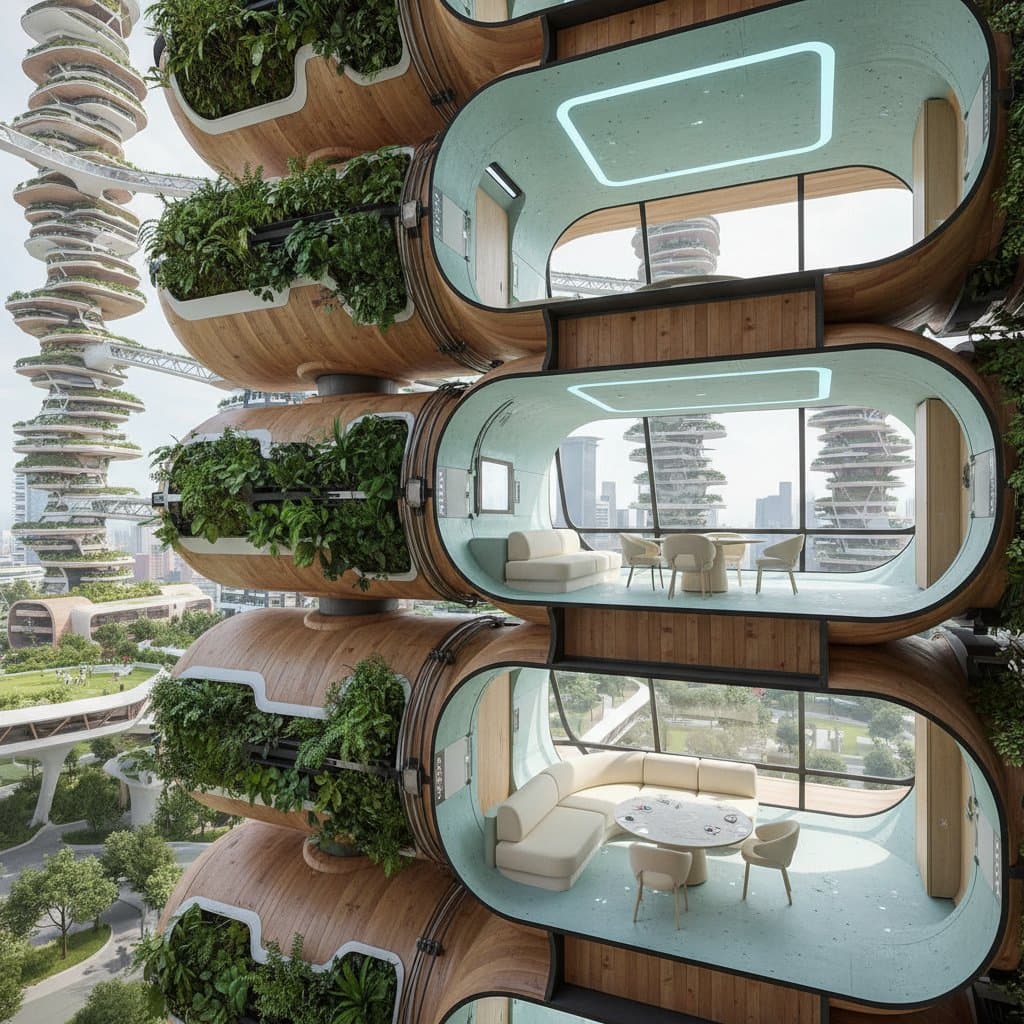
Metabolist Buildings Grow Like Living Organisms
Metabolist architecture represents a visionary approach to design that treats buildings as dynamic entities, capable of growth and adaptation much like biological organisms. Originating in post-war Japan, this movement emphasized modular construction and flexible structures to accommodate societal changes. Today, a 2026 modular organic revival breathes new life into these ideas, integrating advanced materials and sustainable practices to create spaces that evolve with their inhabitants.
The core principle of Metabolist design lies in its organic metaphor: buildings as living systems that expand, contract, and respond to environmental and human needs. Architects envisioned megastructures composed of interchangeable capsules, allowing cities to grow organically without rigid planning. This philosophy challenged traditional static architecture, promoting a fluid urban landscape.
Foundations of Metabolist Architecture
In the 1960s, Japanese architects like Kenzo Tange and Kisho Kurokawa pioneered Metabolist ideas amid rapid urbanization. They drew inspiration from biological processes, such as cell division and metabolism, to propose buildings that could be disassembled and reconfigured. The 1964 Tokyo Olympics showcased early examples, including the Yoyogi National Gymnasium, which demonstrated structural flexibility.
These designs addressed the limitations of conventional construction by prioritizing adaptability. Modular units served as building blocks, enabling quick assembly and modification. This approach not only responded to population booms but also anticipated future technological shifts.
Key features included lightweight steel frameworks and prefabricated components, reducing construction time and waste. Metabolist projects often featured elevated structures to preserve ground-level green spaces, fostering harmony between urban development and nature.
The 2026 Modular Organic Revival
The upcoming 2026 revival reinterprets Metabolist principles through modern lenses of sustainability and digital innovation. Architects now incorporate bio-based materials, such as mycelium composites and recycled polymers, to create truly organic growth. These materials allow structures to self-heal minor damages or expand via 3D-printed additions.
Modular systems in this revival rely on smart sensors embedded in building skins, monitoring environmental data to adjust forms dynamically. For instance, facades might unfurl solar panels during peak sunlight or retract in storms, mimicking plant responses. This integration of AI and biotechnology transforms static buildings into responsive ecosystems.
Sustainability drives the revival's core. Designs minimize carbon footprints by using renewable energy sources and circular economy principles, where components are reusable across projects. Urban planners envision entire neighborhoods that evolve, with residential pods attaching to communal hubs as populations shift.
Adaptive Design in Practice
Consider a residential complex under this revival: initial core modules form the foundation, housing essential services. As families grow, additional living units attach seamlessly, guided by algorithmic planning that optimizes space and energy use. This process eliminates the need for demolition, preserving resources.
In commercial settings, office towers adapt to workforce changes by reconfiguring floors for hybrid work models. Vertical farms integrated into structures provide fresh produce, reducing transportation emissions and enhancing food security. These adaptations ensure buildings remain relevant amid economic fluctuations.
Public spaces benefit similarly. Parks with modular pavilions expand for events or contract for maintenance, promoting year-round usability. Educational facilities might grow to include new labs as curricula evolve, supporting lifelong learning without costly renovations.
Sustainable Materials and Technologies
Eco-friendly materials form the backbone of the revival. Bamboo-reinforced concrete offers strength with lower environmental impact, while algae-based panels generate oxygen and biofuels. These choices align with global goals to combat climate change.
Flexible planning incorporates parametric design software, allowing architects to simulate growth patterns before construction. This foresight prevents inefficiencies, ensuring structures perform optimally over decades.
Energy efficiency stands out: passive systems like natural ventilation and geothermal heating reduce reliance on fossil fuels. Water harvesting modules collect and purify rainwater, creating self-sufficient habitats.
Shaping Future Cities and Homes
Metabolist revival influences urban planning profoundly. Cities like Tokyo and Singapore pilot projects where districts function as mega-organisms, with interconnected modules facilitating efficient transport and resource sharing. This model alleviates overcrowding while enhancing livability.
For individual homes, the approach democratizes design. Affordable kits enable homeowners to customize expansions, from adding home offices to greenhouses. Such personalization fosters community resilience against uncertainties like natural disasters.
Everyday design transforms too. Furniture and appliances adopt modular traits, allowing seamless integration into evolving spaces. This holistic shift encourages mindful consumption, where durability trumps disposability.
Realizing Adaptive Living Benefits
Embracing Metabolist principles yields tangible advantages for inhabitants. Adaptive buildings lower living costs through energy savings and reduced maintenance. They promote mental well-being by providing spaces that align with personal and communal rhythms.
Communities gain from shared, evolving infrastructures that strengthen social bonds. As structures grow with needs, they symbolize progress and adaptability in an unpredictable world.
This revival positions architecture as a partner in sustainable progress, inviting all to envision homes and cities that thrive like nature itself.