
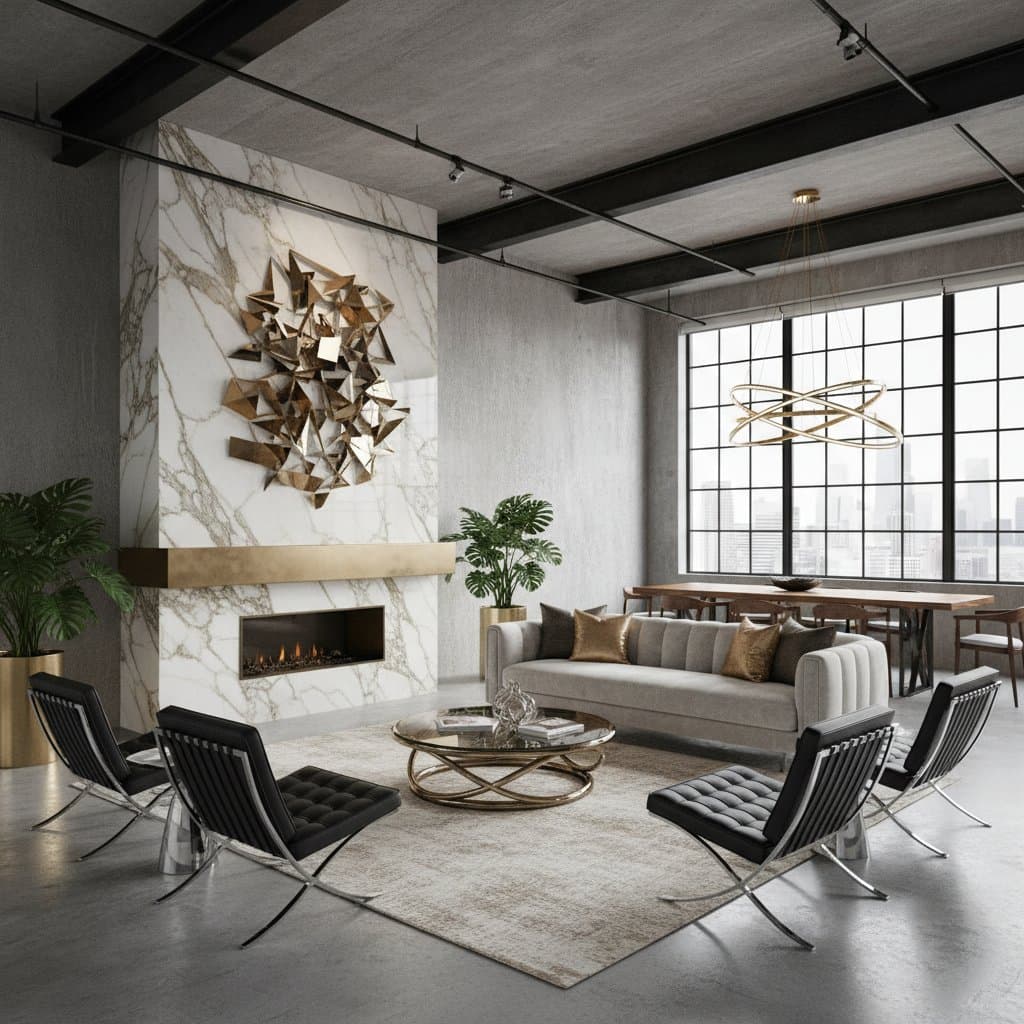
The Rise of Industrial Glam in 2025 Designs
Picture a living room where exposed steel beams frame a sleek marble coffee table, and a crystal chandelier illuminates reclaimed wood shelves. The result combines rugged durability with refined elegance, creating spaces that feel lived-in yet luxurious. Industrial glam captures this dynamic, drawing homeowners who desire warehouse-inspired openness paired with upscale comfort.
This trend surges in popularity for its ability to transform standard interiors into statement-making environments. Designers highlight its versatility across urban lofts and suburban renovations alike. As 2025 approaches, industrial glam stands out for balancing bold aesthetics with practical functionality.
Why Industrial Glam Captures Attention
Homeowners appreciate industrial design for its honest, durable appeal, yet many find its stark elements uninviting without softening touches. Industrial glam addresses this by layering warmth over raw foundations, such as pairing visible ductwork with plush velvet cushions. The result fosters an atmosphere that feels approachable and sophisticated.
Contrast defines the style's allure. Raw materials like concrete gain depth through polished accents, while open layouts invite natural light to enhance metallic sheens. This approach yields interiors that endure daily use while projecting timeless refinement.
The style also aligns with modern lifestyles, offering flexible spaces for work, relaxation, and entertaining. Its enduring appeal stems from materials that age gracefully, ensuring long-term satisfaction.
Core Elements of Industrial Glam
Build industrial glam through intentional layers that harmonize texture and scale. Focus on elements that amplify contrast while maintaining unity.
-
Exposed Structure with Intentional Finish
Retain visible steel beams, brick accents, or polished concrete floors as defining features. Apply a clear sealant to protect surfaces and highlight natural grains, ensuring they integrate seamlessly with surrounding decor. -
Strategic Metallic Accents
Incorporate brass hardware on cabinetry, chrome-edged mirrors, or brushed nickel lighting to introduce subtle gleam. These details warm the industrial base and draw the eye to focal points like entryways or dining areas. -
Opulent Textural Surfaces
Select marble for countertops, leather for seating, or frosted glass for partitions to counterbalance hard edges. These choices diffuse light and add tactile interest, preventing the space from appearing overly austere. -
Integrated Lighting Layers
Blend utilitarian track lights with statement pendants or wall sconces in aged metal. Position a central chandelier to anchor the room, illuminating key areas and underscoring the style's dual nature. -
Nuanced Color Palette
Anchor with neutrals like slate gray, warm taupe, and crisp white. Introduce accents in burnished copper, soft gold, or navy for depth, ensuring colors enhance rather than compete with structural elements.
Practical Steps for Homeowners
Incorporate industrial glam gradually to assess its fit within your space. Begin with foundational adjustments before layering details.
-
Establish the Base Layer
Evaluate existing architecture for exposure opportunities, such as uncovering brick behind drywall or staining concrete subfloors. For homes lacking these features, install peel-and-stick brick panels or metallic wallpaper to simulate authenticity without major disruption. -
Harmonize Textures
Pair each industrial element with a softening counterpart, like positioning a wool area rug beneath a steel-frame table or draping linen curtains over warehouse-style windows. This balance maintains edge while ensuring comfort. -
Curate Lighting for Ambiance
Install dimmable LED tracks for task lighting alongside glamorous orbs in clear glass. Test combinations to achieve even illumination that highlights textures without casting harsh shadows. -
Blend Eras Thoughtfully
Source a vintage industrial cart as a bar station next to a modern minimalist sofa. This mix adds narrative depth, making the space feel curated rather than contrived. -
Embrace Minimalism
Opt for multifunctional furniture in streamlined silhouettes to preserve openness. Edit possessions to showcase select pieces, allowing the architecture to breathe and dominate visually.
Cost, Timeline, and Skill Level
Budget for industrial glam depends on project scale and material choices. Plan accordingly to align with your resources.
Cosmetic enhancements, including hardware updates and accessory swaps, typically cost between $1,000 and $4,000 per room. These involve straightforward tasks like swapping fixtures or adding wall art.
Moderate renovations, such as refinishing surfaces or reupholstering furniture, range from $8,000 to $15,000. They require basic carpentry skills or professional input for precision.
Comprehensive overhauls, featuring structural exposures or custom millwork, exceed $25,000 and demand expert involvement. Timelines vary: minor changes complete in one to two weeks, while full projects span two to six months.
Homeowners handle DIY elements like painting exposed pipes in matte black or arranging decor. Delegate wiring, load-bearing modifications, or sealant applications to qualified tradespeople for safety and compliance.
Regional Considerations and Code Compliance
Urban properties with historic bones, like pre-war apartments or warehouse conversions, adapt effortlessly to industrial glam. Their inherent exposed elements provide a strong starting point.
In suburban settings, replicate the vibe through strategic additions, such as installing faux beams or distressed wood paneling. Verify local regulations before alterations; exposing interiors may impact HVAC efficiency or fire ratings.
Engage a structural engineer to inspect modifications, ensuring stability. Adhering to codes preserves warranty and resale potential while safeguarding occupants.
Return on Investment
Beyond visual appeal, industrial glam boosts property value through its broad market draw. Durable finishes withstand wear, and modular glam elements allow personalization.
Well-planned implementations recoup 60 to 80 percent of costs at resale, influenced by regional demand for contemporary styles. High-quality executions in growing markets yield even stronger returns, positioning the home as a premium offering.
Sustaining the Design
Preserve industrial glam's vibrancy with routine care tailored to materials. Dust steel and brass weekly using microfiber cloths and mild soap solutions to maintain luster.
Reapply sealants to concrete or brick annually to repel stains and retain matte finishes. Refresh textiles by washing or swapping seasonal pillows, extending their lifespan.
Monitor lighting fixtures for bulb efficiency and polish metals quarterly to counteract tarnish. These practices sustain the style's fresh, intentional character over time.
Achieving Lasting Harmony
Industrial glam thrives on measured contrasts that honor both grit and grace. Leverage your home's unique attributes as a canvas, then refine with purposeful selections.
The outcome delivers environments that inspire confidence and ease, where functionality meets artistry. This approach not only enhances daily living but also creates enduring value through thoughtful, adaptable design.