
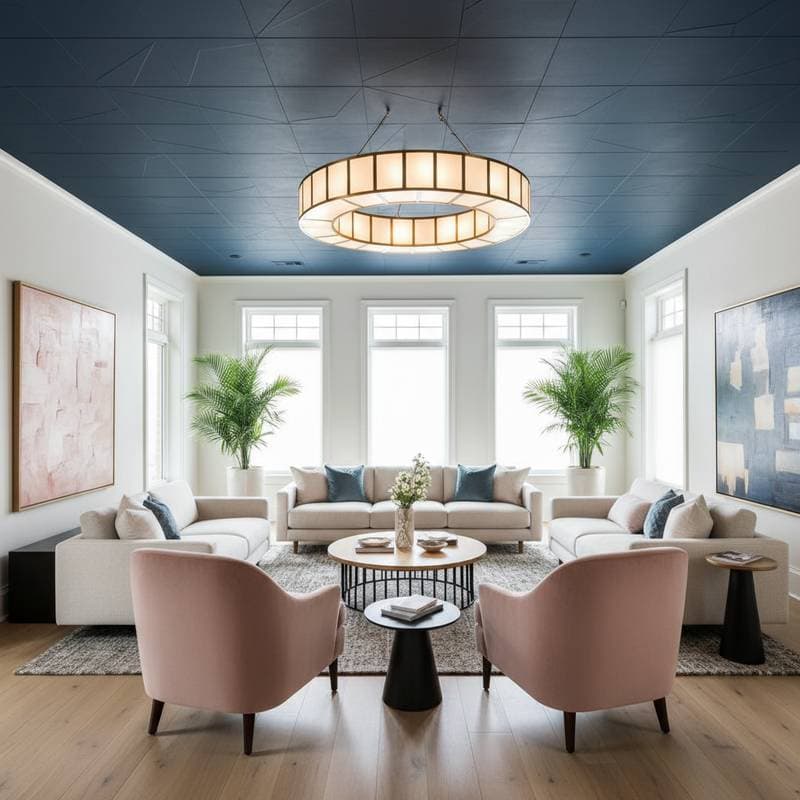
Why Interiors Are Focusing on Colorful Ceilings
You have painted your walls. You have updated your floors. You have styled your furniture. Yet something still feels unfinished. Look up. That wide, blank expanse above your head might be the missing piece. Designers are calling it the fifth wall. It is fast becoming the focus of modern interiors. Colorful ceilings are changing how spaces feel. They add drama, depth, and personality that draw the eye upward and make rooms come alive.
The Opportunity Above
For years, ceilings have been treated as an afterthought. They were painted plain white to open a space. More homeowners now discover that this neutral approach can leave a room feeling flat. The ceiling holds as much design potential as any wall. Using color there can completely transform the atmosphere. A soft blush tone creates warmth in a bedroom. A rich navy ceiling grounds a dining area with quiet sophistication. The possibilities remain endless. The effects stay striking.
Why the Fifth Wall Matters
The appeal lies in how a ceiling color can shift perception. A darker hue makes a large room feel cozier and more intimate. A light pastel softens bright daylight and reflects warmth in cooler seasons. Even a subtle tint ties together design elements from furniture, textiles, or artwork. The ceiling acts as a unifying thread. It guides the eye and balances visual weight across the room.
Designers also use colorful ceilings to define zones in open concept spaces. A muted teal ceiling over the kitchen distinguishes it from a dining area with a soft ivory ceiling. This approach creates flow without physical dividers. It adds character without clutter.
How to Choose the Right Color
Selecting a ceiling color requires understanding mood and proportion. Here are some practical tips to help you decide.
- Match the tone to the purpose. Soothing colors like pale blue or sage green work well in bedrooms or bathrooms. Vibrant choices such as coral or mustard energize kitchens or creative studios.
- Test your lighting. Natural and artificial light affect how color appears overhead. Always sample paint on a small section before committing.
- Coordinate carefully. A ceiling color should complement your wall tones and flooring. Use color families or contrasts to maintain harmony.
- Mind the height. Darker ceilings make low rooms feel snug. Lighter ones help lift the eye in smaller spaces.
Practical Considerations
Painting a ceiling demands more effort than painting a wall. It requires proper preparation, drop cloths, and sometimes scaffolding for high areas. If you tackle it yourself, wear protective gear and use low splatter rollers. For intricate designs or textured finishes, hiring a local professional painter is often worth the investment. Costs vary depending on ceiling size, paint type, and complexity. A professional finish ensures consistent coverage and crisp edges.
Before starting, check if your paint choice needs a specific primer. Confirm if moisture resistance is needed in kitchens or bathrooms. Quality materials extend the life of the finish and prevent peeling or yellowing over time.
Transform Your Space with Intentional Color
A colorful ceiling creates a space that feels intentional and alive. When you look up and see a hue that reflects your personality, the entire room feels more cohesive and inspiring. Whether you choose a subtle wash of color or a bold statement shade, the fifth wall offers a canvas that elevates your design story. Thoughtful color choices and creativity turn that once forgotten surface into the crowning touch that completes your home character.