
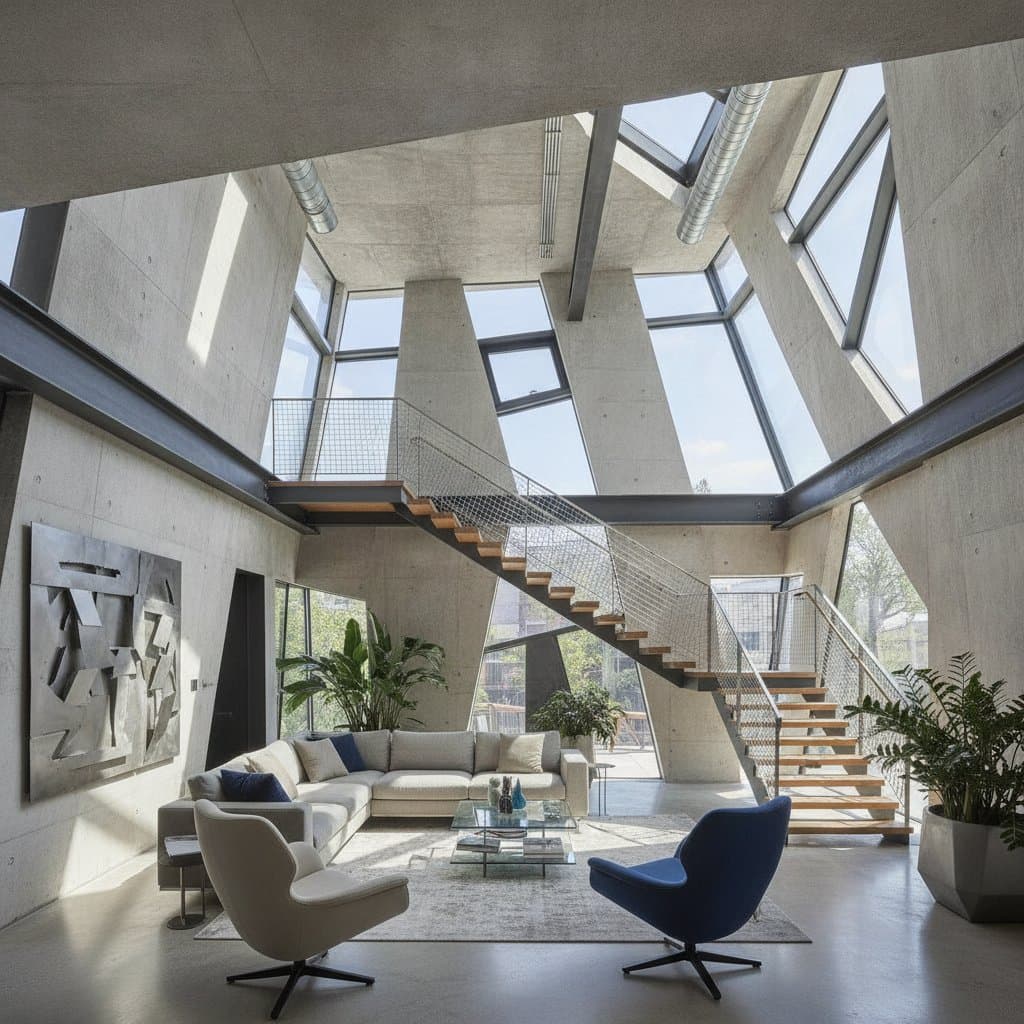
The Rise of Fragmented Deconstructivist Homes
You have probably noticed homes that seem to bend, tilt, or fracture in unexpected ways. A neighbor's new addition may appear as a cluster of geometric planes rather than a traditional roofline. What once seemed radical or reserved for museums now enters residential neighborhoods. The fragmented deconstructivist home has moved from architecture journals to real homebuilding projects.
The Shift from Order to Expression
Traditional homes rely on symmetry and balance. Deconstructivist homes reject those conventions. They celebrate broken geometry, sharp intersections, and exposed structure. The goal is not chaos but a clear expression of the construction process. Walls may appear to peel away from ceilings. Rooflines intersect at odd angles. Windows sit in deliberate positions to optimize light, views, or privacy.
These layouts influence movement through dynamic shapes rather than predictable grids. A living area might open toward a courtyard. An angular kitchen wall can frame a mountain or city view. The result feels personal and alive.
Why Homeowners Choose Fragmented Design
Many homeowners seek alternatives to repetitive suburban layouts. They want spaces that reflect individuality. Fragmented design delivers this through several practical advantages:
- Visual interest arises from shifting planes that create depth and changing shadows throughout the day.
- Architectural honesty shows in exposed steel beams, raw concrete, and open framing.
- Functional creativity produces inventive uses of space such as built-in seating niches and unique window placements.
- Sustainability improves when irregular forms support passive ventilation and daylighting strategies.
Modern software and prefabrication have made these builds more accessible.
The Design and Construction Process
A fragmented deconstructivist home requires early collaboration between architect and engineer. Begin with concept sketches that emphasize movement and asymmetry. Engineers calculate loads for every tilted wall or shifted plane, which typically adds 10 to 15 percent to structural design costs.
Select materials such as steel, concrete, glass, and composite panels that complement the geometry. Use advanced 3D modeling to test intersections and sun angles before construction. Many projects rely on panelized components to control accuracy and expenses.
Budget Expectations
Costs for these homes fit within high-end residential ranges. Architectural design runs from 40000 to 150000 dollars. Construction averages 350 to 800 dollars per square foot. Engineering and permits add 10000 to 30000 dollars. Specialty fabrication for custom elements costs 20000 to 50000 dollars.
A conventional custom home averages 250 to 400 dollars per square foot. The premium covers extra engineering, materials, and detailing.
Key Construction Considerations
Framing uses structural steel or engineered lumber with precise angled connections. Weatherproofing demands careful flashing at irregular joints. Insulation requires continuous barriers to maintain energy performance. Permitting often takes extra time because plans deviate from standard models.
Hire licensed professionals experienced with complex geometry. This is not a suitable project for DIY builders.
Regional Adaptations
Coastal homes need corrosion-resistant steel and hurricane-rated glazing. Mountain designs incorporate sloped roofs and insulated panels for snow loads. Desert projects use reflective coatings and deep overhangs. Urban infill benefits from forms that maximize privacy and daylight in tight lots.
Balancing Expression and Livability
Successful projects place dramatic geometry in shared spaces while keeping bedrooms calm and simple. Consistent materials unify separate volumes. Clear circulation paths prevent disorientation. Work with an architect to calibrate the level of fragmentation.
Environmental Performance
Irregular geometry supports efficient airflow and daylight. Clerestory windows along angled walls deliver indirect light. Offset openings create cross-ventilation. Insulated concrete panels add thermal mass. Tilted roof planes improve solar panel orientation. These features can cut energy use by 20 to 40 percent when integrated from the start.
Maintenance and Long-Term Value
Budget roughly 1.5 percent of home value annually for upkeep. Inspect sealants twice yearly. Recoat metal surfaces every five to seven years. Keep gutters clear at roof intersections. The distinctive architecture often supports strong resale value in design-oriented areas.
Next Steps for Homeowners
Start with a concept discussion with an experienced architect. Share goals, size requirements, and budget early. Verify that your builder has completed comparable projects. Allow extra time for design and permitting. Maintain open communication among all team members throughout construction. Commit fully to the design language inside and out to achieve a cohesive result.